Get Full Government Meeting Transcripts, Videos, & Alerts Forever!
Get email alerts on the School Board Appointments topic
No spam. Unsubscribe anytime.
Bill to shift school-board vacancy appointments to quorum courts faces pushback, fails to advance
Summary
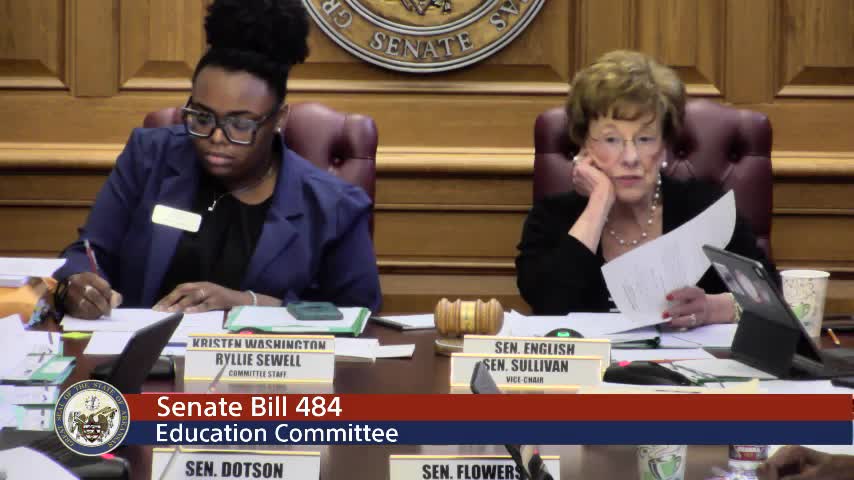
Senator Missy Irvin, District 24, presented Senate Bill 484 to the House Education Committee to change how school-board vacancies are filled; the bill would make county quorum courts the primary appointing authority with the state education secretary as a fallback.
Senator Missy Irvin, District 24, presented Senate Bill 484 to the House Education Committee as an amendment intended to change how school-board vacancies are filled in Arkansas. The amendment would make the county quorum court where a district’s administrative offices are located the primary appointing authority, with the state secretary of education as a fallback if the quorum court does not act.
Irvin said the change was prompted by a Stone County situation in which she said vacancies were filled in ways that aligned votes to close a rural school. "These rural schools are incredibly vital and important to the Stone County," Irvin said, and the bill aims to add notice and a public application process while retaining local control through the quorum court.
Committee members raised concerns about representation in large or multi-county districts. Several senators asked how a county quorum court could represent voters in school zones outside the county or in districts that cross county lines. Renee Carr of Fox in Stone County testified that appointees would be expected to be qualified electors from the school zone with the vacancy, but members said the bill may need more precise language to address cross-county districts and city-based districts.
Other concerns included whether leaving appointment authority with the existing school board — the current default in some districts — would better preserve local control. Senator comments included the view that leaving appointments to locally elected school boards preserves the most locally accountable decisionmaking, while sponsors said the bill creates a separation to avoid "fox guarding the hen house" scenarios.
After debate and additional amendments were discussed, the committee took a vote. The motion to pass did not receive the votes needed to advance; sponsors said they would continue to work on amendments and return the bill later in the session.