Get Full Government Meeting Transcripts, Videos, & Alerts Forever!
Get email alerts on the Environmental Pet Services topic
No spam. Unsubscribe anytime.
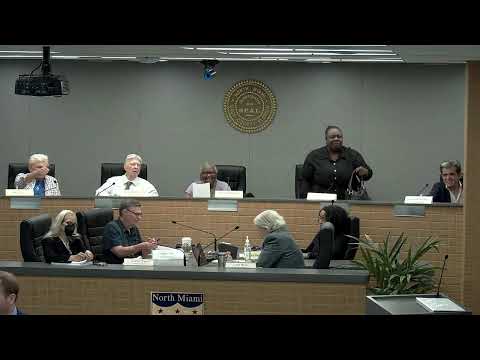
Planning board approves pet crematory (alkaline hydrolysis) at 1965 NE 140th Street amid neighbor concerns
Summary
The board approved a special exception for Etern al Water Cremation (alkaline hydrolysis) at 1965 NE 140th Street in an M-1 industrial district. Nearby recording-studio operators raised concerns about vibration, odors and wastewater; staff and county environmental review found the process allowable.
The Planning & Zoning Board approved a special exception (SE-3-25) permitting a pet crematory that uses alkaline hydrolysis at 1965 NE 140th Street in the M-1 industrial district.
Staff reported the use met the five special-exception criteria in Article 3, Division 5 (Sec. 3-504) and noted that Miami-Dade County and the city’s public works division had reviewed and approved the wastewater treatment and industrial discharge elements of the proposal. Staff also said the applicant’s proposed bay has the parking required under the code (three spaces for this use) and that the operation is sited within a warehouse complex rather than a retail strip.
Applicant Monica Davis, founder of Eternal Water Cremation, said the process uses primarily water and a natural alkaline salt; she described it as “a new way of doing cremation that is more compassionate and sustainable for our planet.” Davis said the method uses less energy than flame-based cremation and produces no hard-stack air emissions.
Several nearby business owners, including two recording-studio operators, registered vocal concerns at the public hearing. Hal (After Hours Music Inc.) said he feared vibrations and refrigeration equipment would be audible in adjacent studios. “There’s bone crushing equipment there that will be heard,” he said, adding that studio microphones and client work could be affected. A second local producer observed that compressors or refrigeration can reverberate and disrupt recordings.
The applicant responded that the alkaline-hydrolysis vessel does not generate the same kinds of vibrations as other industrial equipment and that the operation would use the rear loading overhang for pickups, minimizing customer foot traffic at the front of the building. Davis said a full cycle takes 16–24 hours depending on load and that the process was reviewed by the county Department of Environmental Resources Management (DERM) and the city’s public works staff.
After discussion, a motion to approve the special exception with standard conditions — compliance with federal, state and local regulations and receipt of a Certificate of Use and Business Tax Receipt — passed by roll call. The board asked staff to encourage applicant outreach to neighboring tenants to address operational concerns.