Get Full Government Meeting Transcripts, Videos, & Alerts Forever!
Get email alerts on the Education Parental Rights topic
No spam. Unsubscribe anytime.
Senate Education Committee sends parental-consent bill on "human sexuality" instruction for amendment
Summary
The Senate Education Committee advanced legislation that would require parents to opt in before their children receive instruction the bill defines as "human sexuality," add a two-week notice requirement and create a limited enforcement path for parents. The committee voted 8-1 to send the measure to the fourteenth order for possible amendment.
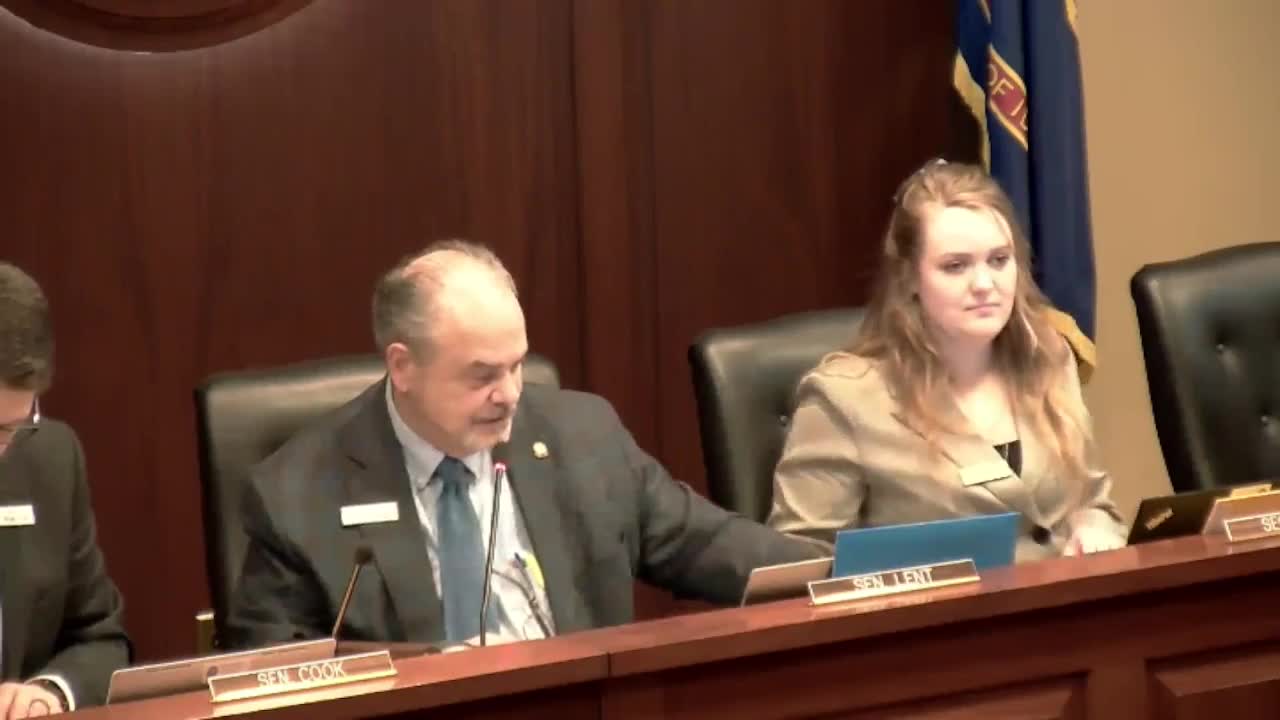
At a meeting of the Senate Education Committee, members voted to send House Bill 239, a parental‑consent measure introduced by Representative Barbara Ehardt of District 33, to the fourteenth order for possible amendment after discussing the bill’s definition of “human sexuality,” notice and opt‑in procedures, and an enforcement mechanism for parents.
The bill would require schools to provide at least two weeks' written notice to parents before any classroom instruction that addresses topics the bill defines as “human sexuality.” Representative Barbara Ehardt said the proposal is “about consent, not content,” and that it flips the current default from automatic inclusion toward an opt‑in model so parents must give permission before their child is exposed to covered material.
The legislation sets out a definition for the covered material that, according to the bill text shown to the committee, includes references to sexual conduct, eroticism, sexual orientation and gender identity (the packet lists gender identity, gender ideology and gender conversion among covered categories). The bill would require schools to provide an alternate, substantive educational activity that furthers grade‑level or graduation requirements for any student whose parent does not sign the written permission. Representative Ehardt told the committee that the alternate instruction is intended so a student “isn't just put in the hall or allowed to run loose” during the covered lesson.
Attorney Kate Hartley, who spoke for the bill’s sponsors, summarized three features of the legislation: first, she said it would not change existing statutory definitions of sex education; second, it would not ban classroom content but would require parental notice and permission before certain instruction; and third, it includes an enforcement mechanism that gives districts an opportunity to cure an alleged violation before parents may file suit. Hartley told the committee that statutory damages are set at $250 and that “actual damages can include any monetary harm caused to the child or the parents,” and that attorney fees would generally be the other form of relief parents could seek.
Supporters who testified said the instruction being characterized as beyond biology and reproduction has become more common in textbooks and health curricula, and they urged an opt‑in requirement. Stephanie Gifford, who identified herself as a K‑12 curriculum analyst, testified that such instruction “goes far beyond biology and human reproduction” and described it as values education that should require parental consent.
Some committee members voiced concerns. Senator Woodward said he worried the bill could “open the door” to classroom instruction that Idaho law had historically reserved for home and church; he questioned whether adding a statutory definition and opt‑in would, effectively, allow more instruction of this type instead of less. Other senators raised concerns about a private cause of action against school districts and the potential cost to local education budgets, and asked for clarifications on how the bill’s definitions would apply in practice, including whether lessons about abuse or signs of abuse would be affected.
After discussion, Senator Woodward moved to send House Bill 239 to the fourteenth order for possible amendment; the motion was seconded and the committee approved it on a roll call vote, 8‑1. The roll call recorded the following votes: Senator Cook—Aye; Senator Woodward—Aye; Senator Nichols—Aye; Senator Carlson—Aye; Senator Burton Shaw—Aye; Senator Zito—No; Senator Ward Engelking—Aye; Senator Semmelroth—Aye; Senator Linn—Aye.
With the committee’s action, sponsors and staff indicated they will accept input as the bill is drafted for amendment. Representative Ehardt told the committee she would provide additional feedback during the amendment process. The committee postponed full consideration of a separate education bill until the next day; that measure had been scheduled for later testimony.
Votes at a glance
- Motion to send House Bill 239 to the fourteenth order for possible amendment: Passed, 8‑1 (Cook, Woodward, Nichols, Carlson, Burton Shaw, Ward Engelking, Semmelroth, Linn—Aye; Zito—No).