Get Full Government Meeting Transcripts, Videos, & Alerts Forever!
Get email alerts on the Education topic
No spam. Unsubscribe anytime.
Senate Education hears $1 billion School Modernization Fund update; statewide facilities assessment estimates about $19 billion in needs
Summary
State Department of Education staff told the Senate Education Committee that school districts have met statutory requirements to receive bond‑proceeds from the School Modernization Facilities Fund and described a new statewide facilities condition assessment that estimates nearly $19 billion in capital needs over 20 years.
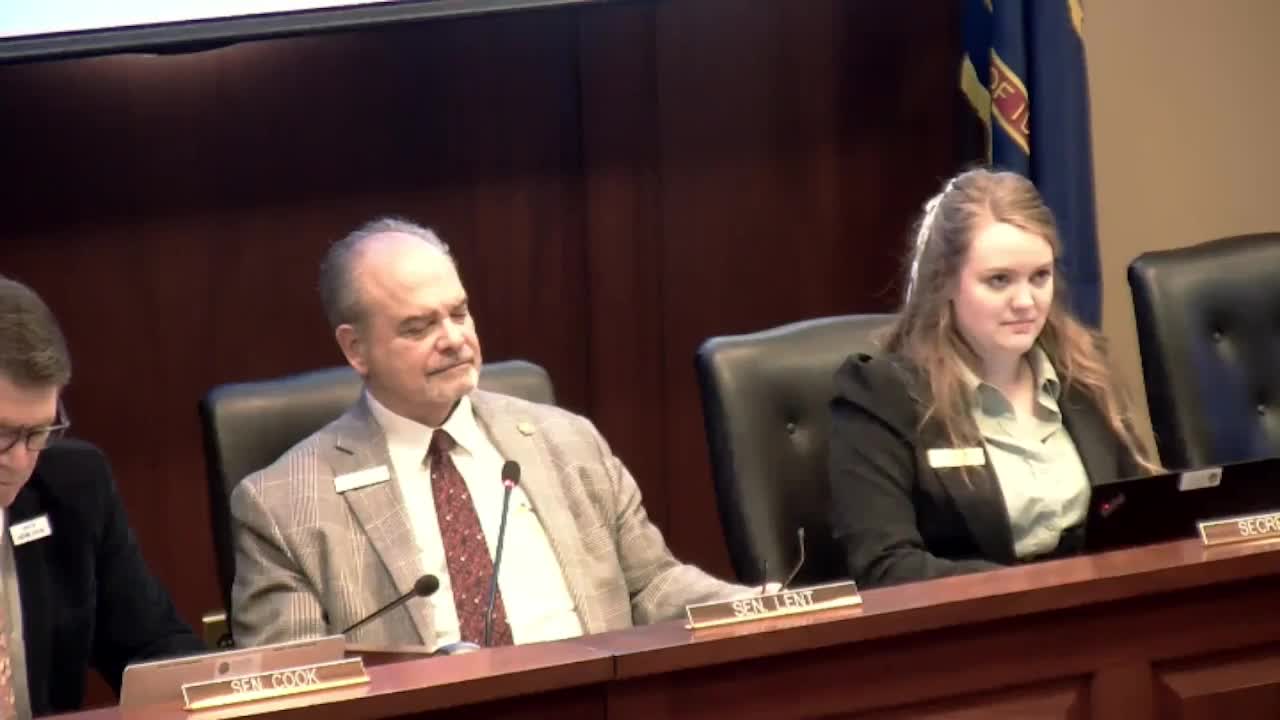
The Senate Education Committee on March 7, 2025 heard a joint presentation from Gideon Tolman, financial officer at the State Department of Education, and Spencer Barzee, deputy superintendent, on the School Modernization Facilities Fund and the results of a statewide facilities condition assessment.
Tolman said the fund was created by last session’s House Bill 521 and is financed through bonds issued by the State Building Authority that will be repaid over 10 years from sales tax collections. He told the committee that districts were allowed to elect whether to receive their share as an annual installment or a lump sum and that all 116 school districts elected a lump sum. “All districts have completed the process to receive this funding,” Tolman said.
The state issued bond proceeds in two series, Tolman said. One issuance occurred in October and another in December; the department reported approximately $750 million was distributed in those issuances and additional proceeds of roughly $336.5 million were made available by the end of last month. Tolman said the authorization capped at $1 billion but favorable market conditions produced somewhat more proceeds; he said about $86.5 million remains to be distributed pending related legislation.
The department also described limits on what bond proceeds can fund. Tolman said the bond legal requirements constrain proceeds to capital projects with a useful life of at least seven years, not routine operating expenses or staff salaries. He contrasted that with other statutory language that referenced maintenance, noting the department worked with district partners to align spending plans with bond law.
Spencer Barzee described the facilities condition assessment process the department used to estimate statewide capital needs. The department contracted Jacobs Construction’s MAPS software and provided training to district facility staff to collect uniform data. Barzee explained the Facilities Condition Index (FCI) used in the assessment: “The higher the percentage, the worse the facility,” and facilities with FCI above the replacement threshold are candidates for replacement rather than incremental repairs.
Barzee said the assessment scored buildings across 37 categories tied to building systems (structure, electrical, HVAC, interior, etc.), used baseline per‑square‑foot cost assumptions informed by RSMeans, and applied regionally adjusted cost factors. The department reported cost estimates by time band: about $2.7 billion for needs in the next five years, about $5.6 billion for years six through ten, and just over $10 billion for years eleven through twenty, for a total just under $19 billion. With inflation factored over 20 years the department said the lifecycle figure could rise substantially (the presentation cited an illustrative figure of roughly $40 billion).
Committee members raised methodological questions. Senator Woodward and others asked how the department ensured consistency across many local data collectors. Barzee and Nathan Bursey (State Department of Education staff) said the department provided a single training and a standardized rubric but acknowledged there was no statewide, in‑person interrater reliability program funded for this effort. Bursey noted limited operational funding constrained the department’s options for sending a single assessment team to every district.
Committee members also asked about the district 10‑year facility plans that districts submitted to meet House Bill 521 requirements. Tolman and Barzee said the department provided a template and reviewed each plan for compliance; they said districts must sign an attest form and that local school boards retain flexibility to reallocate funds if urgent needs arise (for example, reassigning funds to a roof after an unexpected collapse). The department will report annually to the Legislature on actual expenditures and planned uses, aligned to the facility assessment categories, Tolman said.
Barzee and department staff told senators that when districts expend funds they must follow Idaho procurement and public‑works laws (for example, multiple bids for larger projects). The department offered to provide committee members a spreadsheet breaking down the FCI scores for the 126 schools that were rated in the “poor” range.
The committee’s agenda also included routine approval of minutes. Senator Zito moved to accept the March 5, 2025 minutes; the motion was seconded and carried by voice vote. A subsequent motion to approve the March 6, 2025 minutes was likewise moved, seconded, and adopted by voice vote.
The department and committee members agreed the statewide assessment provides a consistent, statewide baseline for capital needs, while senators urged the department to pursue resources to improve assessment reliability and to provide additional breakdowns of the scores that underlie the cost estimates. The committee was scheduled to meet again the following day.