Get Full Government Meeting Transcripts, Videos, & Alerts Forever!
Get email alerts on the Education School Facilities Funding topic
No spam. Unsubscribe anytime.
Committee advances bill to free up dormant school facilities fund, add $25.5 million to aid rural districts
Summary
The Senate Education Committee voted to send House Bill 338 to the floor with a due-pass recommendation after testimony that the bill would unlock an unused Public School Facilities Cooperative Fund, add a new appropriation, and change application and repayment rules to help rural districts finance repairs and replacements.
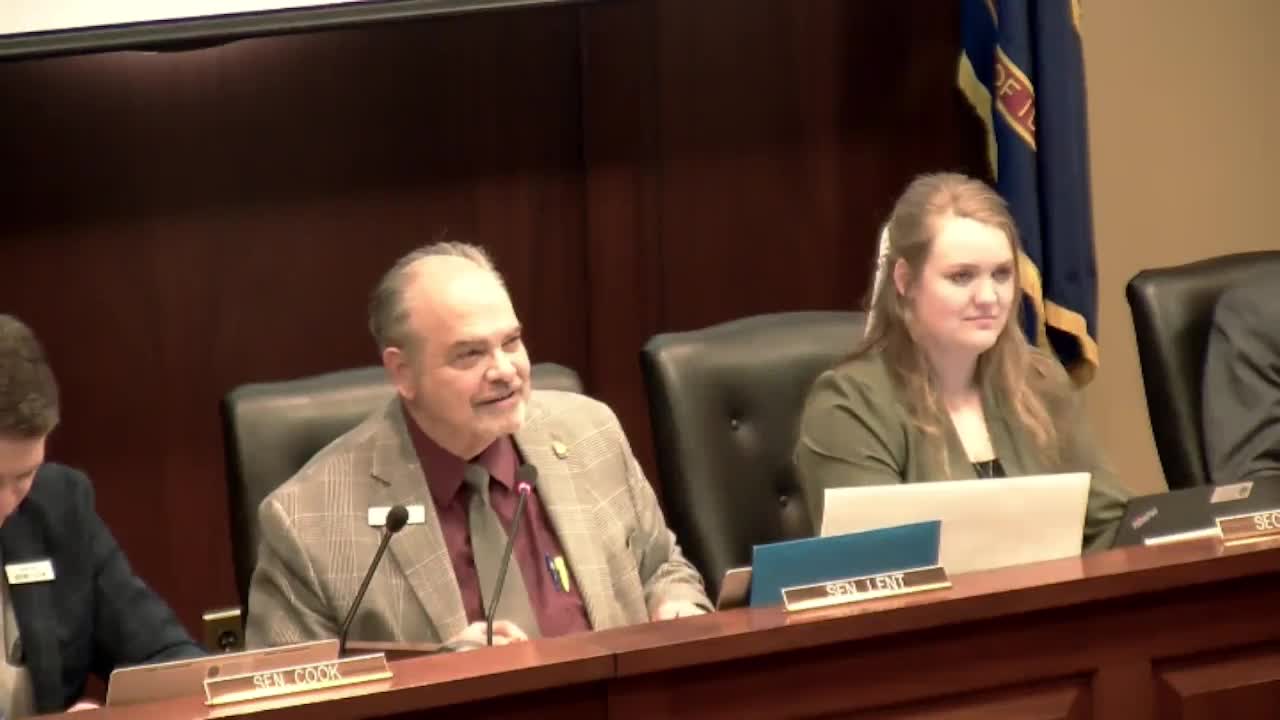
The Idaho Senate Education Committee voted to send House Bill 338 to the Senate floor with a due-pass recommendation after extended testimony from lawmakers and rural school representatives.
Representative Doug Pickett, identified in committee remarks as the House Education Committee chair, described the bill as a way to make dormant Public School Facilities Cooperative Fund dollars available to rural districts that lack bonding capacity. Pickett traced the program’s origin to a 2006 law and said the bill would make $50.5 million available by combining $25 million from previously appropriated funds with an additional $25 million from the bond-levy equalization fund.
Representative Sonia Galaviz (District 16) presented facility-assessment data compiled after a May 2024 requirement that districts perform condition assessments. She said the assessments used Jacobs Engineering’s MAPS software and that, when sorted by a facility-condition index, the statewide immediate (0–5 years) replacement need totaled about $2.7 billion. Galaviz said the bill creates a revolving mechanism to help districts that have tried and failed to pass bonds, or that passed bonds that are insufficient for their needs.
Under the bill as discussed, districts that have failed a bond vote could submit a plan to a three-member panel (which would include the superintendent of public instruction under the proposed changes). The panel may approve, modify or reject plans. The bill exempts the first $5 million of need from the historical requirement to appoint a state-appointed district supervisor, a change designed to encourage districts to use the fund.
Pickett and other presenters described the bill’s repayment mechanism as a hybrid structure: repayments would be amortized up to 20 years (the constitutional limit on repayment periods for this sort of financing) and would be calculated using the state’s bond-levy equalization value index, which considers property values, unemployment and average income. Interest would be charged at the state treasury idle rate, described in testimony as “around 4 to 4.2 percent.” The bill also removes language allowing a plant facilities levy and instead allows districts to use proceeds from a property-tax incentive enacted in House Bill 292 to repay the state when available.
Senator Woodward and others cautioned that the facility-assessment data were compiled at the local level and may not be strictly comparable across districts; local testimony described substantial volunteer contributions in some communities. Salmon School District representatives Brianne Green and Wendy Scobie told the committee about Salmon’s recent bond passage after many failed attempts and about millions of dollars in donated site work and materials; both supported the bill and said their district would apply if eligible.
Senator Burnshaw moved that the committee send House Bill 338 to the floor with a due-pass recommendation; the motion was seconded and carried on a voice vote. Committee members asked staff and sponsors to consider ways to make the program accessible to districts with the fewest local resources and to revisit the bill’s impacts after implementation.