Get Full Government Meeting Transcripts, Videos, & Alerts Forever!
Get email alerts on the Education topic
No spam. Unsubscribe anytime.
Senate committee holds SB 10‑68 to March 12 after debate over parent‑supported public schooling model
Summary
At a Senate committee meeting, lawmakers held Senate Bill 10‑68 to the call of the chair with a date certain of March 12 after extended testimony and questions about a parent‑supported public schooling model used by several Idaho districts.
At a Senate committee meeting, lawmakers held Senate Bill 10‑68 to the call of the chair with a date certain of March 12 after extended testimony and questions about a parent‑supported public schooling model used by several Idaho districts.
The bill’s sponsor and several parents described a model in which a public school or virtual charter — for example Idaho Home Learning Academy — enrolls students and routes state funding through the district to a school and then to education service providers. Sponsors said the model allows parents to choose curriculum and for much instruction to occur at home while preserving testing and certain state accountability requirements.
Sponsor Steven Thane said the measure “basically puts in code what I saw as happening,” describing the proposal as a way to give local districts flexibility to “innovate” and to prevent the model from being curtailed by future regulation. Janet Cox, representing Idaho Home Learning Academy, told the committee that IHLA is “a virtual charter school, authorized under Oneida School District,” and explained the payments and services the school and contracted service providers perform.
Why it matters: The bill would formalize a model already operating in several Idaho school districts and clarifies who may provide instruction and which curriculum‑adoption requirements apply. Proponents said the model brings students back into local public school rolls and supplies parents with an education expense account for materials and activities; opponents said it diverts public dollars to private choices and risks widening inequities.
Most of the committee’s discussion focused on how funds flow, what can be reimbursed from parental expense accounts and what oversight the State Department of Education would retain. Committee members pressed sponsors and providers for specifics: how much of the per‑student funding is reserved for special education; whether parents ever receive cash; which expenses are eligible; and whether students are still required to take state tests.
Key details discussed during testimony and questioning include:
- Scale: Sponsors said about 11,000 Idaho students were using variants of this parent‑supported model in multiple districts.
- Parental expense accounts: Testimony stated that many third‑party providers offer parents roughly $1,700–$1,800 per student per year for approved educational expenses. Janet Cox said HomeEd360‑style service providers typically allocate about $1,800 to families and spend roughly $150 per student on program‑provided curriculum and another $100+ on testing and proctoring.
- Provider and district shares: Witnesses said a service provider can receive about $2,500 of the per‑student funding after district withholds for special education; sponsors said districts retain the remainder to cover teachers, administrators and other district services. Cox explained service providers are paid by unit (about $63,000 per unit, where a unit covers roughly 20–23 students) and that districts reserve additional funds for special education costs.
- Eligible expenses and limits: Committee members were told eligible expenses generally include instructional materials, curriculum and admission fees for museums and similar educational activities. Travel, hotels, food, clothing and typical household items are explicitly not reimbursable; witnesses said families must submit receipts and providers review them line‑by‑line. Funds must generally be spent by April 30 each year and do not roll over.
- Accountability: Sponsors stressed that students remain public school students, must take state tests, and that providers maintain weekly contacts and examples of student work. Opponents said curriculum choice by parents reduces uniform oversight and questioned IHLA’s test scores.
Public testimony was strongly split. Parents and students from districts using the model described academic and social benefits; examples included students advancing ahead in math and families using funds to purchase specialized curricula. Darren Forrest, a parent from Meridian, said the funding helped his family “make the right choice for our daughter so that she can excel.” Parents also described the program’s role in providing jobs in some rural communities.
Opponents urged the committee to protect traditional public schools. Denise Caruzzi, who identified herself as a Treasure Valley parent and grandparent, told the committee, “I do not believe that our taxes or public school dollars should be spent on parents' private choices.”
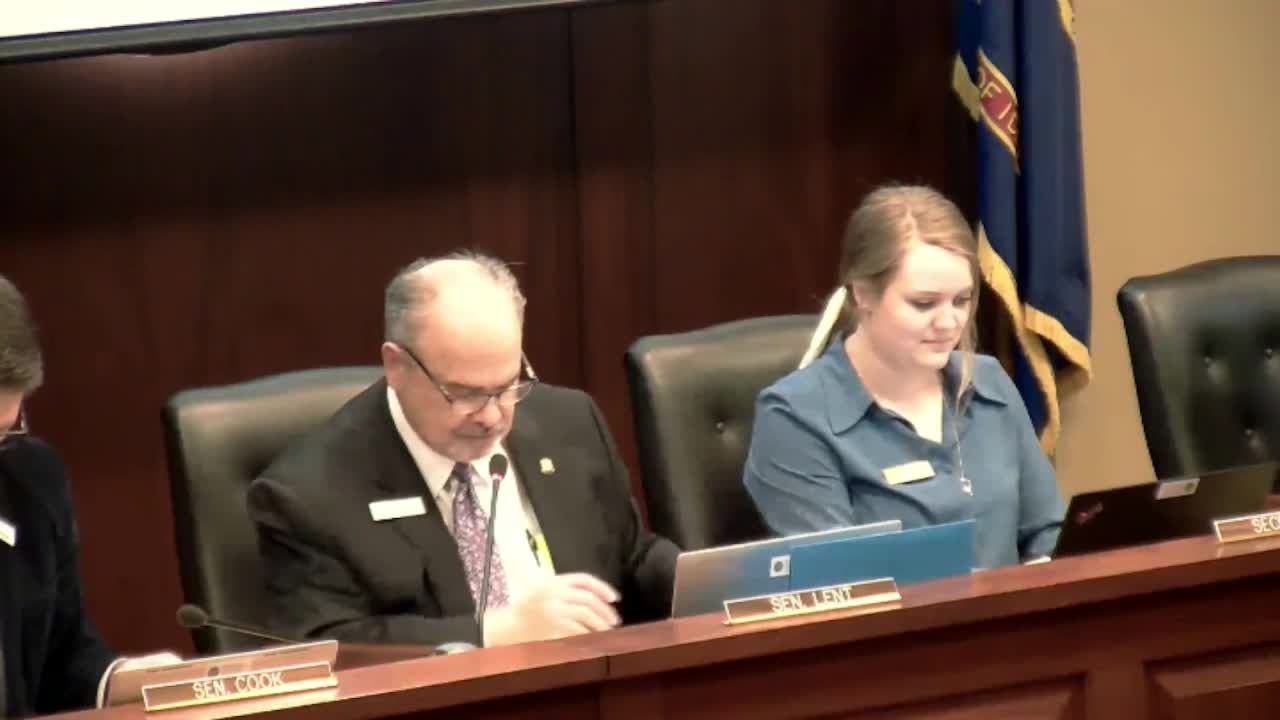
Committee action and next steps: Senator Cook moved to hold SB 10‑68 to the call of the chair; a substitute motion by Senator Nichols set a date certain. The committee voted voice‑approval to hold the bill to March 12. No roll‑call vote was recorded in the transcript; the committee’s chair said the motion carried.
The committee did not adopt policy language or amendments at the hearing. Senators asked staff and witnesses to return with further financial breakdowns and clarifications about who performs which functions (district administrators, school employees, or contracted service providers) and how special education costs are accounted for. The committee will revisit SB 10‑68 on March 12 per the date‑certain motion.
Notes: The hearing included both in‑person and virtual testimony and featured multiple parents and students from the Treasure Valley and other communities.