Get Full Government Meeting Transcripts, Videos, & Alerts Forever!
Get email alerts on the Solar Feasibility topic
No spam. Unsubscribe anytime.
City receives municipal solar feasibility study; staff to prioritize library, community center and Haile for RFPs
Summary
The commission received a 16‑facility solar feasibility study on March 18; the consultant recommends right‑sized rooftop PV and identified the library, community center and Hale as near‑term candidates after recent roof work.
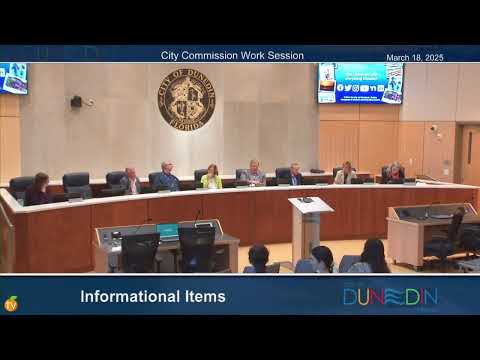
The City Commission received a municipal solar feasibility study on March 18 that evaluates rooftop solar potential at 16 city facilities and summarizes Duke Energy–provided energy audits.
Scope and process: Sustainability Program Manager Natalie Gass and consultant McKim & Creed (Sol Haroun, director of renewables) outlined a multi‑step analysis that examined structural rooftop viability, electrical interconnection, hourly energy use (8760 file), and financial feasibility. Duke Energy performed no‑cost building energy audits that cataloged HVAC and lighting equipment, eligible utility incentives and equipment‑replacement suggestions; McKim & Creed used those audits and utility bills to size and model photovoltaic (PV) systems.
Library case study and modeling approach: The consultant used the library as a representative case study. The team modeled rooftop layouts, assessed shading and slope, and used industry software (HelioScope) to generate hourly solar production and match it against the building’s hourly load. McKim & Creed recommended “right‑sizing” each rooftop array to offset about 90–95% of annual consumption rather than oversizing and exporting large volumes to the grid; staff noted that oversizing changes interconnection and may reduce financial return because exported energy is credited at a wholesale rate.
Financial scenarios and findings: The study ran four scenarios: low installed cost ($2.00/W DC) and high ($3.50/W DC), each with and without the 30% federal direct‑pay incentive included in the Inflation Reduction Act. At $2.00/W, most facility systems are financially feasible with internal rates of return above the city’s 5% discount rate; with the 30% incentive the IRR improves significantly. At $3.50/W the study found only a few buildings are feasible without federal incentives, though the IRA direct‑pay incentive can make otherwise marginal projects viable.
Recommendations and next steps: McKim & Creed recommended prioritizing buildings that already have new or imminent roof replacements to avoid rework. Staff proposed beginning RFPs for the library, the community center and the Hale facility now that their roofs are replaced or being replaced; staff will bundle energy‑efficiency work after Duke incentives where appropriate. The report also recommends clear RFP language, conservative system sizing, and a procurement pathway that preserves the city’s ability to claim federal incentives.
Batteries and wider goals: The study did not include a detailed battery economics analysis; both staff and the consultant noted battery costs are falling but remain expensive in many municipal use cases. Commissioners and members of the public urged staff to keep an open review of batteries and other complementary measures as market prices change. Staff reiterated that municipal solar and efficiency work alone will not achieve the city’s “Ready for 100” municipal goal; the city will need a mix of on‑site PV, energy efficiency and off‑site subscriptions (Duke Energy Clean Energy Connection) to reach the 2035 municipal target.
Public comment and engagement: Sierra Club members and local volunteers attended and urged the commission to consider larger system sizing and faster action toward the city’s renewable goals. Staff recommended posting study results on the city’s strategic dashboard and returning with RFP language and budget requests as part of the FY26 capital planning cycle.