Get Full Government Meeting Transcripts, Videos, & Alerts Forever!
Get email alerts on the Workforce Housing topic
No spam. Unsubscribe anytime.
Pecos council approves nonbinding MOU for essential‑workers housing, plans 27 units
Summary
The Pecos City Council approved a nonbinding memorandum of understanding for Phase 3 of a Community Essential Workers Housing project. The MOU sets a framework for four taxing entities to pursue a roughly $3.5 million, 27‑unit development with a lease‑purchase model and a lottery allocation system.
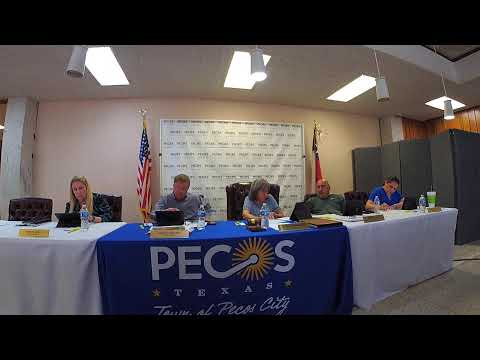
The Pecos City Council on March 18 approved a nonbinding memorandum of understanding (MOU) to advance Phase 3 of a Community Essential Workers Housing project, a collaboration among the Town of Pecos, the Pecos Economic Development Corporation (PEDC), the hospital district and Reeves County.
The MOU establishes a framework for further negotiations and designates a designee to finalize timelines and details. Jimmy Dutjober, director of the Pecos Economic Development Corporation, told the council the group expects the project to cost about $3,500,000 and would include 27 housing units. He said one unit would be retained by the PEDC and the remaining units would be allocated through a lottery system to meet partnering entities’ staffing needs.
Why it matters: council members said the project is aimed at recruitment and retention of essential staff. The developers plan lease agreements with a lease‑purchase option, and officials said the project is intended to return funds to the participating entities once units are sold.
Key details discussed at the meeting: PEDC staff said architectural and engineering work has been completed and that the economic development entity is prepared to absorb initial engineering costs (discussed in the meeting as roughly $320,000–$350,000). Unit sizes presented at the meeting were 21 units at about 1,622 square feet and six units at about 2,020 square feet; parking will be carports rather than garages. Council members and staff recommended forming a homeowners association (HOA) to manage shared features such as fencing, carports and private streets; the council was told any dedicated streets would be turned over to the city for maintenance.
Affordability features discussed: meeting presenters proposed a rent structure described in the MOU discussion as $1,500 per month, with $1,000 of that held in a savings account for a resident during a proposed 36‑month period and $500 used for insurance/maintenance. Staff and council said the arrangement would create a down‑payment fund (cited in the meeting as an expected $36,000 after 36 months under the suggested plan) to help residents qualify for financing. PEDC staff also said the corporation would consider gifting part of the land value to lower buyers’ costs. A banker named in the discussion, Brenda Basquette of West Texas National Bank, was referenced as saying financing should be available if buyers meet credit requirements.
Concerns and next steps: council members asked whether the entities had surveyed employees to determine demand; staff said no internal survey had been completed and that a designee would work to set timelines and finalize details. Council members also raised concerns about potential HOA costs and whether first‑time buyers could afford them. Council members requested that those cost estimates and participant eligibility criteria be clarified in subsequent documents.
Formal action: Councilman Graham moved and Councilman Arona seconded approval of the MOU. The motion carried.
The MOU is explicitly nonbinding; staff said further agreements will be drafted for each party to sign and that the project’s full funding remains contingent on grant awards and additional appropriations.