Get Full Government Meeting Transcripts, Videos, & Alerts Forever!
Get email alerts on the Environment Water Restoration topic
No spam. Unsubscribe anytime.
Kenosha County board moves forward on Pike River South Branch restoration, approves $2.5 million borrowing and property acquisitions
Summary
After more than a dozen residents and regional experts urged action, the Kenosha County Board voted unanimously to authorize up to $2.5 million in general obligation borrowing for the Pike River South Branch restoration and to acquire two properties tied to the project.
Kenosha County Board of Supervisors members voted unanimously to approve an initial resolution authorizing up to $2,500,000 in general obligation bonds or notes for waterway projects and a separate resolution to approve a plat plan and purchase two properties needed for the South Branch Pike River restoration project.
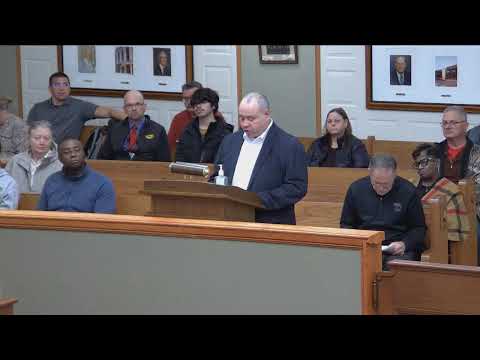
The measures were moved to the start of the meeting because of the large number of residents in favor. Supporters — including local residents, university officials, conservation organizations and downstream landowners — urged the board to complete the “final leg” of restoring the South Branch of the Pike River to reduce erosion, improve water quality and expand habitat.
The resolutions are intended to finalize funding and property acquisition steps for a multi-phased restoration effort that local and federal partners have planned. Supervisor Mark Gence moved the borrowing resolution, seconded by Supervisor Gabe Nudo; both resolutions passed unanimously.
Residents described years of erosion and poor water quality along the South Branch and said restoration would produce recreational, ecological and economic benefits. “I encourage you to vote in favor of this resolution to support the final leg of the Pike River restoration project to protect Lake Michigan and finish the job that Mount Pleasant started,” said Nancy Washburn, a Mount Pleasant trustee and abutting property owner. Other speakers cited improvements seen in partly restored reaches, the return of fish and birds, and the project’s potential to reduce stormwater impacts.
Several organizations and officials gave institutional endorsements. John Scalbeck, a professor of geoscience at the University of Wisconsin–Parkside, and Phil Hirsch, UW–Parkside vice chancellor for finance and administration, said the university supports the project and highlighted research and student opportunities. Craig Helker, identified as a Pike River biologist for the Wisconsin Department of Natural Resources, noted that the south branch is currently listed as impaired for total phosphorus under federal reporting and said projects like this reduce nutrient pollution.
Local conservation leaders highlighted wetland components of the design. “The inclusion of the stormwater infiltrating wetlands…is essential to the health of our downstream environment,” said T.J. Levesque, executive director of Hawthorne Hollow Nature Sanctuary and Arboretum, citing measured reductions in soil loss seen at nearby restorations.
Supervisor Decker told the board that new partner funding reduced the county’s share of the project compared with earlier plans: he said the county’s share fell from about 38.7% under an older plan to about 20.7% under the current arrangement. The board also heard that earlier approvals authorized a combined total of $5,125,000 for the project; the current bond authorization is for up to $2,500,000 to be borrowed over the project’s life.
The two resolutions were described at committee as unanimously recommended. After the public comments and brief committee presentations, the board voted with electronic clickers; Resolution 87 (the bond authorization) and Resolution 88 (plat approval and property acquisition) passed unanimously.
The project partners named during public comment included the U.S. Army Corps of Engineers, the Wisconsin DNR, UW–Parkside, Hawthorne Hollow, Kenosha Country Club and local foundations and watershed groups. Several commenters emphasized benefits for pollinators, including the federally endangered rusty patched bumblebee and noted that the South Branch falls within a priority habitat corridor.
What’s next: The resolutions authorize borrowing and property acquisition steps; federal, state and private grants and Corps involvement were discussed as necessary elements of the overall restoration schedule. No explicit timetable for construction or final federal approvals was announced at the meeting.