Get Full Government Meeting Transcripts, Videos, & Alerts Forever!
Get email alerts on the Brownfield Remediation topic
No spam. Unsubscribe anytime.
Commission hears remediation plan, interim‑use guidance for recently purchased Consolidated property in Palatka
Summary
City staff and an environmental consultant described a soil‑vapor remediation program and a likely 1–2 year cleanup window for the Consolidated property downtown; commissioners discussed interim uses and next steps for due diligence and lease/RFP processes.
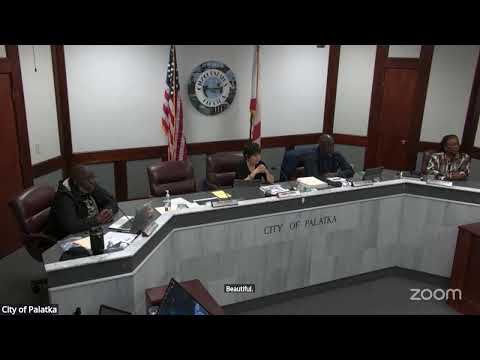
Palatka City Commission workshop — City staff and an environmental consultant briefed commissioners on environmental testing, cleanup steps and interim‑use limits for the recently purchased “Consolidated” property in downtown Palatka.
Marilyn Martin, a city staff member, summarized the site’s ownership history and recent sale activity and said the city purchased the parcel during the current year. Chad Russo of Land Trust Environmental, introduced as the engineer of record on the cleanup, said there is no confirmed soil contamination on the site and that the groundwater plume is “fairly small compared to other sites I’ve seen,” and — as he put it — “it is not under the building.”
Russo said the planned remedy is an active air‑sparge/soil‑vapor‑extraction system. He described the near‑term process: delineation of the plume, submission of a remedial action plan (pre‑RAWP) to the state regulator, a review period (he said the reviewer would have about two months), then construction and installation of the temporary system. He reported the system is typically a temporary trailer with above‑ground equipment and underground piping; he said similar systems often remain in place roughly one to two years while contaminant levels decline and monitoring takes place.
The central operational point the consultant and staff stressed is that using the existing building without breaking ground is generally allowed while remediation proceeds. Russo said that installing permanent improvements that would cover or obstruct access to the subsurface plume makes later cleanup more costly and technically more difficult; he recommended against permanent redevelopment that requires deep excavation before remediation is complete. He also described standard controls and monitoring for vapor intrusion and said the city would be notified and the system adjusted if any odor or indoor‑air issue arose.
Financial and procedural context: a staff member identified the city’s cash outlay at about $267,000 and said the disposed property was shown on the city’s books at roughly $570,000 after depreciation; market values cited in the meeting were higher but not presented as final appraisals. Staff said remediation costs will be filed with the cleanup funder and the consultant noted that state review and approvals are required before construction of the remedy.
Commissioners asked for additional detail and for a clear next‑steps schedule. Staff said they will provide the full inspection report obtained before purchase and will proceed with the pre‑RAWP submission and state review. Commissioners discussed opening a transparent solicitation process for interim uses (leasing or short‑term proposals) once the city confirms what spaces can be used without disturbing subsurface piping or the remediation work. Several speakers urged balancing quick, short‑term activation of the property with appropriate due diligence so the city does not create a public‑safety or liability exposure.
What’s next: staff will submit the remedial action paperwork to the regulator, circulate the pre‑RAWP schedule, share the earlier structural/inspection report with commissioners, and return with a proposal for an RFP or leasing process that accounts for the remediation timeline and monitoring requirements.
Ending: Commissioners did not take a formal vote on a reuse plan during the workshop; they directed staff to continue environmental permitting and to prepare materials (inspection report, timeline and a proposed solicitation) for a future meeting so the commission can consider specific interim tenants or short‑term uses.