Get Full Government Meeting Transcripts, Videos, & Alerts Forever!
Get email alerts on the Housing topic
No spam. Unsubscribe anytime.
Legislative committee hears hours of testimony on House Bill 1217 rent‑stabilization proposal
Summary
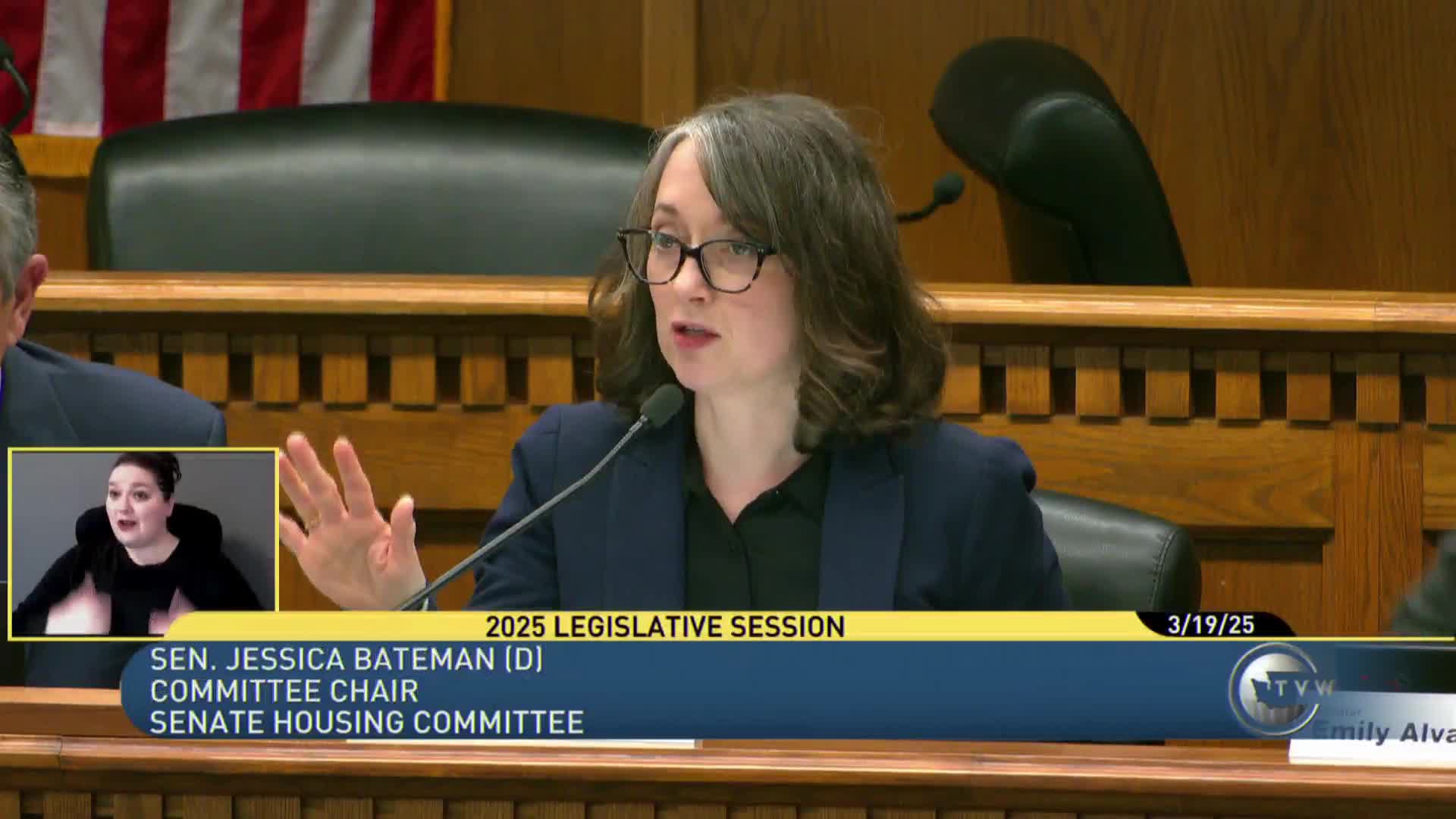
A legislative committee chaired by Chair Bateman heard hours of public testimony on House Bill 1217 on Oct. 12, 2025, with labor unions, tenant advocates and local officials urging passage and multifamily owners, builders and property managers urging rejection or changes.
A legislative committee chaired by Chair Bateman heard hours of public testimony on House Bill 1217 on Oct. 12, 2025, with labor unions, tenant advocates and local officials urging passage and multifamily owners, builders and property managers urging rejection or changes.
Supporters said HB 1217 would provide predictable rent increases and stem displacement. "The stress, hurt, and struggle that housing insecurity creates continues to escalate," said Maddie Fouch, representing SEIU 775. Sarah Charon, chief of staff at UFCW 3000, testified: "Grocery workers cannot wait." Vanessa Kritzer, president of the Redmond City Council, told the committee the city enacted local protections more than two years ago and still sees housing development continuing.
Opponents from the housing industry warned the bill could deter investment and reduce new construction. "Rent control is bad policy that will push scarce capital for new construction to other states," said Carl Charette of AvalonBay. Carter Nelson, testifying on behalf of the Washington Multifamily Housing Association, said the apartment sector contributes broadly to the state economy and "Washington cannot afford to take steps that risk straining the housing economy any further." Brett Waller, general counsel at Widener Apartment Homes, warned of liability in the bill's language and said a mistake in a statutory notice could carry criminal penalties: "One mistake in calculating rent ... could result in 10 years in prison or a $20,000 fine." That description reflects Mr. Waller's reading of Section 103; committee staff did not offer a legal interpretation on the record during the hearing.
Testimony covered several recurring provisions and concerns. Supporters emphasized a 7% annual cap and longer notice periods as stabilizing measures for tenants, and called for an equity-focused approach; Harpreet Kaur of the Washington Build Back Alliance said the bill's social vulnerability assessment would help target resources. Opponents urged exemptions or modifications, citing a 12-year exemption for new construction and suggesting additional carve-outs (for example, inflation indexing or capital‑improvement pass‑throughs) to preserve development incentives. Multiple witnesses from the development and financing community described shifting investments to states they described as having lower regulatory burdens.
Manufactured‑housing owners and residents offered contrasting views. Deborah Wilson, who lives in a manufactured housing community in Aberdeen, told the committee she is living on a fixed income and supports limits on rent increases: "Knowing the possible increase of 7% is healthier than an unknown increase." Owners and managers said the bill would restrict their ability to reset rents when lots turn over and would strain small operators; Christa Connolly, who owns a manufactured home community, said the bill would prevent owners from raising rents to cover steep cost increases she listed for taxes, utilities and insurance.
Several legislators asked industry witnesses about empirical effects in other jurisdictions. Industry witnesses cited research and industry data alleging higher eviction rates after rent‑stabilization policies in some areas and offered examples of capital moving to Sunbelt markets; committee members pressed witnesses on whether those external factors (tariffs, interest rates, construction costs) should affect the legislature's ability to set renter protections. Committee members also questioned how lenders and underwriting would respond to the bill's limits.
Committee staff closed the hearing by noting that 5,253 individuals had signed in supporting the bill, 4,144 opposed and 58 marked other on the sign‑in sheet. No final action or vote was recorded at this hearing.
The committee did not adopt or reject the bill during this session. Chair Bateman adjourned the meeting and invited written comments from those who did not testify.
Sources: public testimony on House Bill 1217 as recorded in the committee transcript.