Get Full Government Meeting Transcripts, Videos, & Alerts Forever!
Get email alerts on the Early Learning & K 12 Education topic
No spam. Unsubscribe anytime.
Supporters urge Washington committee to back House Bill 1414 to expand paid work-based learning for 16- and 17-year-olds
Summary
Testimony at a state committee hearing urged allowing paid, supervised work-based learning for 16- and 17-year-old students and asked lawmakers to revisit regulations through a working group to address capacity, access and safety concerns.
Supporters of changes to work-based learning regulations told a Washington state legislative committee that allowing paid, supervised work placements for 16- and 17-year-olds would expand access to living-wage career pathways and relieve capacity pressures at career and technical education programs.
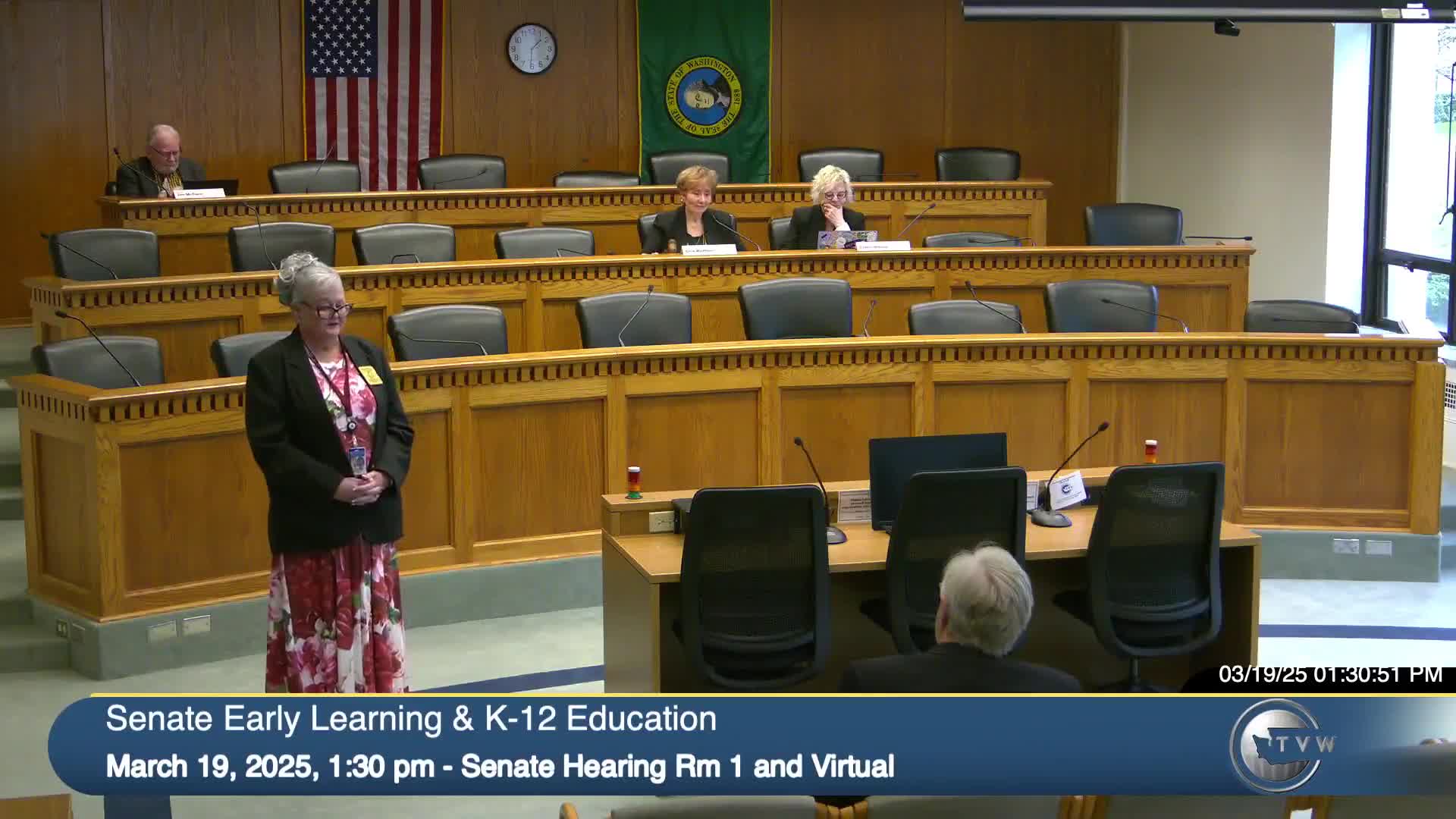
At a committee hearing, Joel Boucher of Kennewick, a resident with farm and food-industry experience, said current rules prevent young people in skill centers and similar programs from being paid for work in farming, packing, food service and retail. “These programs are limited both in capacity as well as regional accessibility,” Boucher said, adding that students miss opportunities to develop “soft skills that are developed through these job exposures.” He also told the panel, “By accepting the proposals of House Bill 1414, we will make significant strides in this effort.”
The testimony emphasized safety and supervision as prerequisites for expanding work placements. Lynette Brower, director of the Northwest Career and Technical Academy and president of the Washington State Skill Center Association, said the state’s industry partnerships can create “a seamless pathway” that keeps students engaged from classroom training into paid work. Brower told the committee that work-based learning could open classroom seats and address recruiting shortfalls for CTE instructors.
Caitlin Keane, representing Northwest Maritime, a Port Townsend nonprofit, said her programs place graduates into maritime trades but face access barriers when students must choose immediate paid work over unpaid training. “Removing those barriers for our 16 and 17 year olds to access a workplace opportunity in a safe and structured way and get paid for it, is pretty critical for sustaining the workforce,” Keane said, thanking Representative Connors for support of the bill.
Witnesses asked lawmakers to form or authorize a working group to revisit state regulations governing minors in workplace learning so the state can clarify safety rules, funding implications and role definitions for schools and employers. Testifiers repeatedly urged strict safety scrutiny but argued that meaningful, paid work experiences would expand pathways into living-wage jobs without requiring new classroom construction or lengthy capital investments.
No formal vote or committee action on House Bill 1414 was recorded during the testimony. Committee members present asked clarifying questions and expressed that they were “inspired” by the testimony; witnesses said they stood ready to provide more detail to inform any regulatory review or draft implementing language.
The testimony drew on examples from agriculture, maritime training and regional skill centers and emphasized statewide relevance; several speakers described capacity limits at existing skill centers and the need to reduce barriers for students who face financial pressures.