Get Full Government Meeting Transcripts, Videos, & Alerts Forever!
Get email alerts on the Ethics In Public Service topic
No spam. Unsubscribe anytime.
Committee reviews amendments to ethics and public-service law including gift thresholds and website rules
Summary
A hearing was held on engrossed substitute Senate Bill 5143, an agency-request bill from the Legislative Ethics Board that would clarify the definition of "beneficial interest," raise certain gift thresholds, modify how election-year website and social-media activity is treated, and change penalties and cost provisions.
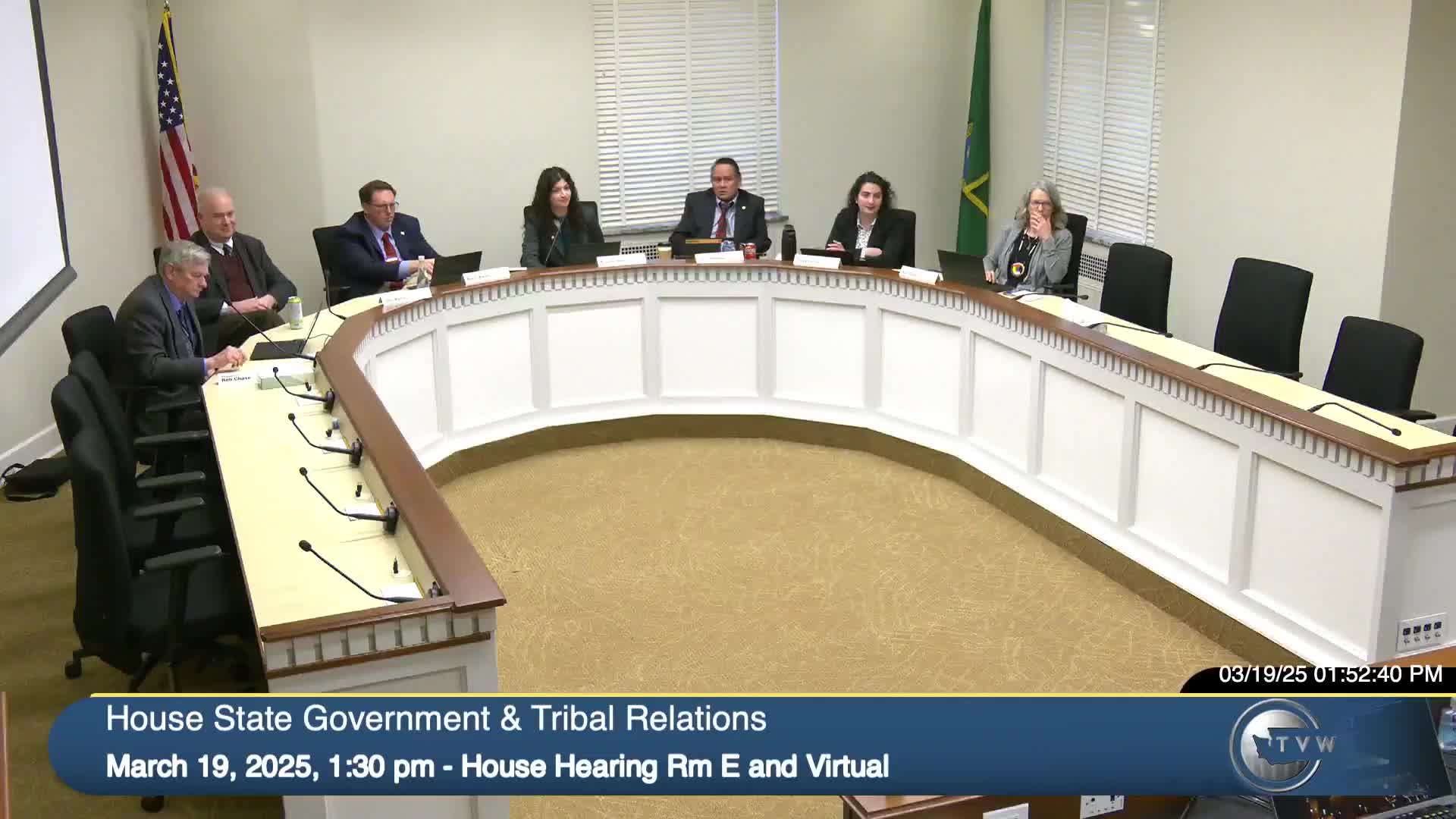
Engrossed substitute Senate Bill 5143, an agency-request bill from the Legislative Ethics Board, was presented to the State Government & Tribal Relations Committee for a public hearing. The bill would make multiple technical and substantive changes to the ethics and public-service laws.
Desiree Omley, OPR staff, gave the staff report. She told the committee the bill clarifies "beneficial interest" to mean a financial interest in a contract, sale, lease, purchase, or grant unless the officer's ownership in the entity is less than 10 percent. It also modifies the list of activities that are treated as within the normal and regular conduct of a legislative office, updates the monetary threshold for accepting gifts from $50 to $100, exempts gift cards of $25 or less for legislative employees, and adjusts reporting requirements for food and beverage gifts. The bill also changes how election-year activity regulations apply to official legislative websites and removes costs from the combined cap on penalties and costs imposed by an ethics board.
Jamie Petersen, a member of the Legislative Ethics Board, described the bill as a bipartisan, bicameral package intended to clarify overlapping exemptions and modernize outdated numeric thresholds. Petersen recounted prior board debates (including a historical example that led to the "12 meal" rule) and said clarifications should help ethics advisers give clearer guidance.
Representative Walsh and other members asked questions about how the bill would affect official social-media and website activity during an election-year freeze. Staff explained that under current law certain activities had been explicitly described as within normal and regular conduct; the bill removes that specific language so those activities would not be automatically exempt but would remain subject to election-year regulations and the separate standards of conduct adopted by House and Senate rules. The practical effect, staff said, is similar to current practice but the statutory language would change.
Brady Hornstein, a former state employee and interested citizen, testified remotely in support and asked the committee to pass the bill as it passed the Senate; he noted the removal of proposed language that would have provided blanket immunity to the executive ethics board.
Senator Gildan (prime sponsor) and Senator Petersen spoke in support and described the bill as clarifying and modestly modernizing the Ethics in Public Service Act. The hearing record shows no committee vote or final action on the bill in the transcript.
Key numeric clarifications in the bill as presented include raising the nonreportable gift threshold to $100, exempting gift cards worth $25 or less to legislative employees, and clarifying that ownership under 10 percent does not constitute a "beneficial interest" for the purposes described in statute.