Get Full Government Meeting Transcripts, Videos, & Alerts Forever!
Get email alerts on the Access To Justice topic
No spam. Unsubscribe anytime.
Committee advances memorial asking state Supreme Court to reinstate limited licensing program
Summary
Senate Joint Memorial 8006, which asks the Washington Supreme Court to reinstate a limited technician program intended to expand legal assistance, was reported out of committee 10–3 after members debated the program's past costs and training concerns.
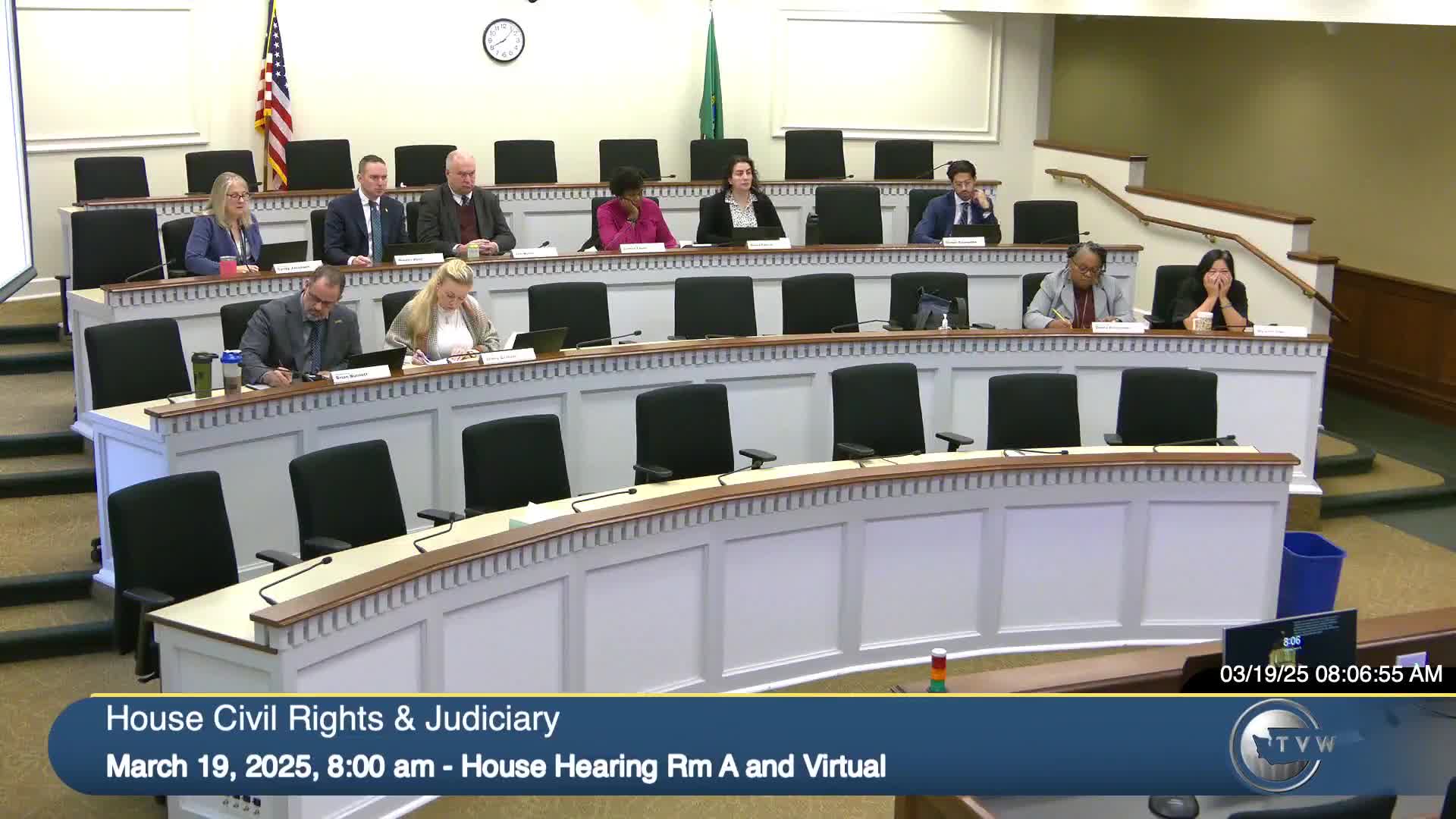
The Civil Rights & Judiciary Committee reported Senate Joint Memorial 8006 out of committee with a due-pass recommendation on March 19, advancing a memorial that asks the Washington Supreme Court to reinstate a limited technician program intended to expand legal assistance.
Matt Sterling, staff to the committee, described the memorial as a request that the Washington State Supreme Court reinstate the limited technician program; he said there were no amendments. Representative Fevella and Representative Goodman expressed opposition. Fevella said the program “cost over $30,000 per license” in prior iterations and noted the supreme court previously sunset the program over concerns about cost and public safety. Goodman said his no vote was motivated by concerns about adequate training for people handling criminal matters.
Representative Walsh said she would vote yes and argued the program could improve access to justice by deputizing trained individuals for limited responsibilities, drawing a parallel to court commissioners used for specialized dockets. Representative Graham also opposed the memorial in its present form, saying he would prefer a model with more narrowly defined training and duties.
A recorded roll call showed 10 ayes and 3 nays; staff announced the result and the memorial was reported out of committee with a due-pass recommendation. Proponents framed the measure as a potential tool to improve access to the court system for people who cannot afford full legal representation; opponents raised concerns about training, scope of practice and past program performance.