Get Full Government Meeting Transcripts, Videos, & Alerts Forever!
Get email alerts on the Public Lands topic
No spam. Unsubscribe anytime.
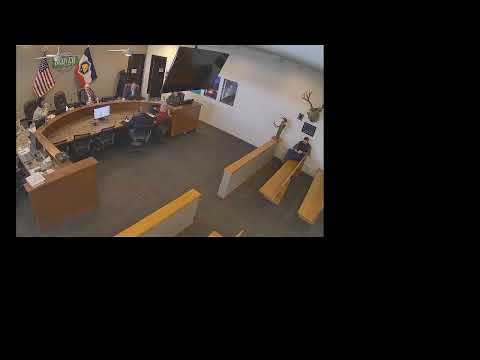
Visiting federal official outlines federal priorities on public lands, energy, budget and housing at Beaver County meeting
Summary
A visiting federal delegation met with Beaver County leaders to discuss public-lands management, energy and mining investment, federal budget priorities and local housing and water-rights concerns. County officials raised housing, water-rights litigation and resource-management issues; no formal actions were taken.
A visiting federal delegation briefed the Beaver County Commission on federal priorities — including public-lands policy, energy and mining development, federal budgeting and housing — and heard local officials’ concerns about water rights, housing shortages and land-use rules.
The delegation introduced staff members and said it planned to coordinate with local leaders on permitting, public-lands management and incentives for private investment. The visiting official framed the federal policy moment as a time to confront large fiscal and regulatory questions, and emphasized a combination of short-term and structural changes in Washington.
"I think the country had stopped the car at the moment," the visiting official said, characterizing the public reaction to recent national issues and the need for federal attention to priorities that affect counties. He described four priority areas he planned to pursue in Washington: public-lands and permitting reform, federal debt and budgeting, China and national security, and energy and climate policy.
Why it matters: Beaver County officials told the delegation that roughly 87% of the county is public land, and they urged clearer coordination between federal, state and local governments on land use, road access and siting of large federal projects. Commissioners and staff said federal decisions about BLM and Forest Service rules, renewable-energy siting and road closures directly affect local economic development, housing availability and traditional land uses such as grazing and recreation.
On public lands and renewable energy, the visiting official said he opposed large-scale siting on federal lands that would displace other uses. "The solar deal is you'll eliminate every other multiple use," he said, adding that private-land siting is preferable when possible. He and his staff described efforts in Congress to review federal rules and to seek options that would make some non-sensitive federal parcels available for development or housing near communities.
County leaders pressed the delegation on several local issues: a pending water-rights application filed by an out-of-county claimant, recurring road closures tied to long-running RS 2477 litigation, and the housing shortage that local officials said is squeezing working families. One commissioner described the water-rights dispute and said local residents feel disadvantaged in litigation against better-funded outside claimants.
Housing and incentives: The visiting official discussed a proposed change to allow greater use of self-directed Individual Retirement Account (IRA) funds for purchasing real estate — a proposal he said could help families access capital for housing without losing tax advantages. He also discussed federal tax provisions and incentives used to attract large energy and mining investments, and urged local leaders to weigh tradeoffs between job creation, tax incentives and long-term community benefits.
Energy and mining: The delegation described the county—s mining prospects and said new investors with mining experience are now active in the area. The visitor highlighted critical minerals and copper as part of a long-term energy transition and said a mix of energy sources, including fossil fuels and nuclear, will remain part of the energy portfolio while emissions fall through technology.
Wildlife and range management: County officials and the delegation discussed wild-horse population management on public lands and associated costs. The visiting official said current federal spending on holding facilities and range management has created budgetary and management challenges and noted the population—s potential to grow without ground-level control measures.
Transportation and infrastructure: Commissioners discussed electric-vehicle charging capacity and local power constraints; the visiting official noted that public charging infrastructure requires sustained electric capacity and local planning. Officials also asked for federal coordination on permitting and on identifying federal parcels that could be suitable for housing development near towns.
Local requests and next steps: County staff and commissioners asked for continued contact with the delegation—s outreach staff and for follow-up on several items, including rulemaking updates affecting BLM and Forest Service lands, coordination on RS 2477 and outreach regarding the pending water-rights application. The meeting did not produce formal votes or directives to staff; the discussion focused on information-sharing and requests for follow-up from the federal delegation.
Commissioners thanked the delegation for visiting and said they hoped for continued coordination. The meeting record shows discussion and requests for more detailed follow-up rather than any binding federal commitments or local policy changes.