Get Full Government Meeting Transcripts, Videos, & Alerts Forever!
Get email alerts on the Public Officials Disclosure School Leaders topic
No spam. Unsubscribe anytime.
Bill would require superintendent financial disclosures and limit certain outside income; universities warn amendment could restrict adjunct instruction
Summary
Sen. Dave Murman introduced LB682 (amended) to require school superintendents to file statements of financial interest and to limit potentially conflicting outside employment; higher‑education witnesses urged a carve‑out for adjunct instruction, while legal counsel cautioned the proposed restriction could raise constitutional concerns.
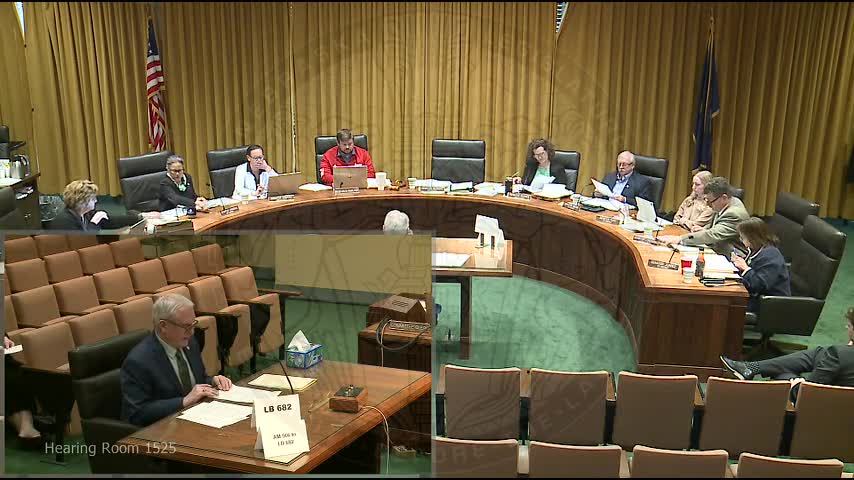
LINCOLN, Neb. — Lawmakers heard testimony on LB682 with AM566, a proposal from Sen. Dave Murman that would require school superintendents to file statements of financial interest and limit some forms of outside employment while in office.
Sponsor’s rationale: Murman said the change is intended to prevent conflicts of interest and preserve public trust where district leaders make procurement and contract decisions. The sponsor cited a national example of a superintendent who also had private consulting relationships with firms that received district business, and said the measure is a basic accountability step for officials whose compensation is paid by taxpayers.
What the amendment does: AM566 narrows the original language and would allow several outside income sources (farm/ranch, investments, real estate), but it would limit other outside paid work and require a public financial disclosure form. The sponsor said he was developing a further tweak to permit adjunct university appointments after hearing early feedback.
Support and concerns: Several witnesses supported transparency measures for public officials. Doane University and a program director asked that the measure explicitly allow superintendents to serve as adjunct instructors for higher‑education programs that prepare school leaders, saying acting superintendents serving as adjuncts help recruit and train future district leaders.
Legal and practical cautions: Counsel for school districts warned the bill’s restrictions could raise constitutional issues if the state targets superintendents without a rational basis for singling them out; courts have required that restrictions on outside employment be tailored and justified. Counsel also noted the law already provides tools to address misuse of public resources and that school boards have authority to set local conditions for employees.
Where it stands: Committee members asked for legal review and drafting fixes. Sponsors said they were open to adjustments to protect legitimate adjunct roles and to consult the Attorney General’s office on constitutional questions. The committee did not vote on the amendment during the hearing.
Ending: Witnesses urged careful drafting to balance public‑trust safeguards with legal protections and local control; Murman signaled willingness to refine the amendment.