Get Full Government Meeting Transcripts, Videos, & Alerts Forever!
Get email alerts on the Student Discipline Early Education topic
No spam. Unsubscribe anytime.
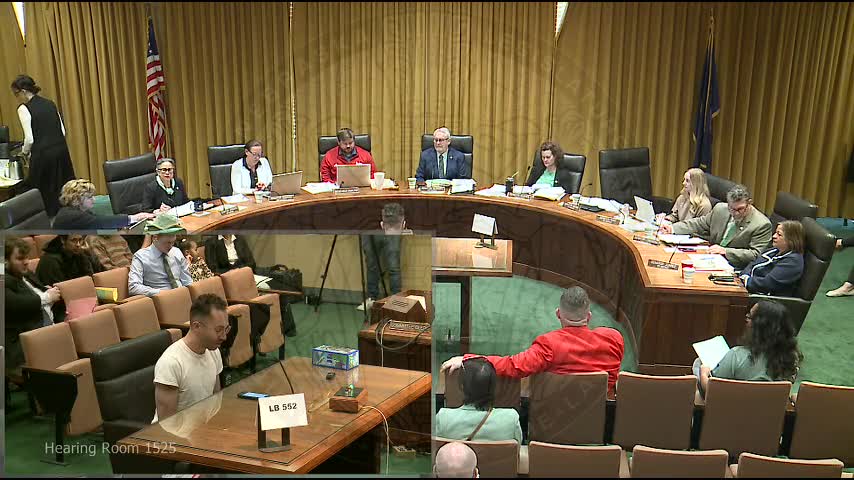
Committee hears competing bills on student discipline; debate centers on suspensions for pre‑K–2 students
Summary
Two related bills — LB430 from Sen. Dave Murman and LB149 from Sen. Ben Hansen — would change how Nebraska schools handle violent or repeatedly dangerous behavior by students in pre‑K through second grade, prompting a detailed hearing on whether limited suspension authority is necessary for safety.
LINCOLN, Neb. — The Education Committee held a joint hearing on two related measures seeking to modify rules adopted after LB705 (the committee package that limited suspension for pre‑K through second grade students). Senators Dave Murman and Ben Hansen offered distinct approaches to address violent or repeated dangerous behavior by young students while balancing the goal of keeping students in class.
What the bills say: Sen. Murman’s LB430 would add a narrowly framed exception permitting suspension when a young student’s conduct is “violent or otherwise disruptive in a manner that would risk physical injury” and would require schools that use suspension to document prior interventions and recommend resources to parents. Sen. Hansen’s LB149 (and his filed amendment AM677) similarly seeks to preserve alternative in‑school disciplinary options but to allow suspension in extreme cases so principals and teachers can maintain classroom safety.
Why lawmakers are revisiting the rule: Committee members and supporters said the COVID era saw a rise in social, emotional and behavioral issues among young children and that some school leaders describe rare but severe incidents — including fighting, running out of buildings and repeated assaults on staff or students — where removal of a child provided a pause to craft a plan. Opponents warned that expansion of suspension authority risks exacerbating the school‑to‑prison pipeline and urged investment in evidence‑based interventions.
Testimony and witnesses: Norfolk Public Schools director of student services described the administrative burden when principals must supervise highly disruptive students and urged limited authority for suspension so schools can protect other students and restore order. Other opponents including families, advocacy groups and disability advocates urged caution and pointed to Rule 51 (special‑education protections), IDEA obligations and programs such as the pyramid model and restorative practices; they urged strengthening supports rather than returning to exclusions.
Practical concerns and variations: Witnesses emphasized variation among districts — larger districts may have more capacity for in‑school alternative placements while smaller rural districts have fewer staff and options. Many testified that districts already exhaust a long checklist of interventions (behavioral plans, parent conferences, restorative practices, referrals for services) before considering removal.
Where it stands: No committee vote was taken. The hearings highlighted tradeoffs: removing an extremely disruptive student can be a short‑term safety step but can also produce long‑term harms if not paired with services and a plan to return the child to learning. Lawmakers asked for more data on how often schools exhaust alternatives and whether current statutes or resources should be adjusted instead of changing suspension rules.
Ending: Both sponsors said they were open to amendments and to working with superintendents, special‑education experts and student advocates to craft language that protects classroom safety while minimizing unnecessary exclusion.