Get Full Government Meeting Transcripts, Videos, & Alerts Forever!
Get email alerts on the Dei Policy Colleges topic
No spam. Unsubscribe anytime.
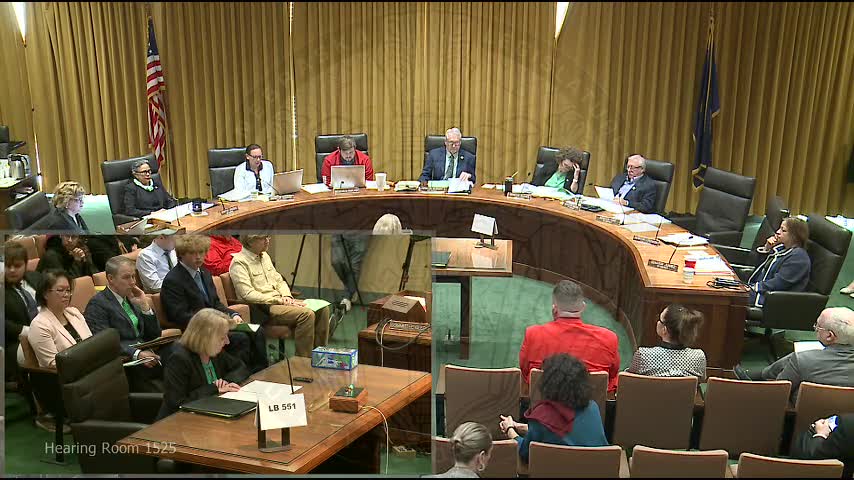
Education committee hears sharply divided testimony on LB552 to ban DEI offices at public colleges
Summary
Sen. Loren Lippincott introduced LB552 to forbid postsecondary institutions from establishing or maintaining offices or programs described as diversity, equity and inclusion, prompting more than 100 testifiers and a sharp split between supporters and opponents.
LINCOLN, Neb. — The Education Committee heard heated testimony on Legislative Bill 552, a measure from Sen. Loren Lippincott that would prohibit public postsecondary institutions from establishing or maintaining offices or programs identified as diversity, equity and inclusion (DEI) and would ban certain DEI‑related hiring or admissions preferences.
Sponsor’s case: Lippincott opened the hearing saying LB552 would bar units that “influence hiring or employment practices based on race, color, ethnicity, gender identity or sexual orientation” and would forbid programs that he described as promoting “concepts such as systemic oppression, privilege and power structures.” He framed the bill as protecting merit, free speech and “preventing ideological coercion” on campuses (Sen. Loren Lippincott, introducer).
Opposition from system leaders and campus communities: University of Nebraska President Jeffrey Gold and multiple campus leaders testified in opposition, saying the university is already reviewing policies to ensure federal compliance and that DEI offices support students’ educational success. Gold told the committee the university complies with federal guidance and that, as of the hearing, no state dollars were being spent on DEI programs at the system campuses. He also said the Board of Regents is reviewing bylaws and practices to respond to evolving federal guidance (President Jeffrey Gold, University of Nebraska).
Students, faculty, civil‑rights and nonprofit groups provided the bulk of opposition testimony. Student leaders, faculty senate presidents, the NAACP, the ACLU of Nebraska, LGBTQ and Latinx advocacy organizations and education associations warned LB552 would chill speech, erode campus supports for historically marginalized students and deter faculty and students from coming to Nebraska. Several witnesses said DEI initiatives identify and address educational disparities and help with student retention, mentoring and access to scholarship and support services.
Proponents and arguments for the bill: Proponents — including several private citizens — argued DEI initiatives promote identity politics, lower academic standards and can impose ideological conformity. Some cited studies they said show limited effectiveness for short‑term diversity training. The sponsor and some proponents also pointed to recent campus actions in Nebraska where DEI offices were closed and said the bill would codify restrictions to avoid re‑establishing those offices.
Legal and practical issues raised: Committee members asked whether LB552 would conflict with federal civil‑rights law or with Nebraska’s 2008 voter‑approved amendment banning preferential treatment based on race, ethnicity or national origin. Lippincott said the bill is intended to reinforce merit‑based policies; other senators pressed for clarity on whether the bill would ban teaching historical events that reference race or on whether extracurricular, affinity or academic‑support programs would be affected.
Public comment totals: The committee clerk reported large public engagement online: 74 proponents, 333 opponents and one neutral for LB552. The hearing featured a broad cross section of testimony that cut across student groups, civil‑rights organizations, university leaders and private citizens.
Next steps: Committee members did not take a vote and asked for further legal and policy review. University witnesses urged the board of regents and institutions to continue policy reviews and engage with the Department of Education when federal guidance changes; opponents urged the committee to indefinitely postpone or reject LB552.
Ending: The hearing underscored a partisan and cultural debate about campus practices and curricula and illustrated how higher‑education policy decisions intersect with legal, administrative and community priorities.