Get Full Government Meeting Transcripts, Videos, & Alerts Forever!
Get email alerts on the Supported Employment topic
No spam. Unsubscribe anytime.
Task force on supported employment proposed to increase workforce participation for Nebraskans with disabilities
Summary
Sen. Danielle Conrad introduced LB336 to create a time‑limited task force to study and recommend policy changes to increase supported, competitive employment for Nebraskans with intellectual or developmental disabilities. The bill builds on recent reports and a 2024 action plan and would coordinate agencies, employers and advocates.
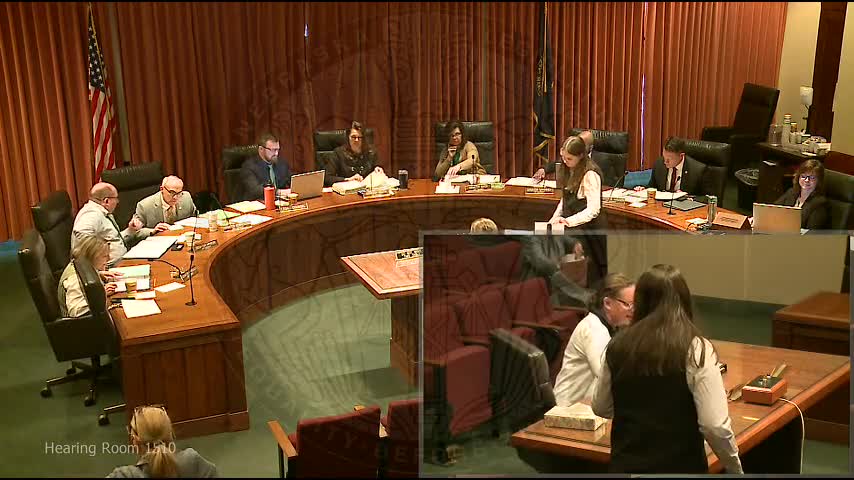
Senator Danielle Conrad introduced LB336 to establish a task force on supported employment aimed at removing barriers that limit workforce participation for Nebraskans with intellectual and developmental disabilities (IDD).
Conrad said the measure revives work started in recent years — including a 2023 report by Dr. Lisa Mills and a 2024 statewide action plan — and would convene stakeholders from business, labor, disability advocacy groups, state agencies and affected families to develop actionable policy recommendations. The task force would focus on competitive, integrated employment (not sheltered workshop or purely congregate day services) and on supports such as job search assistance, job coaching, assistive technology and steps to reduce benefit cliffs that discourage work.
Multiple disability advocates and provider organizations testified in support. Kristin Larson of the Nebraska Council on Developmental Disabilities described prior research and a 2023 report that recommended a statewide action plan; the council co‑hosted a 2023 supported‑employment summit and later funded follow‑up work and recommended a continuing, coordinated effort. Stacy Pfeiffer of the Enable Savings Plan and Brad Meurrens of Disability Rights Nebraska supported the task force and highlighted how coordinated engagement with chambers of commerce and employers would increase buy‑in and real job opportunities. Witnesses said the task force would add accountability and make it easier for agencies to coordinate policy changes and pursue strategies that avoid benefit cliffs for workers with disabilities.
Committee members asked whether a statutory task force was necessary versus an informal, voluntary coalition. Conrad said the statute imposes little to no fiscal cost (the bill carried a $0 fiscal note), would be time‑limited, and could produce a report with specific policy recommendations, including ways to reduce negative impacts on benefit eligibility. Witnesses suggested the task force composition should include business and chamber representation so employer concerns and recruitment strategies are part of the work.
Why it matters: Nebraska faces workforce shortages and lower employment rates among people with disabilities than among the general population. Proponents argued that supported employment expands meaningful work opportunities, offers mental‑health and independence benefits to workers, reduces reliance on public programs, and can increase labor force participation with appropriate supports and legal fixes.
The hearing closed after proponents’ testimony; the bill was positioned as a continuation of multi‑year stakeholder work and a venue for producing concrete, fiscally aware policy options for the Legislature to consider.