Get Full Government Meeting Transcripts, Videos, & Alerts Forever!
Get email alerts on the Higher Education Tenure topic
No spam. Unsubscribe anytime.
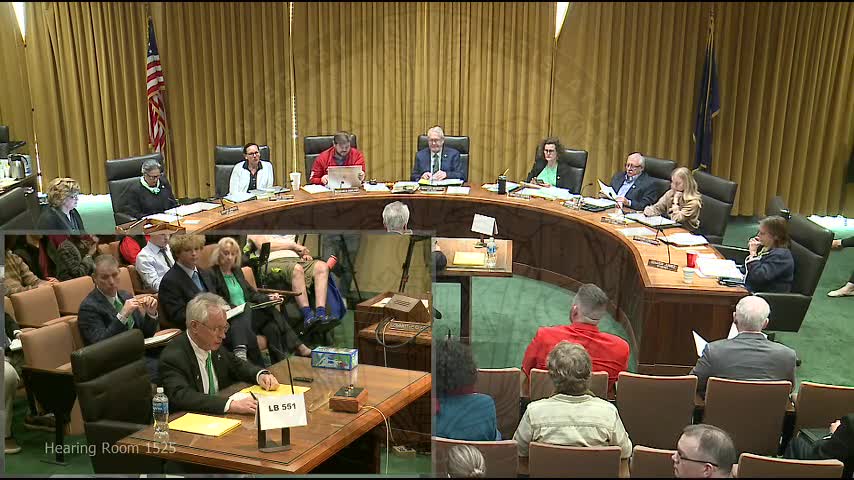
Nebraska committee hears hours of testimony on LB551 to curb future tenure at public colleges
Summary
Sen. Loren Lippincott told the Education Committee LB551 would end the practice of granting tenure going forward at Nebraska public higher‑education institutions; dozens of professors, students and university leaders testified, largely opposing the bill and citing academic freedom, recruitment and research impacts.
LINCOLN, Neb. — Lawmakers heard more than two hours of testimony and public comment on Legislative Bill 551, a proposal from Sen. Loren Lippincott that would prevent public higher‑education governing boards from granting tenure going forward and require alternative employment agreements and standards for faculty evaluations.
Lippincott (R‑34) opened the hearing saying LB551 “removes the authority from the Nebraska Regents to grant tenure going forward” and would require governing boards to adopt employee agreements, acceptable grounds for termination and annual performance evaluations (Sen. Loren Lippincott, introducer). He told the committee a recently filed fiscal note estimates the bill could cost about $8.1 million to implement.
Why it matters: proponents said imposing clearer review metrics addresses taxpayer concerns about accountability. Opponents — including university leaders, tenured faculty and student leaders — warned the change would harm recruitment and research capacity, threaten academic freedom and put the University of Nebraska at a competitive disadvantage.
University of Nebraska President Jeffrey Gold testified against the bill, saying tenure is integral to the university’s ability to recruit and retain faculty, to compete for research funding and to protect academic freedom. “Tenure is not a shield from annual reviews,” Gold told the committee, adding the University continues post‑tenure review processes and annual evaluations for all faculty (President Jeffrey Gold, University of Nebraska). He said losing tenure protections could jeopardize the university’s standing among research institutions and damage long‑term economic benefits tied to research activity.
Faculty and student voices: multiple tenured faculty and faculty‑union representatives described rigorous pre‑ and post‑tenure review processes and warned that removing tenure would discourage applicants and risk faculty departures. Julia Schleck, a tenured professor at UNL, provided historical context for U.S. tenure systems and said tenure was created to protect scholarly inquiry and the public good. Student leaders told the committee that tenure supports classroom instruction and helps retain faculty who mentor students and secure research dollars.
Questions and legal concerns: Committee members pressed whether LB551 would run afoul of Nebraska law limiting the Legislature’s authority to dictate campus policy (the Exon line of cases). Lippincott said the bill is intended to work “with” — not against — university leadership; other senators raised that precedent repeatedly and urged clarity on how the measure would avoid legal problems.
Fiscal and practical notes: witnesses from the university and state colleges emphasized possible fiscal impacts, including recruitment costs if tenure is eliminated and the potential effect on endowed chairs and funded research. Chancellors and campus representatives described varied campus practices — annual evaluations, post‑tenure review processes and student course evaluations — and cautioned that statutory change could have unintended consequences.
Where it stands: The hearing produced extensive public comment (online submissions recorded 18 proponents, 99 opponents and one neutral for LB551). Committee members did not take a vote at the hearing. Sponsors and opponents said they are open to continued discussion about implementation language and narrow fixes, and some witnesses asked for more legal analysis of how the proposal would interact with existing constitutional and case law.
Ending note: Testimony underscored a tension familiar to state higher‑education policy: elected officials and taxpayers pressing for accountability, and campus leaders and faculty pressing for protections they say enable scholarly independence and competitiveness. The bill’s next steps will depend on follow‑up work by sponsors and further committee deliberations.