Get Full Government Meeting Transcripts, Videos, & Alerts Forever!
Get email alerts on the Local Improvement Districts topic
No spam. Unsubscribe anytime.
Nampa officials review Local Improvement District process after years-long construction timelines and delinquencies
Summary
City CFO Doug Ray Seed told the Council that the city’s Local Improvement District (LID) program is voluntary and useful but creates budget and collection risks when projects take years to complete. Staff will pursue internal changes and bring recommended ordinance or policy updates back to Council.
Nampa Chief Financial Officer Doug Ray Seed briefed the City Council at a special meeting on the city’s Local Improvement District (LID) program and outlined financial and operational concerns tied to long construction timelines and delinquencies.
Seed told council members that the LID program “provides property owners an economical way to pay for hookup or construction costs or upgrading various utilities and infrastructure” and that LIDs are now run on a voluntary basis. He said the city typically advances construction costs and later bills participating property owners through utility-billing processes once the LID is confirmed and the city authorizes billing.
The discussion matters to taxpayers and property owners because of the lag between construction and billing. Seed said the average interval from LID creation to confirmed billing is 3 years and 8 months; the shortest was 1 year, 1 month, and the longest about 8 years, 5 months. During that interval the city fronts money, and if staff does not complete confirmation and record a lien, Seed said the city can lose the ability to recover those costs if a homeowner sells or the property changes hands.
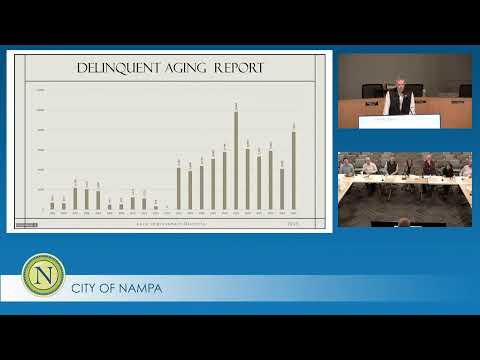
Seed described the program’s scope and current status: the city is managing nine active LIDs, six matured LIDs and four unconfirmed LIDs. He said the city’s active and matured LIDs represent 88 properties, with about 30% of accounts delinquent and roughly 20% of the dollar total — about $73,000 — delinquent. Seed also told the Council the LID fund has a cash balance of roughly $272,500 and the current active LID balance is about $288,000. He said delinquency had been roughly $140,000 a few months earlier but had fallen to about $73,000 after proactive billing and outreach by utility-billing staff.
Seed flagged the program’s operational tensions: working with contractors during their available capacity can reduce construction costs for homeowners but also stretches projects across many years, increasing the city’s exposure. He asked the Council to consider whether the city should “frame [a LID] with a general time frame in mind rather than leaving it open for possibly 8 years.” That phrasing appeared in the presentation as a question for Council consideration rather than a directive for immediate action.
Council members asked procedural and legal questions during the discussion. Seed said the city does not record a lien on individual properties until the LID is formally completed and the Council approves the start of billing. He said county practice affects collections: Ada County (Meridian) allows LID charges to be rolled into property tax billing, but Canyon County has refused the city’s request to roll Nampa’s LID charges into property tax billing, so Nampa must bill LID assessments manually twice a year.
Daniel (staff) told the Council that the city’s current LID creation ordinance lists all properties at creation and no longer adds properties mid-process, which he said provides a notice of a pending lien but does not by itself put the city in a legally enforceable lien position prior to formal confirmation and billing. Seed and Daniel discussed seeking a legislative change to allow a pre-lien or pre-notice to appear in title searches so prospective buyers would see pending LID obligations before a sale.
Council members and staff agreed the issue is primarily operational and administrative but may also require ordinance or policy changes. Seed recommended internal meetings between finance, utility billing and engineering to tighten the process, accelerate confirmations, and avoid extended periods when the city has advanced funds without recorded liens. The Council did not take final legislative action at the meeting; Seed said staff will return with recommendations after internal discussions.
Votes at a glance: a motion to adjourn the special session into executive session was moved and seconded and carried on a roll call. The transcript records “Rodriguez: Yes,” “Jangula: Yes,” and “Reynolds: Yes” before the meeting moved to executive session to “consider preliminary negotiations involving matters of trade or commerce” under the legal citation read as “74061A.”