Get Full Government Meeting Transcripts, Videos, & Alerts Forever!
Get email alerts on the Student Health Vaping topic
No spam. Unsubscribe anytime.
Students ask board to approve ‘Halo’ vape detectors for high school bathrooms
Summary
A student group asked the Trussville City Schools board to allow next steps to install hardwired 'Halo' sensors in student restrooms to detect vaping, estimating phase 1 at about $27,000 for 16 sensors and offering potential funding partners.
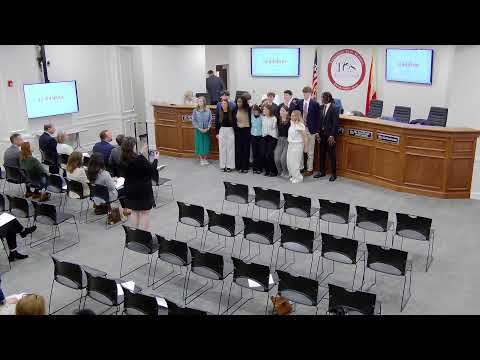
Three Hewitt-Trussville High School seniors asked the school board for permission to advance a proposal to install hardwired "Halo" sensors in student bathrooms that detect vaping, smoke and certain audio triggers while preserving privacy by not using cameras.
"We are the HTHS Hope Initiative Group," said Fallon Dement, a senior, explaining the group’s objective to reduce vaping and long restroom lines and to improve student comfort and safety. Dement said the sensors detect vape, smoke, THC and abnormal sounds such as shouting or gunshots and can be set to flag keywords such as "help." She said the sensors do not use cameras and therefore protect student privacy.
Dement and fellow seniors Mackenzie Stewart and Janie Steele outlined a two-phase plan: an initial installation covering 16 student-used restrooms in academic wings at an estimated cost of about $27,000, and a full buildout of all 26 student restrooms at an estimated $44,000. They said the sensors would be hardwired and do not have batteries, and that a local vendor, Electronic Communications Incorporated, offered to sell sensors at cost and install them for free.
Possible funding sources students named included the Huskies Together Foundation, the Trussville City Schools Foundation and assistance from the Trussville Police Department and school resource officers. The students asked the board for approval to take "next steps" — meaning further investigation, cost confirmation and meetings with suggested partners.
Board members asked technical and operational questions. One board member asked how the sensors would operate during a power outage; students replied they expected normal operation to resume when power is restored and that the district’s facilities team would need to confirm generator or backup capabilities.
The board did not vote on the request; students were seeking permission to continue planning and to pursue funding and cost confirmations.