Get Full Government Meeting Transcripts, Videos, & Alerts Forever!
Get email alerts on the Protective Order Transfer topic
No spam. Unsubscribe anytime.
Bill would require transfer of protective orders to align custody/divorce rulings; family-law groups support measure
Summary
A bill presented for Senator Zaffirini would require protective orders to be transferred to the court handling a related custody or divorce case, enabling the later court to align protective-order terms with its custody and property rulings.
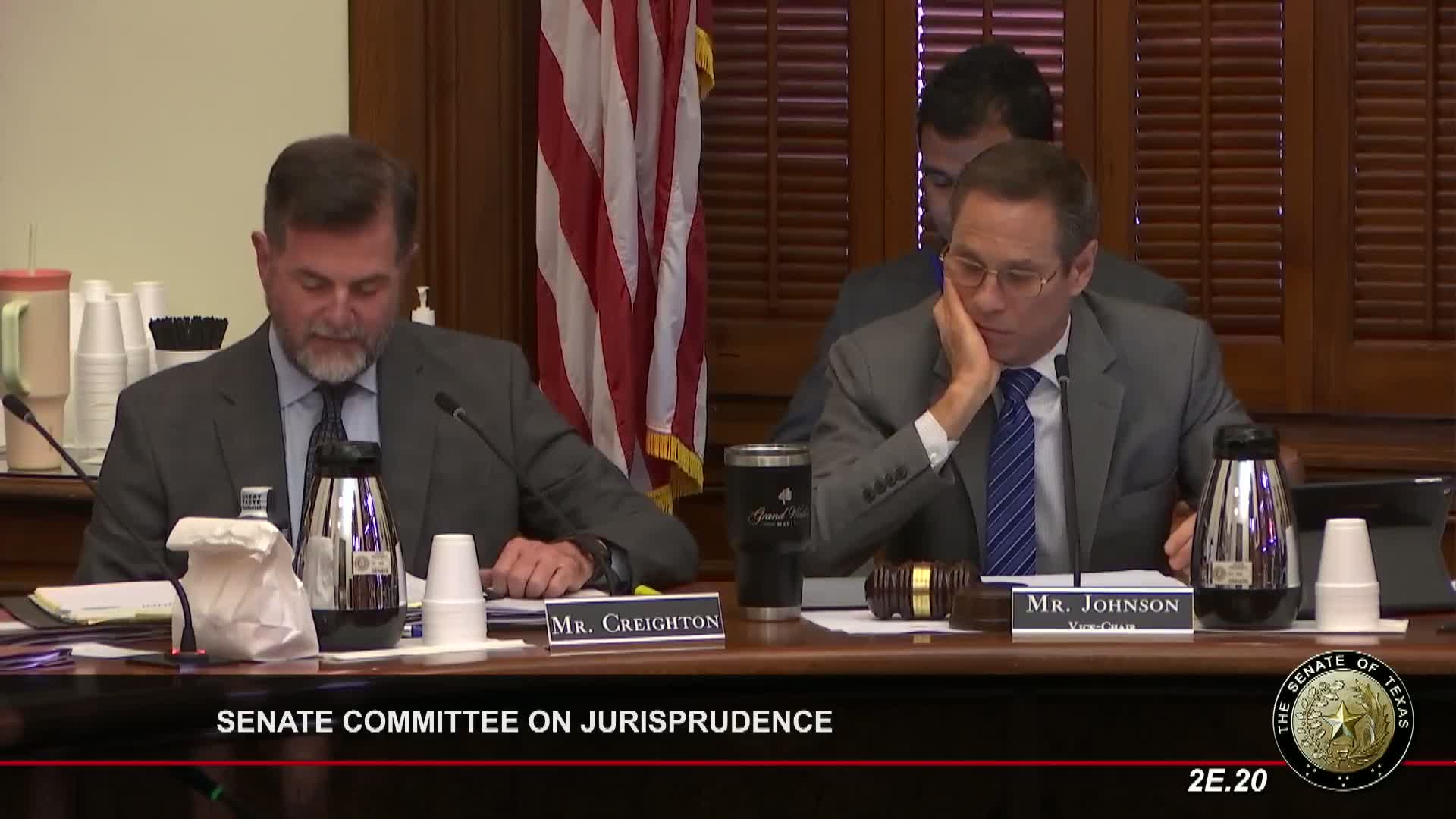
Senate Bill (file number discussed in committee as 15509/1559) presented by Senator Creighton on behalf of Senator Zaffirini would require a protective-order issuing court to transfer the protective order to a court handling a later divorce or suit affecting the parent-child relationship so the receiving court can align protective-order terms with its custody and property rulings.
Sponsor materials and testimony said the current statutory framework permits—but does not require—transfer of protective orders, which can leave conflicting orders in place when a different court later issues custody or divorce rulings. Lisonbee Faulk, a family-law attorney testifying for the Texas Family Law Foundation, told the committee four courts of appeals (Texarkana, El Paso, the Fourteenth district in Houston, and Amarillo) have asked the legislature to address the problem. Carl Hayes, presiding judge of the family court in Hays County (speaking for himself), said he frequently sees situations where protective orders and child-related suits are filed in different counties and courts have produced conflicting orders, producing confusion and delay.
Judge Hayes and other proponents acknowledged concerns by victim-advocacy groups about forcing venue changes but said the bill’s transfer would occur only when a suit affecting the parent-child relationship has been filed, which currently requires parties to litigate in multiple courts. Proponents argued mandatory transfer would reduce duplicative litigation burdens on victims and families. The committee heard proponent testimony and left the bill pending.