Get Full Government Meeting Transcripts, Videos, & Alerts Forever!
Get email alerts on the Child Support Law topic
No spam. Unsubscribe anytime.
Bill would let courts order retroactive child support from date of conception; committee hears support and technical questions
Summary
Senate Bill 942 would allow courts to order retroactive child support beginning at the earliest possible date of conception and permit reimbursement for prenatal and postnatal medical expenses. Supporters said the change would reduce financial strain on single mothers; the committee took testimony and left the bill pending.
Senate Bill 942, presented by Senator Hughes, would authorize courts to set child support obligations retroactively from the earliest possible date of conception and allow reimbursement for a mother’s reasonable prenatal and postnatal health-care expenses.
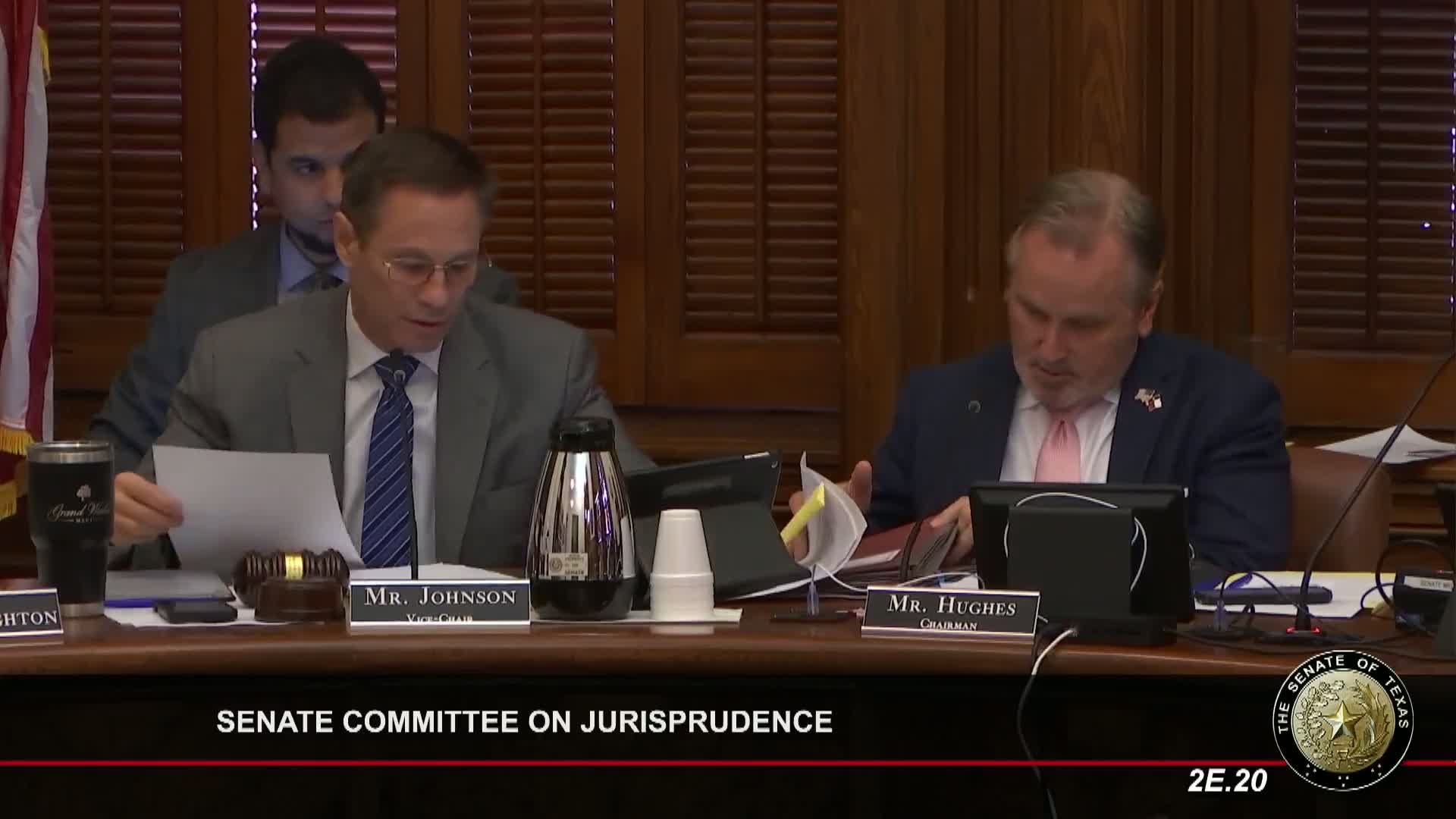
The bill’s author told the Senate Committee on Jurisprudence the measure responds to prior pro-life legislative debates and aims to "provide women the tools they need to care for their children and choose life." He said the bill would permit a woman to receive child support from a man adjudicated or acknowledged as the father beginning on the earliest possible date of conception.
Noah Torres, a policy scholar at the Texas Public Policy Foundation, testified in favor and cited state demographic and income data. Torres said the bill “recognizes that fathers have a duty to provide for their children regardless of their involvement with the child's mother,” and argued retroactive support would help mitigate financial stress faced by single mothers. Joel Rogers, Associate Deputy Attorney General for Child Support Legal Services, told the committee the bill “fits within the framework that we already seek retroactive child support on in most of our establishment cases” and that courts would retain discretion to order retroactive support.
Committee members asked technical questions about whether conception is the appropriate start date and about interactions with Medicaid eligibility; Torres deferred Medicaid technical questions to Medicaid policy experts. No opposing witnesses spoke; public testimony closed and the bill remains pending.
The committee transcript records the bill layout, public testimony from policy and Attorney General Office witnesses, questioning by members, and the chair’s announcement that the bill was left pending.