Get Full Government Meeting Transcripts, Videos, & Alerts Forever!
Get email alerts on the Governance And Administration topic
No spam. Unsubscribe anytime.
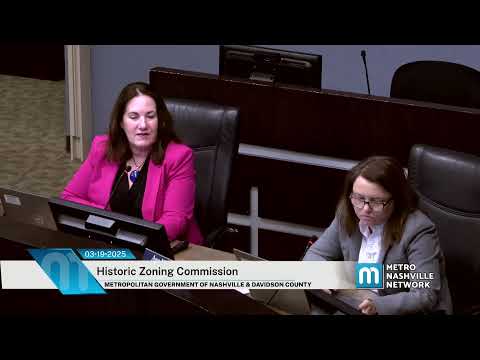
Historic Zoning Commission urges care after Metro Council passes BL 2025-742; forms transition review committee
Summary
After Metro Council passed BL 2025-742, the Metro Historic Zoning Commission reported a split but urgent response: a Feb. special committee issued a statement and the commission appointed a transition committee to review a forthcoming memorandum of understanding with Planning.
The Metro Historic Zoning Commission described a fast-moving policy shift after Metro Council passed BL 2025-742 and said it will review the details of a transition to the Planning Department through a newly created transition committee.
Commissioner David Price reported at the commission meeting that a special-called committee met Feb. 26 and drafted a statement outlining the commission’s view of the legislation and its effects. The commission also appointed a joint transition committee to review a memorandum of understanding (MOU) that will govern operations during the planned move of historic zoning staff to Planning.
Why it matters: BL 2025-742 changes the administrative home for historic zoning staff and has prompted public concern about how design-review authority and the staff–commission relationship will operate going forward. Commissioners said the bill and the process that produced it have stirred public debate and that rapid legislative timing left little room for public review.
The special committee’s statement, read into the record by Commissioner Price, said the commission: - Is not proposing amendments beyond those suggested by Council Member Benedict at the time of the discussion; - Stated its core goal is to strengthen preservation across Nashville and Davidson County; - Expressed support for the autonomy of the Metro Historic Commission and its staff and, in that context, supported removing the Metro Historic Commission Department from aspects of the bill as it was then drafted; - Criticized the Metropolitan Historic Zoning Review (HDR) report as flawed and not inclusive of many voices; and - Noted the urgency of action because of pending state legislation that could preempt local review.
Commissioners and the chair described extensive public engagement during the special committee meeting: residents, neighborhood leaders, council members and others attended and testified. Some commissioners said they supported the committee’s positions; others said they would have preferred a different approach. Several commissioners and the chair criticized the speed and apparent back-room nature of the process, saying the HDR report and council action did not allow adequate public review.
Commission action: The commission’s chair appointed a transition committee to review the MOU between Planning and the historic zoning entities and to meet jointly with the Metro Historic Commission (MHC). The chair said the executive committee members named to the joint review are Chair Winn, Vice Chair Roast, and Robin Ziegler; the commission later noted Commissioner David Price and Commissioner Beth Kachen will serve on the joint committee representing MHZC. Legal staff advised an MOU is typically nonbinding between departments but can be detailed and operational in practice.
What remains unsettled: Commissioners repeatedly said the ordinance itself does not immediately change existing overlays and that the commission will continue to apply current design guidelines and procedures. Multiple speakers said they will watch negotiations and any future changes to appointments, procedures or authority closely.
The commission asked staff to forward the special committee’s comments to Metro Council, the mayor’s office, the vice mayor, and the directors of Planning and the Metro Historic Commission.