Get Full Government Meeting Transcripts, Videos, & Alerts Forever!
Get email alerts on the Cdl English Proficiency topic
No spam. Unsubscribe anytime.
Senate panel rejects bill allowing officers to remove CDL holders from service over English proficiency
Summary
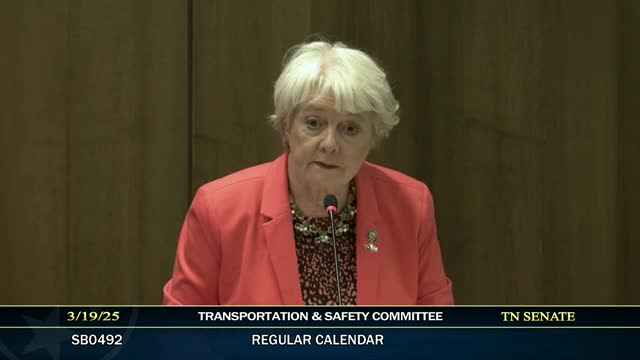
A proposal to let enforcement officers place commercial drivers out of service for insufficient English skills failed in the Tennessee Senate Transportation and Safety Committee after providers, state safety officials and multiple senators raised concerns about enforcement, international drivers and industry impacts.
The Tennessee Senate Transportation and Safety Committee voted 6-3 on Oct. 12, 2025, to defeat Senate Bill 492, a sponsor-led proposal that would have allowed an officer to issue an out-of-service order to a commercial driver if the officer determines the driver cannot read or speak English sufficiently to understand traffic signals, converse with the public and complete required records.
The bill’s sponsor, Senator Raum Bolling, told the committee the measure was intended to ensure that drivers of large commercial vehicles can “read and converse to the point of understanding the traffic signals and to be able to communicate with an officer should he be stopped.” He also noted the bill would not take effect until the federal government provided written assurance that the state could implement the change without jeopardizing federal transportation funds.
Supporters and opponents disagreed on how common the problem is and how enforcement would work. Elizabeth Stroker, legislative director for the Tennessee Department of Safety, said the department was “comfortable” with the bill as amended because the amendment made the law contingent on explicit federal approval and assurances that federal funding would not be jeopardized. A Department of Transportation representative expressed similar caution that federal funding and interstate credentialing issues could be implicated.
Several senators said the bill posed practical and policy problems if enacted. Senator Brent Bailey and others argued that a roadside assessment of language ability could be subjective and could disproportionately affect drivers from many nationalities who work in U.S. freight and trucking. Senator Briggs and others described the potential national-scale disruption if many commercial drivers were removed from service, noting that U.S. transportation depends heavily on drivers who are not native English speakers.
Legal staff clarified earlier committee discussion: federal regulation already requires that a person seeking a commercial driver’s license (CDL) demonstrate knowledge and skills in English to obtain a CDL. Meg Moore of the Office of Legal Services explained that the bill excluded violations for merely not carrying a license and, as drafted, would apply to drivers who do not hold a valid CDL or comparable credential.
After extended debate the committee recorded the roll call: Senator Potee, Senator Powers and Senator Taylor voted in favor; Senators Bailey, Briggs, Campbell, Hatcher, Seale and Chairlady Massey voted no. The committee’s clerk announced the bill “fails for lack of the votes.”
The bill’s author said the measure was contingent on federal action and characterized the sponsor’s intent as safety-focused; opponents argued that the approach risked unfair enforcement and could disrupt freight operations if applied broadly. The committee did not advance the bill.