Get Full Government Meeting Transcripts, Videos, & Alerts Forever!
Get email alerts on the Licensing Administration topic
No spam. Unsubscribe anytime.
Committee OKs wide licensing reforms, allows state boards to meet electronically
Summary
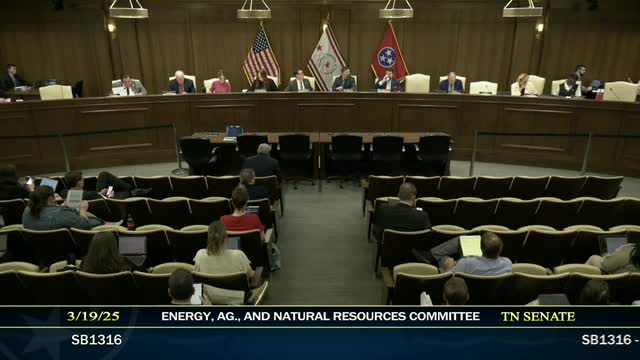
The Senate Energy, Agriculture and Natural Resources Committee advanced Senate Bill 13-16, a multi-part licensing reform package that merges some boards, changes terms and licensing rules across occupations and permits state boards to meet electronically; the bill was sent to the Commerce Committee.
Senator Joey Yeager, chairman of the Senate Energy, Agriculture and Natural Resources Committee, moved Senate Bill 13-16 — presented as an administrative licensing and board-reform package — out of committee, saying the bill aligns state boards with modern practices and reduces administrative costs.
The bill, which Yeager described as the "Less/Lehi Is More Act of 2025" in his remarks, would consolidate or adjust several professional boards and licenses, including merging the professional soil scientist license with geologists, creating a new license category for certified public accountants with additional educational requirements, and moving certain licensing for group homes serving people with intellectual disabilities from the Department of Mental Health to the Department of Disability and Aging. Yeager said the bill also increases term lengths for the Board of Dentistry from three to five years to match other Department of Health boards.
Why it matters: supporters said the changes are largely technical, intended to reduce duplicative requirements and lower administrative costs for boards and local governments while expanding reciprocity flexibility for out-of-state licensees. The most substantive policy change would allow members of state boards, commissions and agencies to participate in meetings by real-time electronic media; the amendment that added that provision also allows members of the public to participate remotely when boards permit public comment.
During questioning, Senator Pote said he supported streamlining but said he was "uncomfortable" with meetings that are exclusively electronic because in-person attendance allows the public to see officials' votes. Yeager replied the change is permissive, not mandatory: boards may choose to meet electronically, but must hold at least one physical meeting per year, must provide public notice and must retain and post records of proceedings. Yeager said the bill does not pay per diem for remote participants and that agencies must preserve recordings and comments for up to three years.
Action: Yeager moved the bill; Senator Seal seconded. The clerk recorded the roll call: Senator Bolling (aye), Senator Campbell (pass), Senator Harshbarger (aye), Senator Lowe (aye), Senator Oliver (aye), Senator Pote (no), Senator Seal (aye), Senator Wally (aye), and Chairman Reeves (aye). The committee recorded seven ayes, one pass and one no; the bill was referred to the Senate Commerce Committee.
Supporters framed the change as a modernization step and a way to reduce travel and per diem costs, while critics stressed preserving public access and the value of in-person oversight. The bill as reported relies on administrative rulemaking and board procedures for implementation.
Members who asked substantive questions pressed staff and the sponsor on recordkeeping, public-notice language and how enforcement would work if a board failed to meet physically once per year; Yeager said the bill includes a reporting mechanism tied to the statutory requirement.
Votes and next steps: SB 13-16 passed out of committee and is scheduled for the Commerce Committee.