Get Full Government Meeting Transcripts, Videos, & Alerts Forever!
Get email alerts on the Charter School Application topic
No spam. Unsubscribe anytime.
Nova Smart Academy founders seek approval after reworking application; focus on English learners, special education, facilities and finance
Summary
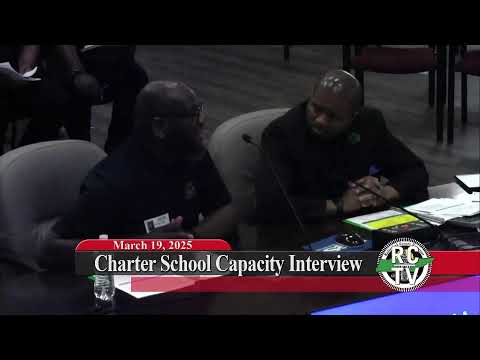
At a Rutherford County Schools capacity interview, representatives for the proposed Nova Smart Academy outlined changes to their charter application, described plans for English-learner and special-education services, detailed facility options and budgets, and explained funding and staffing strategies.
Proposed Nova Smart Academy executive director Jeremy Sager told a Rutherford County Schools committee that the charter applicant revised its proposal after the district and state raised financial and programmatic concerns last year.
Sager said the team revised its calendar from a year-round to a traditional 180-day schedule, clarified several instructional innovations and strengthened its financial and governance capacity. “We believe that college and career begin in kindergarten,” Sager said, describing the school’s emphasis on early career and college exploration. He said the applicant now projects a larger share of English learners in its opening cohorts and has adjusted staffing and program plans accordingly.
The committee pressed the group on classroom supports and compliance. Mark Gullion, director of special populations and federal programs for Rutherford County Schools, led questions about services for English learners and students with disabilities and asked for detail on assessment and intervention systems. Sager and his team said they will use MAP as a baseline assessment, FastBridge for screening and progress monitoring, and a tiered MTSS/RTI model with weekly progress checks for students receiving extra support. “We’re going to take the MAP assessment. We’re going to also do some progress monitoring,” Sager said.
On English-learner services, the applicants told the committee they plan a structured English immersion model and to hire two dedicated EL teachers in year one: one to push into core classes and one for the SIO (structured immersion) class. The team said Individualized Learning Plans (ILPs) for ELs will be maintained by licensed ESL staff under oversight from the assistant principal responsible for Scholar Access. Sager also noted the team reviewed Tennessee Department of Education guidance and updated its plans after the state moved from the WIDA model to the newer ELP standards (EPLAs).
Special-education supports will combine school staff with contracted services. The applicants said they plan two licensed special-education teachers who will “push in” to English and math classes and will partner with a vendor (described in the application as Project Play) to supply additional services such as occupational therapy, physical therapy and speech-language pathology. The presenters said Project Play can provide on-campus staff “based on the students that have been identified” and that the school budget includes contingencies in case vendor capacity is limited. The team said they would hire additional in-house staff if data or demand requires it.
Committee members repeatedly sought assurances about identifying and serving students who do not meet grade-level expectations but do not qualify for special programs. Sager said every student will receive baseline screening, regular interim assessments, and daily or weekly interventions as needed; he described project-based learning, small-group instruction and a built-in 60-minute daily RTI block as part of the model.
Boarding, facilities and security were also central topics. The applicant described two facility options, including a possible co-location at a church on Ridley Street in Smyrna; both options require modifications, and the team acknowledged the chosen site lacks a storm shelter. The presenters said they have an architect and broker assisting with feasibility and estimated the budgeted line items (HVAC, security upgrades, ADA work, storm-shelter options) based on those consultations. The group noted Building Hope has committed up to $250,000 to support facilities if the school meets certain criteria, and the team plans to pursue the federal/state charter facilities grant (they cited an available amount “up to $500,000” in the interview).
On finance and fundraising, the applicants said they had $515,000 secured post-authorization and were pursuing additional grants, including a New Schools Venture Fund opportunity and other development sources. Daniel Cadibaugh, the proposed treasurer, said the budget includes conservative assumptions and contingency plans to operate with enrollment shortfalls; the presenters said they can operate with a modest enrollment decline but would adjust operational spending and fundraising if revenue falls further. The group also described an internal plan to control spending and strengthen development capacity.
Staffing, compensation and professional development were detailed. The applicants proposed a two-adult classroom model (one licensed teacher plus a teacher-in-residence or co-teacher), daily blended-learning blocks, 17 full professional development days pre-opening and weekly PD on Wednesdays. They proposed starting salaries above local minimums: a base licensed-teacher salary of $55,000, $59,000 for a master’s, $63,000 for an education specialist and $67,000 for doctoral-level staff, with a 2% annual increase. Sager said the board recruited finance and real-estate professionals and had added Board on Track for governance support and BES fellowship follow-on support for founding leaders.
The committee asked about enrollment and outreach. The applicants said they contacted “over 350 community members,” had relationships with more than 15 child-care providers, collected 200-plus interviews/Zoom calls/surveys/petitions, and had “60 letters of support” and roughly 30 families who had expressed interest; presenters said 23 families were ready immediately with 7 more asking follow-up questions. The team stated an “aggressive goal” of 50 or more applicants for the initial kindergarten/first-grade seats and said they plan targeted transportation routes and bus vendor procurement to help economically disadvantaged families access the school.
Rutherford County committee members said they will review the capacity interview when they reconvene and plan to make a recommendation to the school board, which will vote on approval. The committee chair said the panel will finalize scores at its April meeting and present a recommendation to the full board at the work session on April 22, with a potential vote April 24.
Although the applicants described staffing, instructional and facility contingencies, committee members pressed repeatedly for documentary evidence such as intent-to-enroll forms (the applicants said surveys and web forms were available and that they would furnish copies) and for clearer documentation of vendor commitments. The applicants acknowledged those needs and said they would provide additional documents to the committee.
The capacity interview produced no formal vote; the panel will continue its review and submit a recommendation to the Rutherford County Schools board.