Get Full Government Meeting Transcripts, Videos, & Alerts Forever!
Get email alerts on the Emotional Support Animals topic
No spam. Unsubscribe anytime.
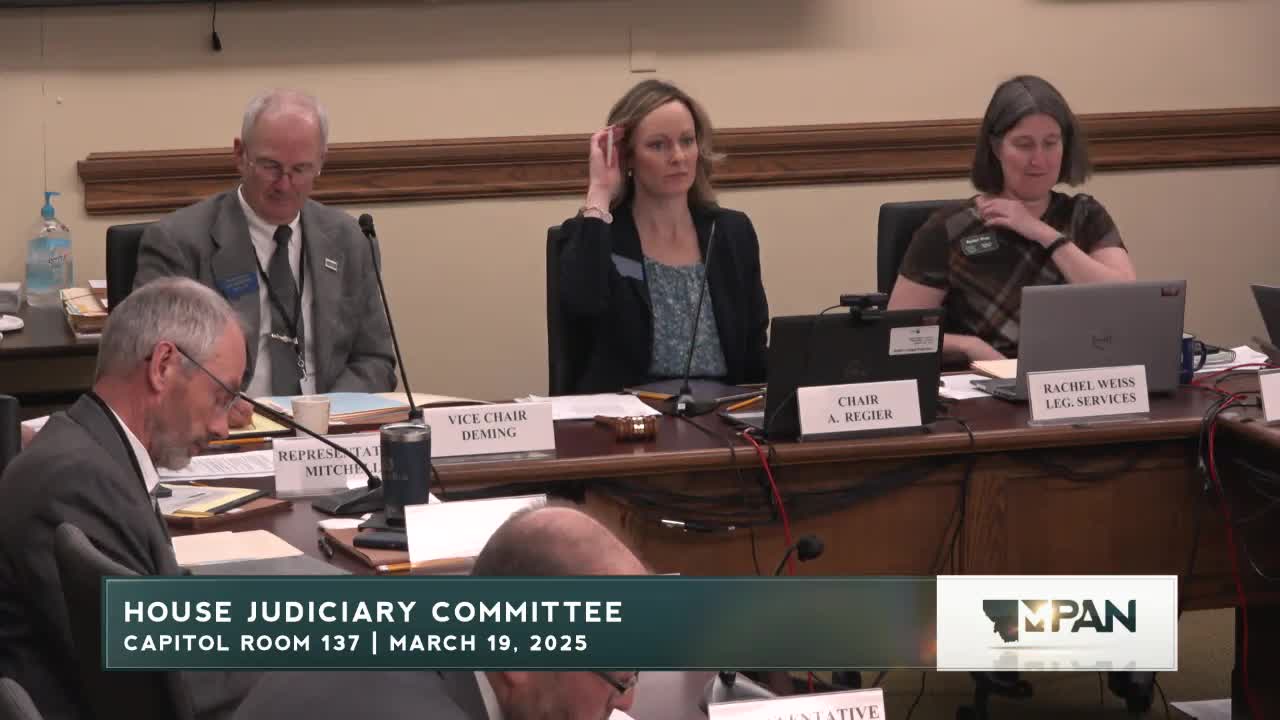
Committee hears landlords, disability advocates on emotional-support-animal verification bill
Summary
Senate Bill 149 would tighten documentation for emotional support animals in housing; proponents said online 'certificates' are frauds that pressure landlords, while Disability Rights Montana warned about potential Fair Housing Act conflicts and unintended burdens for students and out-of-state tenants.
Senate Bill 149, which would clarify documentation and practitioner standards for emotional-support animals (ESAs) in housing, drew supporters who said online certificates are fraudulent and opponents who warned the bill may conflict with federal Fair Housing rules and create liability for landlords.
Sponsor Sen. Denley Loge told the House Judiciary Committee the bill is intended to curb scams: “people go online, they buy this certification, total fraud,” he said, and landlords are pressured to accept documents issued with no examination or established relationship. John Sinrud of the Montana Landlord Association said the association supports clearer rules to stop online vendors selling ESA certificates and described an outreach plan to allow reasonable accommodation of out-of-state tenants with legitimate documentation.
Didi (Dee Dee) Baker, who runs a veteran service-dog training organization, told lawmakers that providers regularly get calls from people seeking ESA certification and that the bill’s requirement for a practitioner–patient relationship would protect both tenants and landlords. Disability Rights Montana’s Kona Franks Ongoy said the group shares concerns about online fraud, but cautioned the committee that federal HUD guidance treats internet-only documentation as insufficient and that requiring Montana licensure or a specific form could conflict with the Fair Housing Act and create liability for municipalities and colleges that host many out-of-state students.
Sponsor Loge said the draft would still accept existing out-of-state provider documentation for incoming tenants and that he was willing to work with Disability Rights Montana on language. The committee kept the hearing open for potential amendment work but did not take a vote during the session represented in the transcript.
The record shows the bill focuses on housing accommodation procedures, clarifies who qualifies as an authorized health-care practitioner for ESA documentation in state law, and aims to reduce landlord–tenant disputes arising from online “ESA certificate” vendors. The committee’s questions concentrated on privacy, whether applicants would be forced to disclose medical details, and how colleges and rural tenants would be treated.