Get Full Government Meeting Transcripts, Videos, & Alerts Forever!
Get email alerts on the Cannabis Regulation topic
No spam. Unsubscribe anytime.
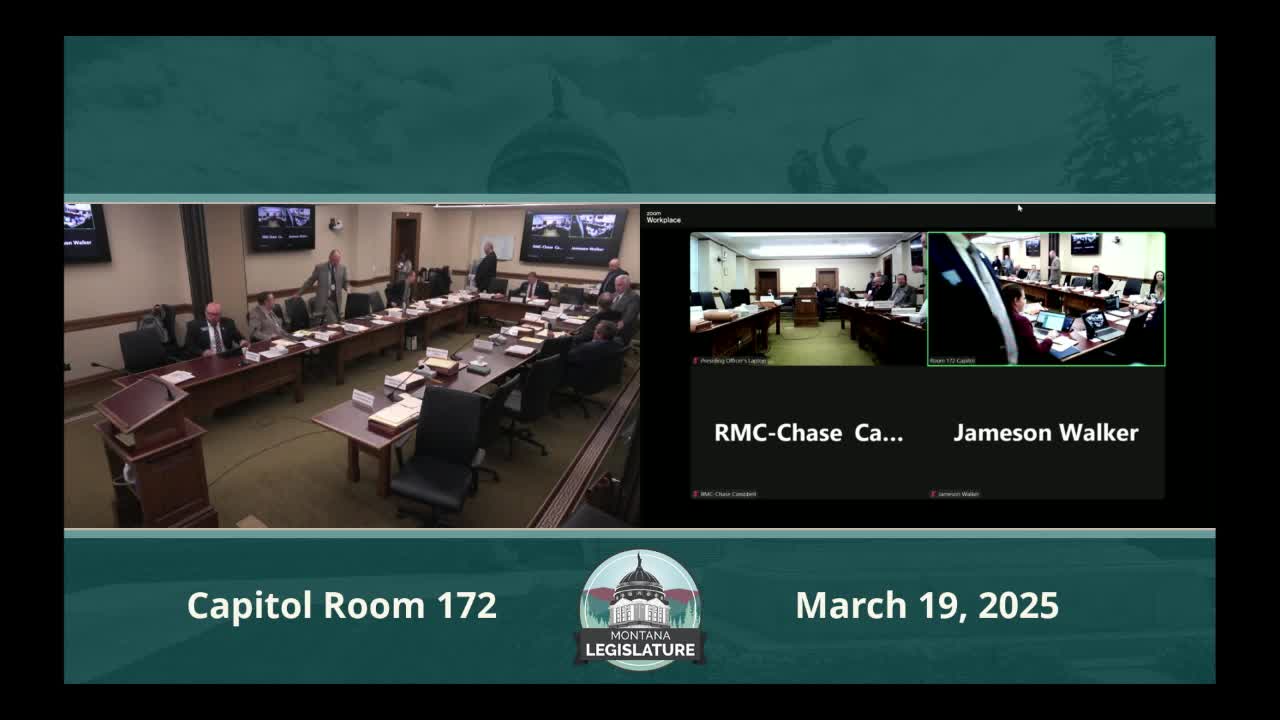
Committee hears support and opposition for two-year pause on new cannabis dispensary locations
Summary
Senate Bill 27 would prohibit issuance of new dispensary location licenses until 2027. Proponents said the temporary freeze would stabilize markets and prevent proliferation seen in other states; opponents warned of reduced access for medical patients and harm to small businesses.
Senate Bill 27, introduced from the Economic Affairs Interim Committee, drew several proponents and at least one opponent at a House Business and Labor hearing. Sponsor Senator Ken Bogner said the bill would bar the Department of Revenue (by way of the Cannabis Control Division) from issuing new location licenses for dispensaries until 2027 and described the measure as "a bridge to the next thing" that gives lawmakers and communities time to assess market growth.
Proponents including Kate Halawa of the Montana Cannabis Industry Association, Pepper Peterson and several business owners said the two-year pause would let the market stabilize, reduce the risk of speculative or rapid expansion and give communities time to evaluate local impacts. Halawa said the interim committee’s approach "takes into consideration that there are... people who don't want this industry to exist" as well as those who favor rapid expansion; she said the bill aims to strike a balance and called it a "measured" response to concerns about rapid growth.
Business witnesses emphasized the current footprint and financial barriers for newcomers. Testimony cited about 1,000 licensed cannabis businesses statewide, with roughly 460 dispensary locations; witnesses said the executive budget projected up to 500 additional locations when a prior moratorium on ownership limits expires. Jay Dukart, a certified public accountant testifying about costs, said rising real-estate and build-out costs mean upfront investment can reach "multiple millions of dollars" for a new facility and "at least a few hundred thousand dollars" for many operations.
Opposition testimony came from Keola Palau, who testified as an individual and argued the moratorium would limit access for medical patients, hinder market competition and raise the risk of corporate consolidation that could harm small, local growers and businesses.
Kristen Barber, administrator of the Cannabis Control Division, appeared as an informational witness and discussed market fluctuations: she said the industry had seen expansion and compression and that markets appear to be stabilizing in some areas. Committee members asked for clarification about how many separate business entities hold the more than 1,000 locations; Barber estimated roughly 300 distinct business entities own those locations. Members also asked whether a single licensee can hold many locations; Barber confirmed that under current law there is no limit to the number of locations a licensee may hold and said SB 27 would freeze the current footprint while allowing market entry within that capped footprint.
Senator Bogner closed by noting bipartisan support for the interim committee bill and the Senate vote on the measure earlier in the session. No final committee vote on SB 27 was recorded at this hearing.
If adopted, SB 27 would impose a two-year freeze on new dispensary locations, require periodic review, and could be revisited after the moratorium if the Legislature or local communities seek different limits.