Get Full Government Meeting Transcripts, Videos, & Alerts Forever!
Get email alerts on the Workers Compensation Wage Cap topic
No spam. Unsubscribe anytime.
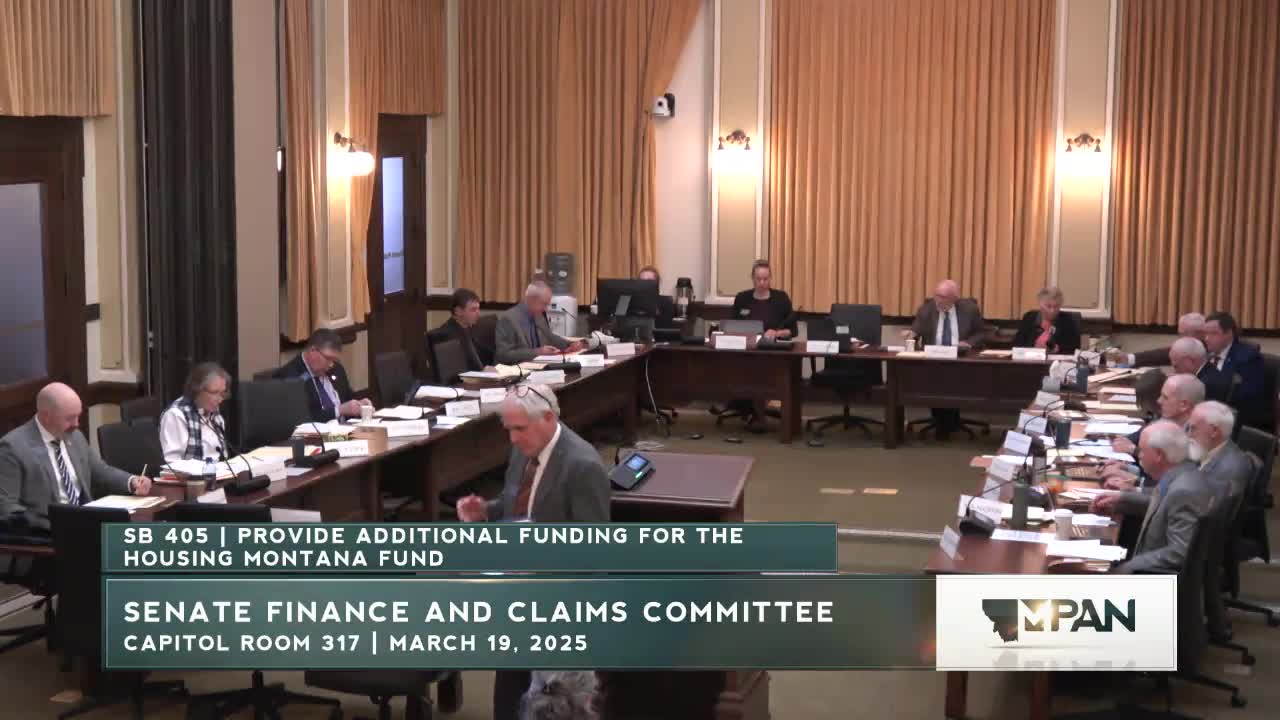
Lawmakers hear debate over SB 308 to raise workers' comp wage cap for higher-paid employees
Summary
Senate Finance and Claims held a fiscal-note hearing on Senate Bill 308, a proposal to change how wage loss benefits are calculated in Montana workers' compensation by increasing the annual income cap used to compute the weekly average from roughly $52,000 to $150,000.
Senate Finance and Claims held a fiscal-note hearing on Senate Bill 308, a proposal to change how wage loss benefits are calculated in Montana workers' compensation by increasing the annual income cap used to compute the weekly average from roughly $52,000 to $150,000.
Sponsor Senator Derek Harvey (Senate District 37) said the bill amends the weekly average so higher-wage workers would receive 66 2/3 percent of their actual wages up to $150,000 annual income rather than being capped at the lower figure. "We're talking about money that's not going into workers' pockets because they got injured in the course of their job," Harvey said, emphasizing the bill is prospective only and not retroactive.
Proponents included Jake Brown of the Montana AFL-CIO, who said the fiscal note is a projection and that actual claim costs can exceed projections; he noted injured workers should not be “weaponized” by the system to force early returns to work. Dwayne Woke of IBEW Local 233 testified the bill addresses inequities for high-wage, high-risk workers. Supporters argued increased benefits for higher-paid workers encourage retention and reflect the state's growing number of higher-paying trades.
Opponents included Peter Strauss of the Montana Self Insurers Association, Kevin Bartsch of MSGIA (Montana School Group), and Rhonda Wiggers of the National Federation of Independent Business (NFIB). They argued adding benefits will increase overall system costs and that premium increases will be borne by employers (including public employers and small businesses) in the form of higher workers' compensation premiums. Strauss cited actuarial studies used by NCCI that project a 6.5–7.7 percent immediate increase in system costs and estimated several million dollars in first-year effects.
Informational testimony from Quinlan O'Connor of the Department of Labor and Industry and Montana State Fund emphasized that plan distinctions (state fund, private carriers, self-insured employers) matter for actuarial projections and that self-insured entities do not report to NCCI in the same way as carriers.
Sponsor Harvey closed by saying the bill simply extends the existing 66 2/3 percent benefit to a higher wage bracket so higher-paid workers—many in construction trades—are not disadvantaged when injured at work. The committee recorded the hearing; no committee vote was taken during this session.