Get Full Government Meeting Transcripts, Videos, & Alerts Forever!
Get email alerts on the Funeral Trusts topic
No spam. Unsubscribe anytime.
Committee hears bill to allow broader investments for Montana funeral trust accounts
Summary
A House Business and Labor hearing on Senate Bill 305 heard supporters say the bill would let prepay funeral trust accounts follow Montana's prudent investor rule, aiming to increase growth of prepaid funds for families. No opponents testified; agency staff were available for questions.
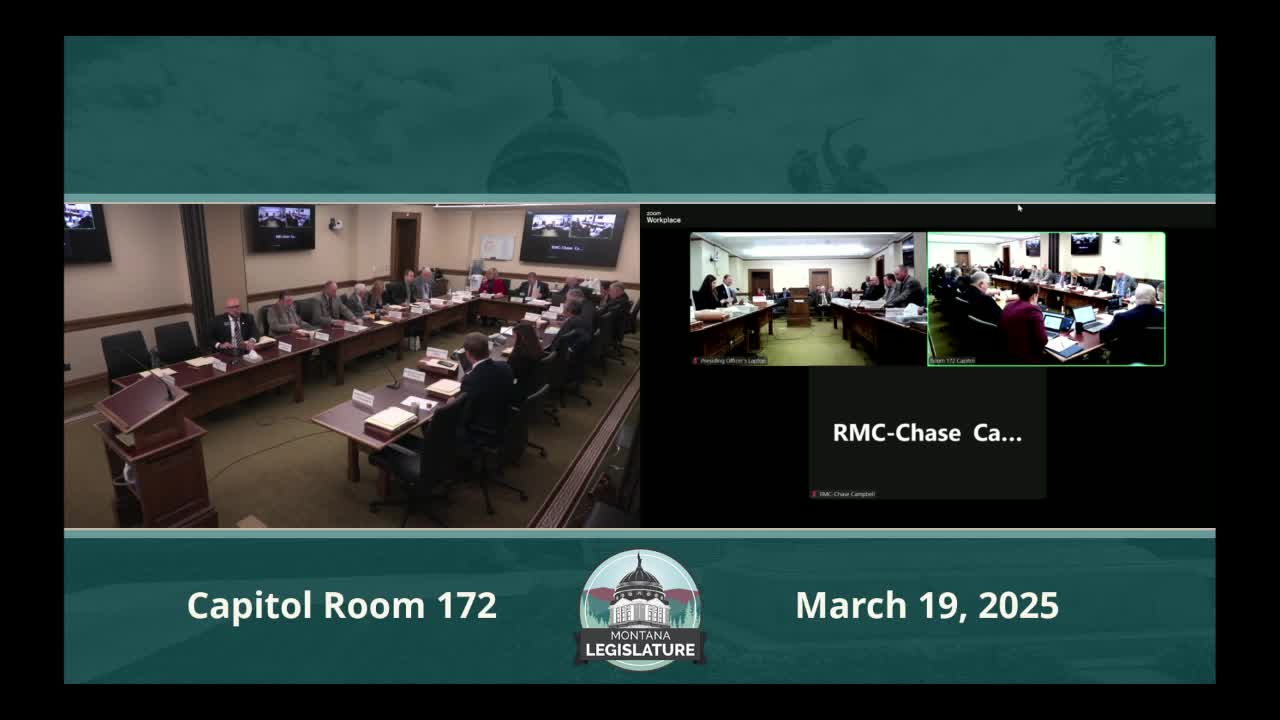
A House Business and Labor Committee hearing on Senate Bill 305 on Thursday reviewed a proposal to change how Montana funeral trust funds may be invested.
Senator Cuff, sponsor of SB 305, told the committee the bill "is very straightforward, very simple... It's good for the kids, and it's good for the old folks," and said the measure would strike-and-replace a sentence of state code to make the Montana Funeral Trust subject to the state's prudent investor standard.
Advocates including the Montana Funeral Directors Association said the change would let trust accounts pursue a broader investment strategy than the law allowed when the trust statute was drafted in the 1980s. The acting executive director of the Montana Funeral Directors Association, identified in testimony as Ms. James, said MFDA supports SB 305 and told the committee the change would "improve administration of Montana's Funeral Trust laws by mandating that Funeral Trust funds adhere to Montana's existing prudent investor rule." Brad Longcake, testifying for the industry, described the change as a path to potentially greater returns for people who prepay funeral services and gave examples of services the trust could cover or not cover as costs rise over time.
Rick Walter, a licensed mortician who testified as a private citizen, said the bill "eliminates some archaic language in the law" and would "maximize the growth of those trusts so that . . . there's appropriate funds there to cover for our final expenses." Kevin Bragg, bureau chief for professional licensing at the Montana Department of Labor and Industry, appeared as an informational witness and offered to answer technical questions about administration and oversight.
Committee members asked practical questions about how beneficiaries are notified and what happens if a trust balance is insufficient. Committee testimony said trust contracts typically name a beneficiary or beneficiaries at setup; if the trust balance does not cover a requested service the family would be responsible for the difference. Longcake used the example of an obituary cost rising from $200 to $500 over decades and said the residual growth in the trust is intended to help offset such increases. Witnesses also said trust funds are held by a financial institution and would remain intact even if a funeral home closed; the account is not simply an in-house company receivable.
No opponents testified. Senator Cuff closed by urging the committee to advance the bill; he noted it had passed the Senate business committee unanimously and had strong floor support there.
If the committee advances SB 305, the bill would move to the House for further consideration. The bill's text, proponents said, does not change what funeral homes may charge nor add administrative fees; it changes the investment standard that governs trust fund management.