Get Full Government Meeting Transcripts, Videos, & Alerts Forever!
Get email alerts on the Workers Compensation Imes topic
No spam. Unsubscribe anytime.
Committee hears fiscal note on SB 345 addressing independent medical evaluations in workers' comp
Summary
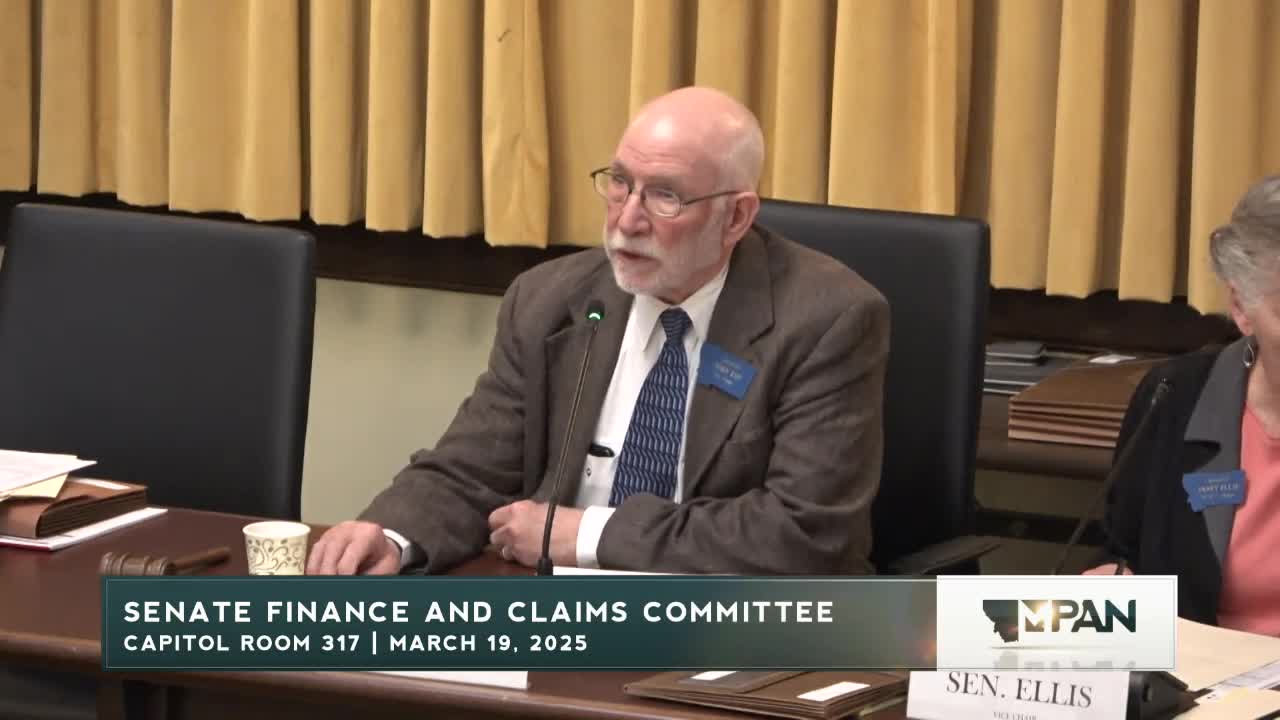
Senate Finance and Claims opened a hearing on Senate Bill 345 on the bill's fiscal note, which addresses procedures and limited reimbursements related to independent medical evaluations (IMEs) for injured workers under Montana's workers' compensation system.
Senate Finance and Claims opened a hearing on Senate Bill 345 on the bill's fiscal note, which addresses procedures and limited reimbursements related to independent medical evaluations (IMEs) for injured workers under Montana's workers' compensation system.
Sponsor Senator Greg Hertz, R-Polson, told the committee the discussion was limited to the fiscal note and expressed expectation that any financial effects would be minimal. "If there is an increase, it'll probably be very minimal," Hertz said, urging members to expedite consideration.
Nick Mazanec of Montana State Fund, which contributed to the fiscal note, told the committee the primary fiscal effects would fall on Montana State Fund as an insurer. Mazanec said reimbursements could include temporary total disability benefits and ancillary costs such as day care for workers who travel for IMEs. He added these travel-related costs are difficult to quantify now and that the bill’s aim—faster, clearer IME-based determinations—could reduce claim costs by returning injured workers to work sooner.
Peter Strauss of the Montana Self Insurers Association and Kevin Bartsch of MSGIA (the Montana Schools Group) both told the committee they support the bill and the fiscal note's findings, saying the changes could produce administrative savings through clearer diagnosis and treatment while producing only minor additional expenses for travel and incidental benefits.
Quinlan O'Connor, chief legal counsel for the Department of Labor and Industry, served as an informational witness and confirmed his agency contributed to the fiscal note and was available to answer technical questions.
Committee questioning focused on the fiscal note’s assumption that greater access to IMEs increases efficiency. Mazanec explained that Montana’s geographic size and limited specialist availability can delay evaluations, treatment and return to work; earlier specialist input can reduce claim duration and costs.
The committee concluded the hearing with no formal action on the bill recorded during this session.