Get Full Government Meeting Transcripts, Videos, & Alerts Forever!
Get email alerts on the Appointments Diversity Policy topic
No spam. Unsubscribe anytime.
Committee concurs in bill removing gender and racial balance requirements for state appointments
Summary
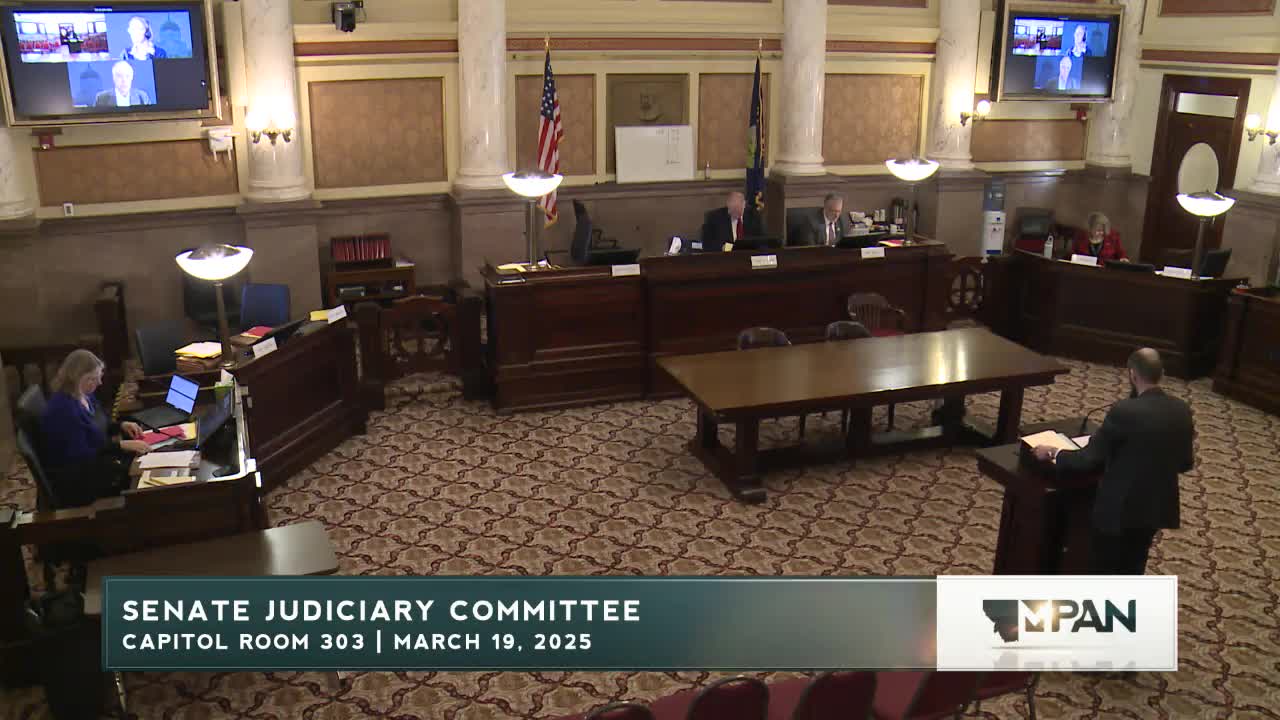
The Senate Judiciary Committee concurred in House Bill 215, which removes statutory language encouraging gender balance and proportional minority representation on state boards and commissions.
Representative Kayla Hinkle presented House Bill 215, which would eliminate language in state code that directs appointing authorities to take “positive action to attain gender balance and proportional representation of minorities resident in Montana to the greatest extent possible.” Hinkle argued the provision is outdated, has not been meaningfully implemented and could be seen as discriminatory.
Proponents included Ed Hallan (testifying as a private citizen), Patrick Webb representing the Montana Family Foundation, Kylene Lingren of the Pacific Legal Foundation, and Philip Genabine of Do No Harm Action. Witnesses argued the change refocuses appointments on objective merit and avoids what they described as legally problematic race- or gender-based selection criteria. Lingren cited recent litigation and U.S. Supreme Court precedent on equal protection as supporting the move.
Senators asked how the change would affect outreach and affirmative recruitment. Senator Olson and others emphasized that existing language encourages actively seeking diverse applicants and asked whether removing it would discourage that outreach. Proponents responded that nothing in the bill prevents appointing authorities from recruiting broadly, and that merit-based selection does not preclude diversity. Senator Mansella and others discussed how the statutory language had not been consistently implemented since its enactment in the 1990s.
The committee took executive action. Senator Ricky moved to concur on HB 215. The committee passed the motion by voice vote; the chair announced House Bill 215 had been concurred in and Senator Mansella volunteered to run the bill on the Senate floor.
Ending: HB 215 was concurred in by the Senate Judiciary Committee after extensive testimony from policy and legal groups; senators asked follow-up questions about outreach and enforcement.