Get Full Government Meeting Transcripts, Videos, & Alerts Forever!
Get email alerts on the Place Based Integrated Water Planning topic
No spam. Unsubscribe anytime.
Place-based planning funding: committee hears from four community collaboratives on House Bill 3116
Summary
House Bill 3116 received extended testimony from four state-recognized place-based water-planning collaboratives on March 19; the measure and its -2 amendment would fund implementation grants and require OWRD reports to the legislature.
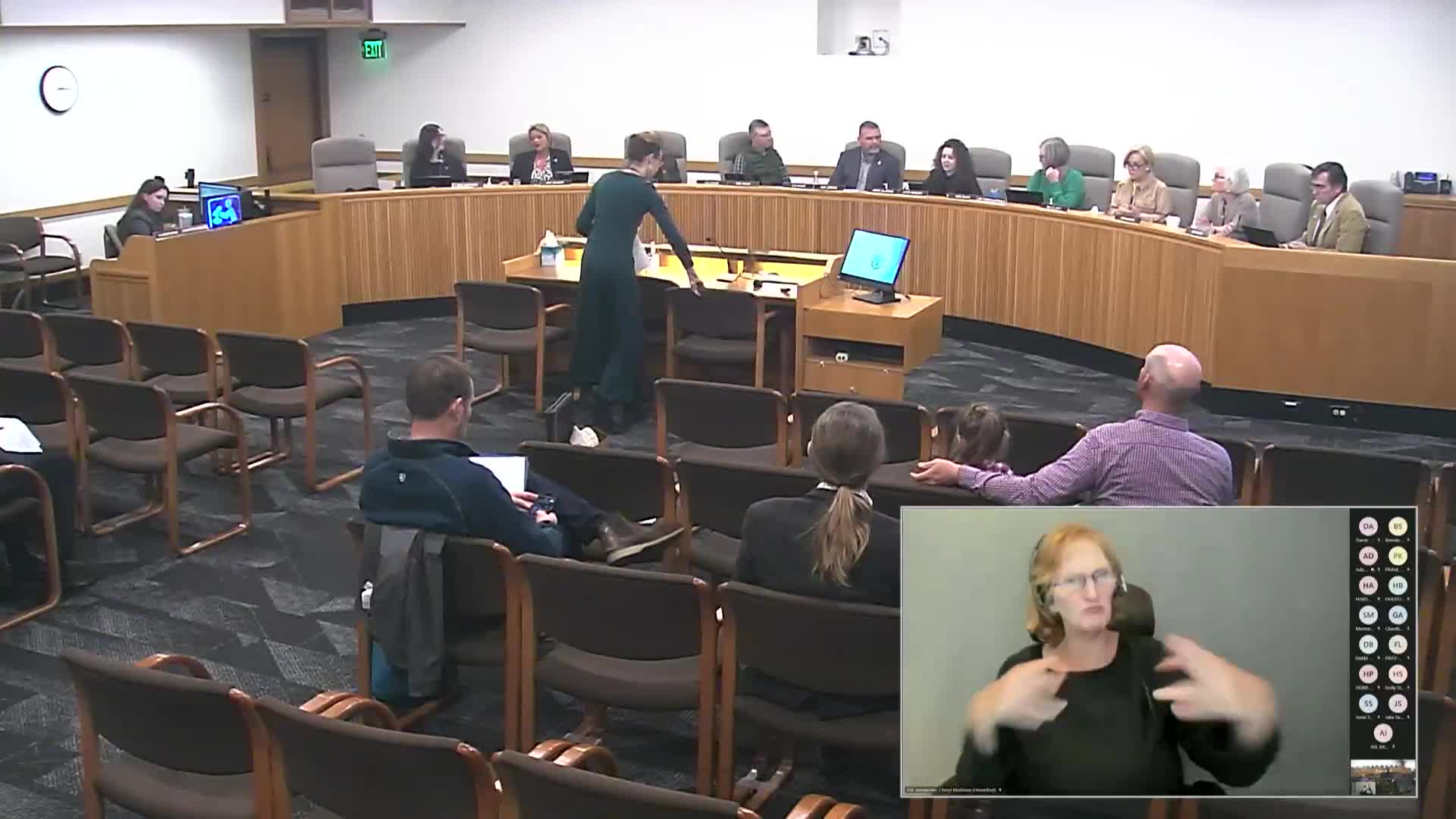
House Bill 3116 drew extended public testimony on March 19 as the committee heard representatives from four state-recognized place-based integrated water resources planning groups seeking implementation funding and technical support.
Committee staff described the bill and the dash-2 amendment: the original draft appropriated $2,000,000 to the Oregon Water Resources Department for the place-based planning fund and grants to several entities; the dash-2 amendment replaced the measure to direct OWRD to submit specified reports to the legislature, appropriate $1,000,000 for implementation, and appropriate $3,350,000 for grants to specified entities to support implementation of state-recognized place-based plans. The amendment also declared an emergency and made an effective date of July 1, 2025.
Speakers who testified in support included: - Jake Seiverk, Union County Commissioner and convenor of the Upper Grande Ronde Watershed Partnership Group, who listed the group's studies and projects and urged funding for continued progress; quoted: "I urge you to support House Bill 31 16 in funding the selected counties for continued progress in these areas of place based integrated water resources planning." - Holly Stenitzis, project manager for the Harney community-based planning collaborative, who described voluntary programs already underway and said "a plan is only as strong as its ability to be implemented". - Brenda Smith, director at High Desert Partnership, who described adaptive management work and the need for resources to sustain collaborative processes. - Debbie Bunch, executive director of the Mid John Day Watershed Council and co-convener of the Lower John Day group, who outlined five prioritized implementation projects and requested about $1.1 million to implement them. - Adam Deminger, general manager of Seal Rock Water District and co-convener of the Midcoast partnership, who urged support to maintain momentum and implement prioritized projects.
Committee members asked questions about rulemaking, scalability and costs. Department of Water Resources staff confirmed the bill as drafted works with rules adopted the prior week. Concerns were raised about the overall price tag and whether funding could be scaled to increase the chances of passage in Ways and Means; bill proponents said local groups have leveraged additional funds and emphasized sustaining momentum to avoid plans "sitting on the shelf."
The committee closed the public hearing after receiving testimony. No formal committee vote on the bill is recorded in the transcript excerpt.