Get Full Government Meeting Transcripts, Videos, & Alerts Forever!
Get email alerts on the Public Safety Cameras topic
No spam. Unsubscribe anytime.
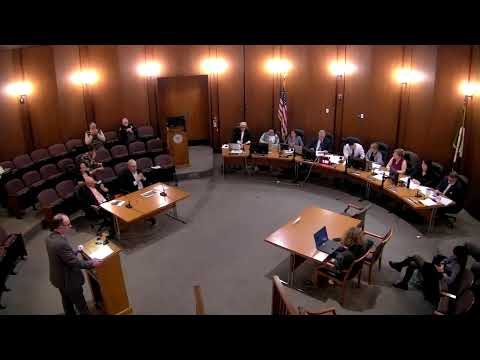
Council hears public comment as police seek Edward Byrne grant for intersection cameras
Summary
Police presented a plan to use an Edward Byrne Memorial Justice Assistance Grant to add and replace intersection cameras and analytics, saying the equipment will aid crash response and investigations.
Police presented a plan to use federal Edward Byrne Memorial Justice Assistance Grant funding to add and replace intersection cameras around the city, saying higher‑quality cameras and real‑time analytics would help officers respond to and investigate crashes and nearby crimes.
Chief Scott told council the cameras are used primarily for historical review, not automated ticketing. "Most of the time, it's historical data that is recorded. And if there's an accident at the inner intersection, if there's a crime that occurs nearby, we're able to go back and view that historical data and utilize it as evidence," the chief said. He added the department hopes the presence of cameras will act as a deterrent to unsafe driving, but confirmed the city does not use the system to issue citations.
Council members pressed for operational details. Councilwoman Kwiatek asked whether footage is ever used for enforcement; the chief replied, "Correct," meaning it is not used to issue tickets. Councilwoman Laird asked whether the grant pays only for hardware or also ongoing services; the chief said subscription and retention costs are budget items paid annually and that the grant would cover equipment and labor. He estimated current retention for unflagged footage is about two weeks but said he would confirm the exact period with IT. Councilwoman Ramsey Smith asked how many intersections are currently covered; the chief said the city has about 28 intersections on its camera network and said the grant would target adding cameras at roughly two additional intersections (candidates mentioned included Broad & Center, Broad & Linden and intersections on the Steffco [Steffco/Stethco] Boulevard corridor).
Two members of the public who addressed the grant raised policy and equity concerns. Bill Shire recounted seeing pedestrians run into an intersection and said some enforcement of pedestrian behavior might be warranted; he also urged caution in advertising the cameras. Harry Faber urged the council to prioritize poverty reduction and education as upstream investments that affect crime and said fines disproportionately affect lower‑income people. "Fines, we all understand disproportionately affect lower income people," Faber said, and suggested warnings rather than citations.
Officials said the city has used Byrne JAG funding in previous years for mobile data terminals and other police technology; with those units replaced, the department is proposing to direct this year’s allocation toward cameras. Council concluded the public hearing and the president of council said the administration would place a resolution on the April agenda for formal consideration of the grant application.
What’s next: the council will consider a resolution in April authorizing application for the Edward Byrne Memorial Justice Assistance Grant and any related appropriations or contract approvals will return for council action at a later meeting.