Get Full Government Meeting Transcripts, Videos, & Alerts Forever!
Get email alerts on the Professional Licensing topic
No spam. Unsubscribe anytime.
Committee hears bill to set statewide baseline for professional licensure procedures
Summary
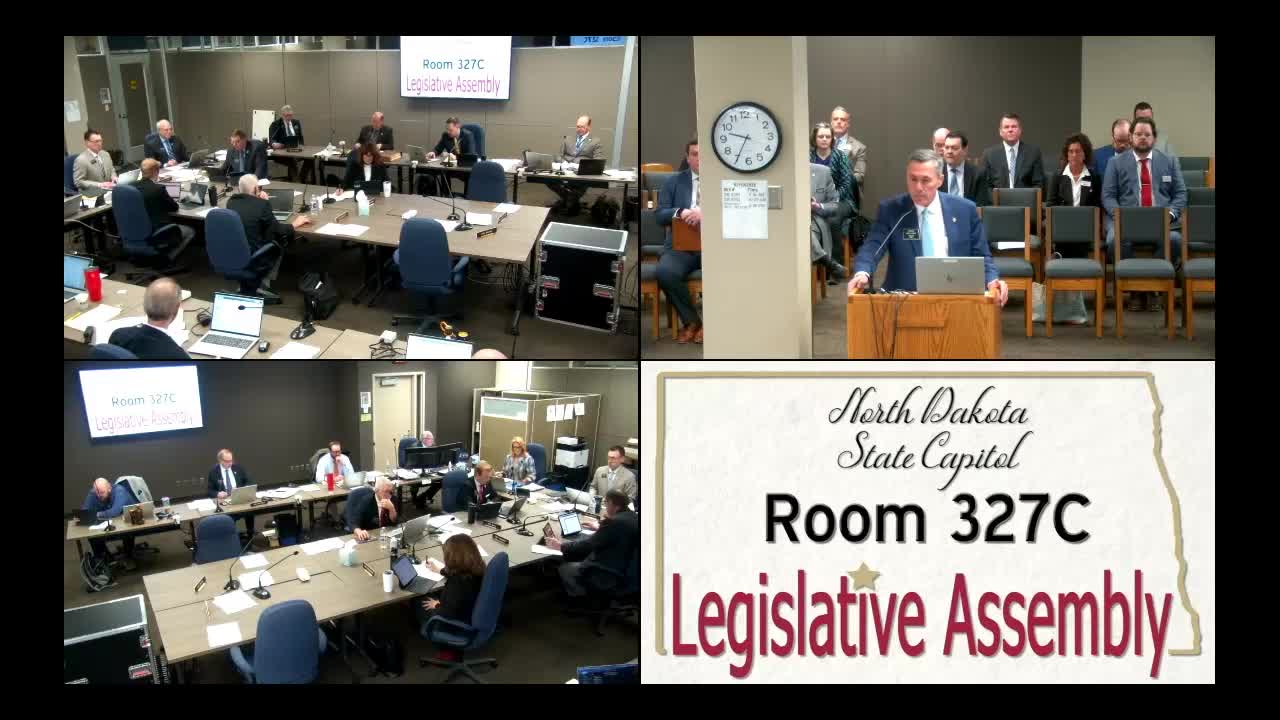
Committee members and agency directors heard more than two hours of testimony on Senate Bill 2395, a package of licensing reforms intended to create consistent procedures across the state’s professional licensing boards and speed licensure for qualified out‑of‑state applicants.
Committee members and agency directors heard more than two hours of testimony on Senate Bill 2395, a package of licensing reforms intended to create consistent procedures across the state’s professional licensing boards and speed licensure for qualified out‑of‑state applicants. State Sen. David Hogue introduced the bill and said it builds on a Department of Labor interim study of licensing boards.
The measure would require boards that license workers under Title 43 to adopt baseline processes such as online application availability, prompt review of clean applications and reporting to the labor department. Proponents said the changes are designed to support workforce recruitment and modernize board practices; one judicial branch board opposed inclusion in the bill.
State Sen. David Hogue, who sponsored the bill, told the committee he filed the legislation after an earlier session directed the labor commissioner to study licensing boards. "I'm here, to testify in support of Senate bill, 23 95," Hogue said, and he described the measure as an effort "to establish a baseline, for all licensing boards and commissions." He said some boards already meet the proposed standards and supported the bill, while others need clearer operating expectations.
Nathan Swihovic, the former labor commissioner who led the interim study and testified in a personal capacity, told the committee the department conducted a large review of boards. "We issued a 53 question questionnaire to all 42 boards subject to the study. We got 100% participation," Swihovic said, and he summarized two main study goals: faster recognition of out‑of‑state licenses and modernization of continuing education requirements.
Key provisions explained during testimony include: - Universal licensure for certain license types that effectively allow out‑of‑state practitioners to obtain North Dakota credentials more quickly when their out‑of‑state qualifications meet specified criteria. - A 10 business‑day target for a board to issue a license on a "clean" application once the required materials arrive and the board’s staff have completed credential and background checks. Witnesses said the 10‑day standard applies to routine applications without disciplinary or other complicating issues. - If a board requires a state‑specific jurisprudence examination, the bill would require that exam be offered at least every 30 days; the 10‑day processing clock would begin after the board receives a completed exam as part of the application package. - Boards would be required to report to the Department of Labor on a two‑year cycle (Swihovic identified 2026 and 2027 as the initial reporting years) with counts of licenses granted, licenses denied, the number of applications not completed within 10 business days and reasons for delays. - An annual review requirement asking boards to consider interstate compacts and explain any decision not to join.
Multiple licensing board directors testified in support. Mark Hardy, executive director of the North Dakota State Board of Pharmacy, told the committee the bill "reflects the core practices" many boards already follow and said boards generally support the framework. Sandra de Pontes of the Board of Medicine and Kyle Martin of the Board of Nursing likewise said their boards already operate under standards aligned with the proposal and that the bill would improve recruiting and portability.
Small boards and boards with limited staff raised implementation concerns in testimony and questioning. Dave Schaible of the State Board of Dental Examiners and other witnesses said smaller boards often rely on a single part‑time contractor or volunteer members to process applications; Schaible noted full electronic application systems can cost thousands of dollars and that some boards currently host only downloadable PDFs rather than a fully automated portal. Swihovic said the bill does not mandate expensive software; an electronic application could be a posted PDF if necessary, though he noted central software or state help could reduce costs.
The State Board of Law Examiners opposed inclusion in SB 2395. Petra Amanda Golomb, the board’s secretary‑treasurer, told the committee: "The admission of attorneys lies with the Supreme Court under North Dakota constitutional article 6, section 3." Golomb said the Board of Law Examiners is organized under the judicial branch, is appointed by the Supreme Court, and that adding licensing language in Title 43 would create conflicting sources for attorney admission and discipline.
Committee members asked multiple clarifying questions about how interstate compacts, jurisprudence exams and reporting requirements would work in practice; the bill’s supporters said amendments adopted in the Senate had addressed many earlier concerns and that the bill was intended to standardize best practices rather than centralize licensing authority.
The committee closed the public hearing on SB 2395 with no final vote recorded at that session and no formal committee action entered in the transcript. The bill’s sponsor and several agency directors urged the committee to give the measure a due‑pass recommendation so the policies could move forward for legislative consideration.