Get Full Government Meeting Transcripts, Videos, & Alerts Forever!
Get email alerts on the Procurement Equity topic
No spam. Unsubscribe anytime.
DAS presents disparity study, roadmap and bill to expand small‑business procurement
Summary
Department of Administrative Services officials presented a disparity study showing a gap between available Oregon small businesses and state contracting, outlined a one‑year implementation roadmap with 29 recommendations, and said a proposed House bill would create a race‑neutral certification and small‑business procurement program.
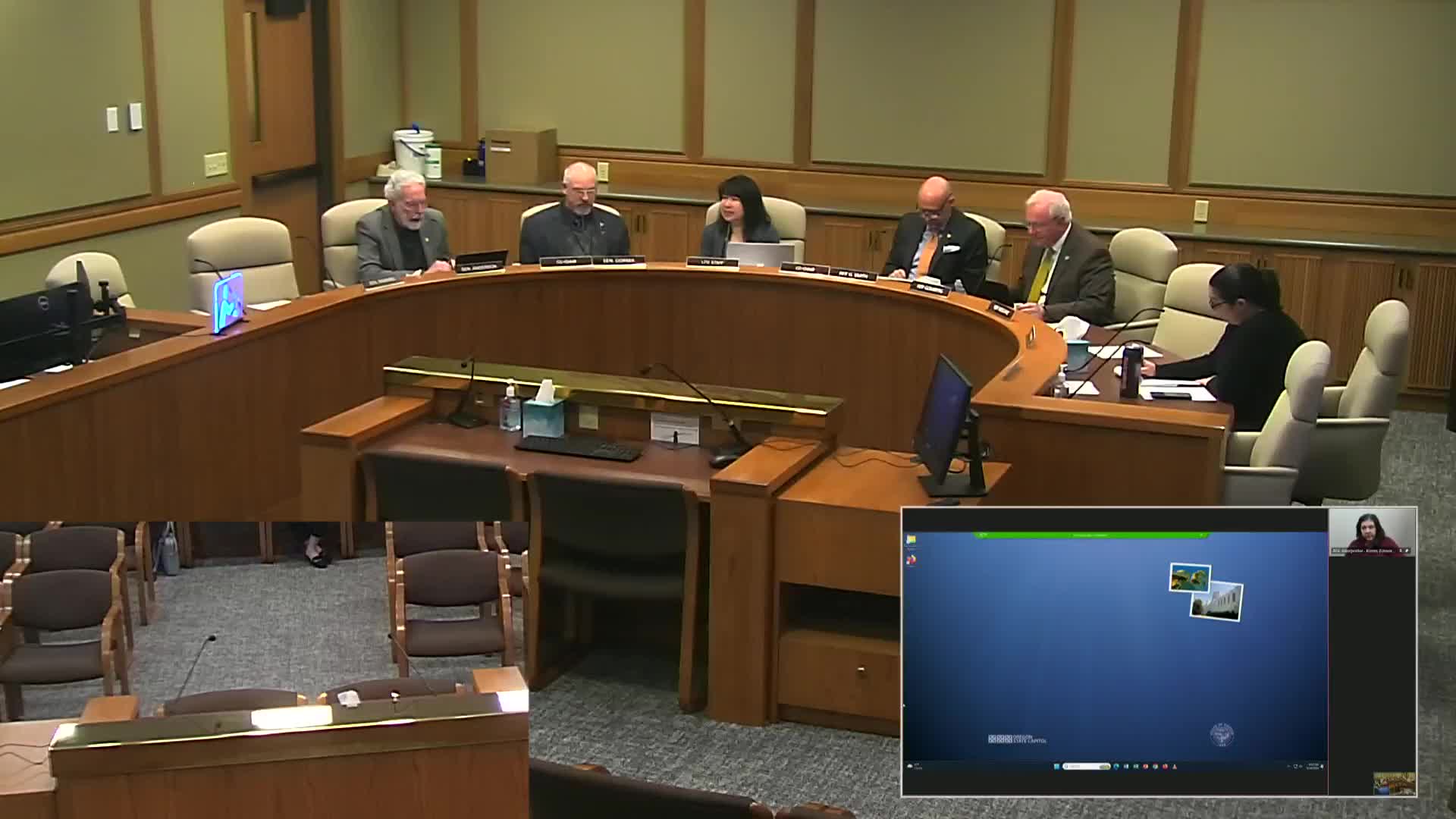
Deputy Director Debbie Dennis of the Oregon Department of Administrative Services told the General Government Subcommittee on March 19 that the department’s Office of Procurement Equity completed a disparity study and is implementing a roadmap of recommendations while pursuing a House bill to establish a small‑business procurement program.
The disparity study, conducted by BBC Research & Consulting from October 2022 through November 2023, analyzed about $3.18 billion in state spending from 2017–2022. The report found that businesses owned by women and people of color accounted for roughly 33.9% of the available marketplace but received about 10.9% of the contract dollars awarded during the study period, a gap the department said warrants a sustained program of outreach, data improvements and policy change.
Dennis said the office has 29 recommendations to implement and has stood up program teams to carry out outreach, data management and policy work. “We have a long road map ahead of us,” she said, describing governance that includes a weekly project team, a monthly steering committee and a quarterly advisory group. Dennis said the office expects to work through implementation in a little over a year for the recommendations grouped into nine topic areas.
Alexandria Straub, strategic initiatives analyst for the Office of Procurement Equity, outlined work required under a 2022 executive order from the governor directing state agencies to improve procurement outreach, data collection and transparency. Straub said Oregon now collects demographic information in its e‑procurement system (OregonBuys), has added a DEI statement to solicitation templates and is expanding outreach through regional small‑business summits in partnership with Small Business Development Centers.
The department described two recent budget actions (POPs) that affected staffing and funding. The office made four limited‑duration positions permanent and received additional positions after asking for 12; the legislature approved six new positions, creating an office of 10 staff focused on data dashboards, outreach and policy review, Dennis said. The department also rolled forward nearly $1 million that had been appropriated earlier to complete the study.
Dennis and Straub described House Bill 2337, introduced by DAS, which would authorize the department to create a small‑business procurement program and would direct Business Oregon to establish an Oregon Small Business Enterprise certification. Straub said the certification would be race‑ and gender‑neutral, open to qualifying small businesses statewide, and would not require firms that already hold other state certifications to reapply.
Straub and Dennis said the department intends to begin with universal small‑business support because broader programs strengthen overall small‑business capacity and because any race‑ or gender‑specific remedies must meet strict‑scrutiny legal standards and be narrowly tailored and supported by evidence. The office will also pursue subcontractor data collection, changes to evaluation teams and procurement language to make solicitations more accessible to smaller firms.
Committee members asked for the study and the list of recommendations to be posted to OLIS (the legislature’s online repository) and raised questions about how small businesses will be defined for the new certification, how existing partners such as Small Business Development Centers and the Government Contracting Assistance Program (GCAP) will be used, and how the steering and advisory bodies will be constituted. Straub said Business Oregon will set the certification criteria and that the department is coordinating monthly and quarterly governance meetings and community outreach to identify advisory members.
No formal committee vote was taken; the presentation was informational. Dennis and Straub said next steps include finalizing implementation assignments, continuing regional summits and building public dashboards to track contract dollars by recipient.
The subcommittee adjourned after the presentation.