Get Full Government Meeting Transcripts, Videos, & Alerts Forever!
Get email alerts on the Transportation High Speed Rail topic
No spam. Unsubscribe anytime.
Lawmakers hear broad support for Cascadia high‑speed rail task force; amendment would appropriate $10 million to Metro
Summary
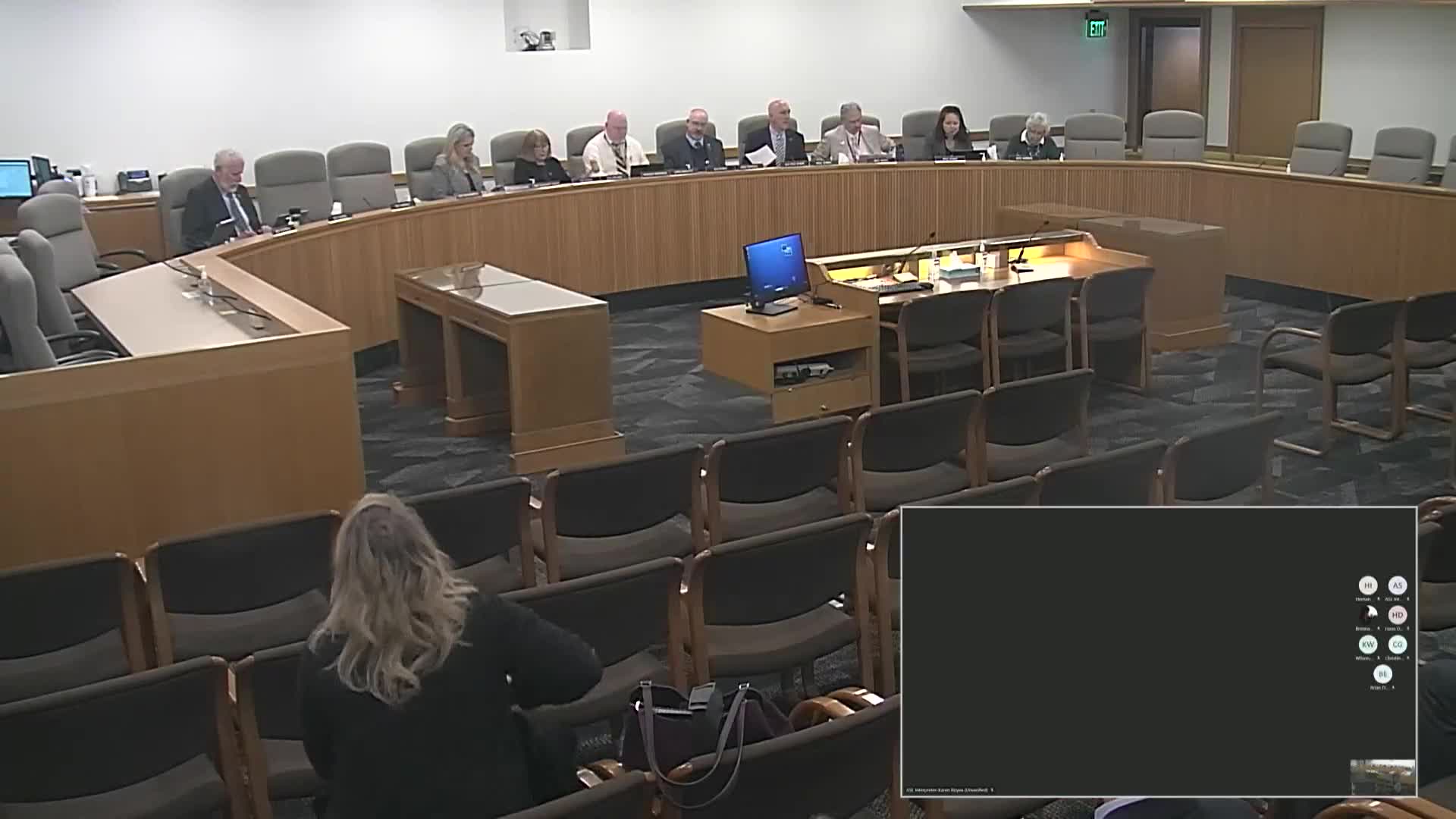
Members of the Oregon Legislature’s Joint Committee on Transportation opened a public hearing March 18 on Senate Bill 715, a measure to create a Cascadia High Speed Rail Task Force to study and coordinate planning for a proposed high‑speed rail corridor linking Vancouver, British Columbia, Seattle and Portland.
Members of the Oregon Legislature’s Joint Committee on Transportation opened a public hearing March 18 on Senate Bill 715, a measure to create a Cascadia High Speed Rail Task Force to study and coordinate planning for a proposed high‑speed rail corridor linking Vancouver, British Columbia, Seattle and Portland.
Supporters — including state and local elected officials, business groups and community organizations — urged the committee to back the bill and begin planning now so Oregon can shape routing, land use and economic benefits. The bill includes a -1 amendment that would appropriate $10,000,000 from the General Fund to Metro to support the task force’s work.
Why it matters: Witnesses said high‑speed rail would reduce highway congestion, open housing and job markets across the Cascadia mega‑region and support climate goals by shifting trips from cars to electrified rail. Several testifiers stressed that early state planning is necessary to ensure benefits are captured in Oregon neighborhoods and to avoid repeating past local harms when large infrastructure projects are built.
Sen. Chris Gorsek (D‑District 25), who introduced the measure in committee, said the project would relieve long‑term congestion along I‑5 and strengthen connections across an area he described as a “mega region” that today includes nearly 10 million people. He said the project is “a leveraging opportunity to grow our economy” and urged a yes vote on SB 715.
Metro Councilor Ashton Simpson, testifying in support for Metro, said WSDOT has already secured roughly $55,000,000 to draft a service development plan and that the corridor has been accepted into the Federal Railroad Administration’s corridor ID funding pipeline. “This bill leaves us and gives us the resources and the direction we need to bring the right leadership, agency, business, tribal and community partners together,” Simpson said.
Christine Gregoire, former Washington governor and CEO of Challenge Seattle, told the committee the Cascadia corridor already ranks among the nation’s recognized mega‑regions and that high‑speed rail would help sustain economic growth and reduce greenhouse gas emissions. “High speed rail is an important strategy for achieving that goal of being a sustainable mega region,” Gregoire said.
Corporate and civic testimony: Hannah Dubrava spoke for Microsoft, urging cross‑jurisdictional planning and calling SB 715 “an important early step” to coordinate two states and a province. Mayor Keith Wilson of Portland, who testified in support, said high‑speed rail would “supercharge economic and equitable opportunity” and referenced international examples where rail investments produced regional gains.
Community concerns and local participation: Serena Boston Ashby, representing the 18 O 3 investment fund, emphasized that the Albina neighborhood — historically the heart of Portland’s Black community — should be included in planning. She warned of past displacement tied to I‑5 construction and asked the task force to explicitly include Albina residents and Black businesses in study and design work.
Other public testimony included representatives from mobilizing for climate action and local transit advocates who framed the measure as a way to expand reliable passenger rail and reduce transportation emissions.
Bill details: Committee staff told members the bill establishes task‑force membership, reporting dates and reporting duties. Staff also noted a -1 amendment that would appropriate $10,000,000 from the General Fund to Metro “to carry out the provisions of the measure.” Committee staff reported a fiscal impact statement (7‑score) had been prepared by Ways and Means staff.
No final action: The hearing record closed after invited and public testimony; the committee did not vote on the measure during this session. Lawmakers and witnesses emphasized that the task force would be an early, planning‑level effort and that routing, environmental review and construction would require separate, future funding and intergovernmental approvals.
What comes next: The committee will consider the bill in future work sessions; proponents asked lawmakers to act now so Oregon can shape how the corridor is planned in the state and how local communities share benefits.