Get Full Government Meeting Transcripts, Videos, & Alerts Forever!
Get email alerts on the Budget topic
No spam. Unsubscribe anytime.
Superintendent outlines midyear budget pressures and proposes drawing on reserves
Summary
At a board meeting, the superintendent presented midyear budget projections showing near‑full spending, cited health‑insurance and pension cost pressures, and proposed using district reserves to limit tax‑levy increases. The board will revisit details before adopting a budget in April.
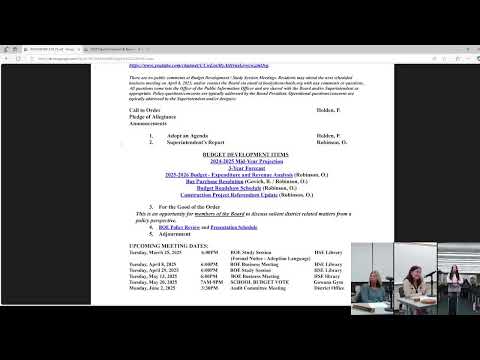
The Shenendehowa Central School District superintendent presented a midyear budget update to the Board of Education, saying the district is projecting to spend roughly 99% of its adjusted budget and faces rising costs that could require use of reserves if revenues do not improve.
The superintendent said the district’s current internal projection shows spending near 99% of the adjusted budget and that interest income remains volatile. He said health insurance — a large cost driver — has been quoted at increases of 20–25% by brokers but that the district is working with its broker (USI) and is using self‑insurance and administrative changes to assume an anticipated increase in the 10–15% range for next year. The superintendent added that the district spends “probably almost $40,000,000 on health insurance.”
The presentation placed personnel and benefits at the core of budget planning. “Roughly 85% of our budget is salary and benefits,” the superintendent said, noting that staff turnover and retirements will affect near‑term savings and hiring needs. He told the board the district is reviewing vacancies, grant‑funded positions and contractual commitments to identify smaller savings across many codes rather than single large cuts.
Why it matters: the district projects a shortfall under current assumptions if it funds all requested items from staff and departments. Using the governor’s proposed foundation‑aid numbers, the superintendent said the current expenditure package would require a 5.25% tax levy increase to balance, while the statutory tax‑cap limit is 3.29%, creating a gap the district must close by revenue, expenditure reductions or reserve use.
The superintendent outlined a reserve‑draw proposal to smooth the gap and avoid immediate program cuts. He described two reserve buckets under discussion: a proposed draw of $2.1 million from the TRS (Teacher Retirement System) reserve and a smaller draw (discussed as $747,000) from ERS (Employees’ Retirement System) or other employment benefit reserves. He said those amounts were put forward so the district can maintain current programming while buying time to refine the budget and seek higher state aid or other revenue.
Board members pressed on sustainability and timing. A board member asked how long reserves could be used before running out; the superintendent replied the plan is not to create a structural deficit and that reserve use would be part of a multi‑year strategy to rebalance staffing, contractual commitments and revenues. The superintendent reminded the board that they must adopt a budget in April and that staff will return with additional refinements before the formal vote.
Other details discussed included debt service (buses are paid through the debt service line), capital timing for construction projects, and efforts to control health‑insurance costs by reviewing usage data and administrative design. The superintendent said the district has been intentionally building reserves for situations like the current projection, allowing a measured use of funds rather than immediate program cuts.
The board did not take a final vote on the budget at the meeting. Staff will return with additional numbers and final recommendations before the April adoption deadline.
Ending: The superintendent asked board members to review linked documents and flagged that revised state revenue proposals from the Legislature could improve the district’s position; he said staff will present updated figures when available ahead of the budget adoption schedule.