Get Full Government Meeting Transcripts, Videos, & Alerts Forever!
Get email alerts on the Firearm Possession Harassment topic
No spam. Unsubscribe anytime.
Prosecutors, advocates clash over bill to remove harassment from firearm-possession disqualifier
Summary
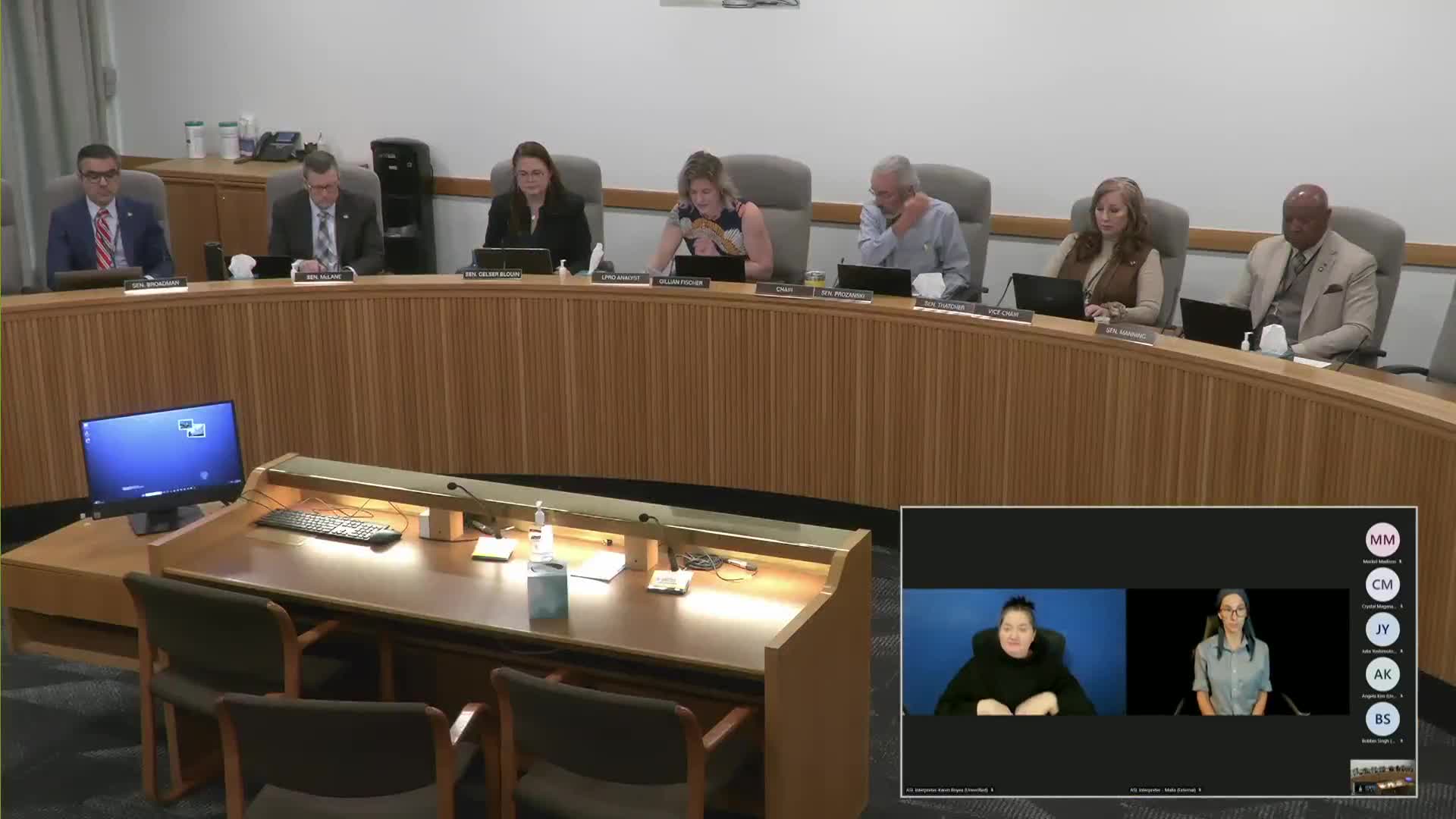
Salem, Ore. — March 18, 2025: The Senate Judiciary Committee heard sharply different views on Senate Bill 11-72, which would remove the crime of harassment from the list of qualifying misdemeanors that can trigger a state prohibition on possessing firearms or ammunition when the victim is a family or household member.
Salem, Ore. — March 18, 2025: The Senate Judiciary Committee heard sharply different views on Senate Bill 11-72, which would remove the crime of harassment from the list of qualifying misdemeanors that can trigger a state prohibition on possessing firearms or ammunition when the victim is a family or household member.
A staff overview described the measure as providing that “the crime of harassment is not a qualifying misdemeanor for purposes of the statute prohibiting the possession of firearms and ammunition based on being the subject of certain court orders or being convicted of certain crimes.” The bill arose after contrasting appellate rulings in State v. Eggers over whether harassment’s element of “offensive touching” amounts to the “use of physical force” language that courts have used to determine qualifying misdemeanors.
Senator Mike McLean (testifying from the dais) framed the bill as an opportunity to resolve differing appellate interpretations. He described Eggers and the two courts’ approaches: the Oregon Court of Appeals analyzed harassment under Oregon law and concluded it was not a qualifying misdemeanor; the Oregon Supreme Court relied on federal interpretation (United States v. Castleman) and concluded harassment could qualify. “I looked in and I read the Court of Appeals and the Supreme Court decision. And it comes down to how do you interpret terms,” McLean said, urging legislators to consider whether Oregon courts should rely on Oregon precedents for statutory interpretation.
Opponents, including the Oregon District Attorneys Association and several domestic-violence advocates, urged the committee to retain harassment in the statute. John Wentworth, Clackamas County District Attorney and president of the Oregon District Attorneys Association, said the 2015 Legislature intentionally used language that mirrored federal law to give local authorities tools to protect victims of lethal domestic violence. “There are no specific conditions required. There's no prescribed duration. And, unfortunately, there's no money allocated to community corrections to supervise these diverted cases,” Wentworth said in the SB 11-69 hearing; in this hearing prosecutors and advocates made similar resource and enforcement arguments about the harassment disqualification.
Gina Skinner, a senior deputy district attorney who prosecutes domestic-violence cases in Washington County, told the committee that harassment commonly covers deliberate physical acts—pushing, grabbing, hair pulling—that often accompany domestic abuse. She cited national statistics and the rationale behind the 1996 federal misdemeanor domestic-violence firearm prohibition and the 2015 state statute (Senate Bill 525) that mirrored federal language. “Victims of domestic violence are at significant risk of intimidation and homicide when there is a firearm in possession of their abuser,” Skinner said.
Ceasefire Oregon and the Oregon Law Center also opposed removing harassment, saying the change would reduce protections for victims and could create dissonance with federal law. The Oregon Law Center noted federal law and the U.S. Supreme Court’s Castleman decision continue to treat offensive touching as included in the federal definition; removing harassment from the state qualifying list could create enforcement and funding complications tied to Violence Against Women Act grants and related notice requirements.
Supporters of the bill argued that the Court of Appeals’ approach better reflects Oregon’s criminal-code interpretation and prevents importing federal analytical methods that do not exactly mirror Oregon statutory language. Testimony referenced factual variations in Eggers (where the defendant grabbed a relative’s arm) and the panel debated whether the statute’s intent was to cover all harassment convictions or only those involving force and a qualifying relationship.
The committee took extensive testimony and then closed the public hearing on SB 11-72; senators invited written follow-up by a statutory deadline.