Get Full Government Meeting Transcripts, Videos, & Alerts Forever!
Get email alerts on the Breast Reconstruction topic
No spam. Unsubscribe anytime.
Supporters tell committee bill would improve access to autologous breast reconstruction after mastectomy
Summary
Senate Bill 1137 would require health plans that cover implant‑based breast reconstruction to cover autologous (patient‑tissue) reconstruction with no less favorable terms, proponents said, citing cases in which patients faced heavy out‑of‑pocket costs or network limits to get the surgery they needed.
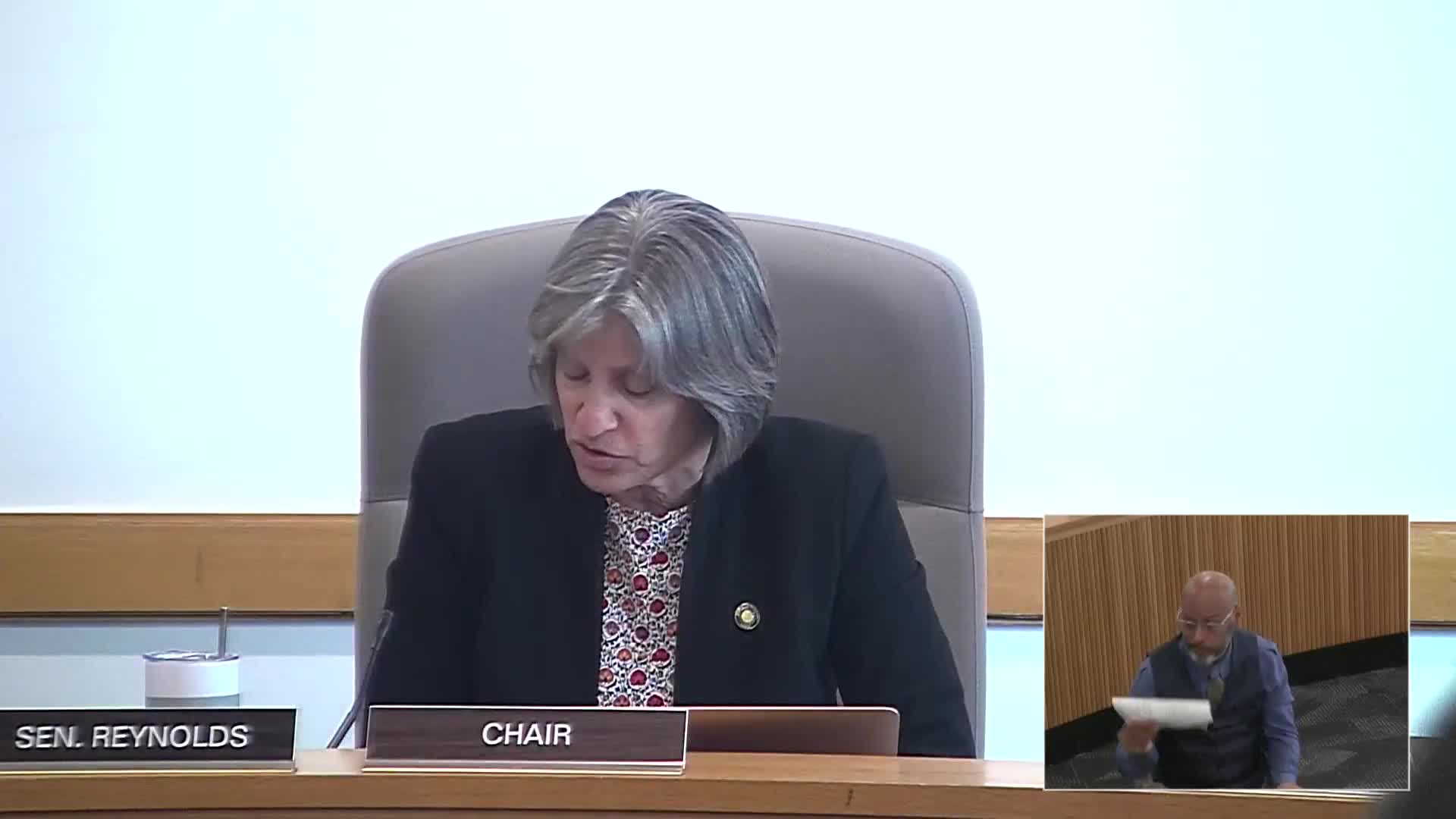
Acting Chair Reynolds opened public testimony on Senate Bill 1137, which would require health benefit plans that cover implant‑based breast reconstruction to cover autologous reconstruction procedures under equivalent terms and utilization review.
Why it matters: Patients and surgeons told the committee that insurer network limits and utilization rules can block access to autologous reconstruction (reconstruction using a patient’s own tissue), forcing some patients to pay large out‑of‑pocket sums or accept implant‑based procedures they view as medically or personally inferior.
Representative Emerson (Emerson) Levy (sponsored testimony) described constituent Gail Menasco’s experience: Menasco said her marketplace EPO limited her to in‑network providers in four states and that local surgeons proposed procedures that would take muscle tissue rather than a muscle‑sparing approach she preferred. Menasco said she had to change jobs and insurance plans and still confronted potential “balance billing” and high out‑of‑network rates to access the reconstruction she and her surgeons wanted.
Physicians and patients corroborated concerns. Dr. Caroline Cook, a board‑certified emergency physician and breast‑cancer survivor, described paying $31,000 out of pocket for reconstruction and said some elements — such as nerve grafting for sensation — were not covered. Reconstructive surgeon Dr. Elizabeth Potter (joining remotely) said many microsurgeons do not perform muscle‑sparing autologous reconstructions in network because reimbursement is poor and some surgeons instead balance‑bill or accept cash payments; she testified the bill could create a clearer, fairer pathway.
Supporters asked the committee to refine technical language, including single‑case agreement and reimbursement mechanics, and Representative Levy said a forthcoming amendment would adjust single‑case agreement language.
Opponents and insurers: Mary Ann Cooper of Regence Blue Cross Blue Shield of Oregon said Regence was discussing technical changes with proponents and emphasized lessons learned from a similar mandate the Legislature considered in 2023; the carrier expressed willingness to work on precise drafting and implementation.
No vote was taken; the committee heard both personal and clinical testimony and proponents asked members to advance the bill with technical fixes to ensure in‑network access and clear reimbursement terms.