Get Full Government Meeting Transcripts, Videos, & Alerts Forever!
Get email alerts on the Early Childhood And Behavioral Health topic
No spam. Unsubscribe anytime.
Senate Bill 1167 would fund community-led “child success” pilots and a Portland birthing village
Summary
Senate Bill 1167 would direct general fund appropriations for 2025–27 to community‑designed child success models focused on the first 1,000 days of life and to establish a Portland‑area birthing village, supporters told the Senate Committee on Early Childhood and Behavioral Health.
Senate Bill 1167 would direct general fund appropriations for the 2025–27 biennium to community-based child success models focused on the first 1,000 days of life and would establish a birthing village in the Portland metro area, proponents told the Senate Committee on Early Childhood and Behavioral Health. The measure includes a sunset date of Jan. 2, 2027, and an emergency clause effective July 1, 2025.
Sen. Lisa Reynolds, a pediatrician who chairs the committee, said she “is in strong support of Senate Bill 11 67,” and described the statute as “an investment in Oregon's future.” Reynolds said the bill funds local organizations working “to ensure that children have equitable opportunities for success in their crucial early years,” noting that the period from conception through age 2 is when “80% of brain development occurs.”
Local leaders and health experts who helped design the proposal told the committee the bill would seed demonstration pilots developed through months of community engagement. Former Gov. John Kitzhaber, sitting with the bill’s sponsors, said the legislation captures brain‑science findings showing that “maternal stress and poor nutrition both before conception and during pregnancy can alter the genetic expression in the unborn child,” increasing risk for later health and behavioral problems. He said communities around the state worked more than a year to create child success models unique to their region.
Community conveners described how the pilots would operate. Chelsea King, executive director of the Oregon Health and Education Collaborative, said six of the seven pilot sites are led by early learning hubs, organizations established in 2012 to coordinate cross‑sector services. Marissa Loyland of the Blue Mountain Early Learning Hub said her rural pilot includes upstream conveners to connect pregnant families with services and a proposal to bring 30 “Baby Promise” slots (birth–3, year‑round early care) to eastern Oregon.
Dr. Roberta Suzette Hunt, a Portland State University researcher and birth‑justice advocate, testified the bill includes seed funding for a birth village concept to deliver midwifery, doula and community health worker care; she described a plan to provide “8 to 10 hours of naturopathic midwifery perinatal care serving about 50 families a month” and a year of postpartum support. Judy Newman of the Lane County Early Childhood Hub described a pilot that would offer monthly, low‑barrier cash assistance — $1,500 during pregnancy and $500 per month for the first two years — and track impacts on parental stress and child outcomes.
Supporters said the legislation centers family voices, aligns local partners (health, education, social services) and funds backbone conveners and referral systems. Chelsea King said the design teams included staff from the Department of Human Services, coordinated care organizations, public health, home visiting, Head Start, providers and community groups. Several testifiers told the committee they expect pilots to develop locally tailored referral pathways, home visiting and peer supports and to use data to measure outcomes.
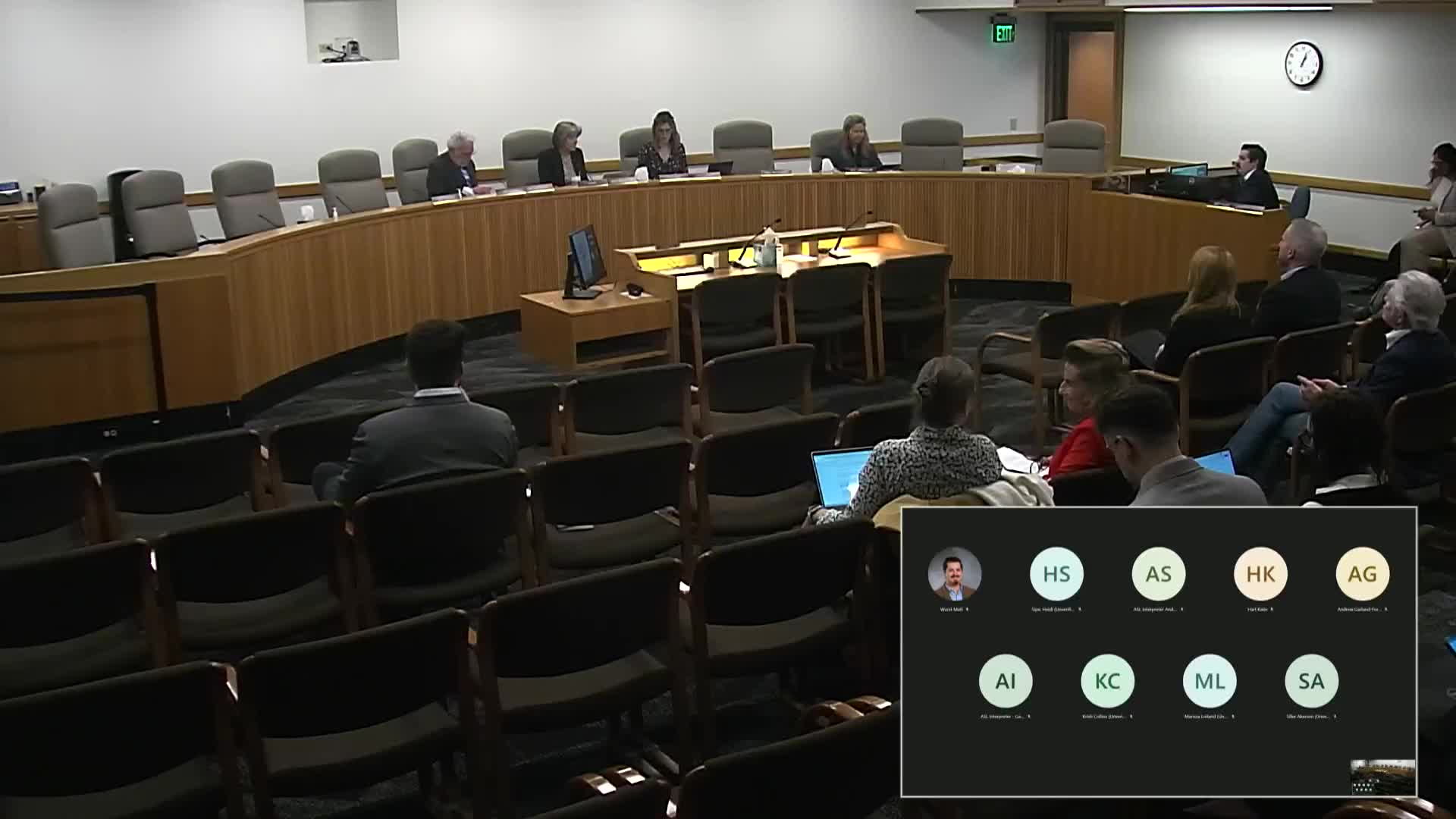
The committee closed the public hearing on SB 1167 after the testimony; no formal committee vote on the bill occurred during the session on March 11. Proponents repeatedly emphasized that the legislation is a “demonstration” investment: communities would pilot models and the state would evaluate results before making longer‑term changes.
Proponents asked the committee to pass the bill so Oregon could support local pilots and the Portland birthing village and to formally recognize early prevention and brain science in statute. The hearing record includes multiple offers to answer follow‑up implementation questions about funding flows through early learning hubs and the role of local conveners.
The committee moved on to other bills after closing the SB 1167 hearing; staff noted the public hearing record is available and that several witnesses attended in person and remotely.