Get Full Government Meeting Transcripts, Videos, & Alerts Forever!
Get email alerts on the Residential Parking topic
No spam. Unsubscribe anytime.
Clifton Heights residents press council for overnight residential parking permits, clearer enforcement
Summary
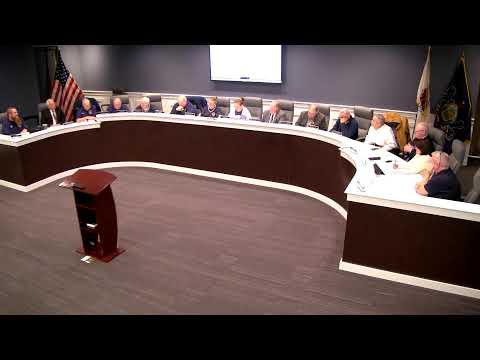
At the borough council meeting, residents raised repeated concerns about a new pay-period and permit system that they say lets nonresidents occupy neighborhood street parking overnight and has produced inconsistent ticketing.
Christie Burns, a Clifton Heights resident, told the borough council during public participation that recent changes to the parking-permit program have left residents without access to overnight street parking and confused about enforcement.
"I thought you were letting us park there from 9 to 9," Burns said, describing notices residents received; she said she and neighbors later learned the posted hours were a pay period that applies to people without permits. Burns asked whether residents could get an overnight residential permit and said nonresidents attending events at nearby businesses and the Legion take neighborhood spaces late into the night.
The issue drew a second public comment from David Volpe of 19 North Springfield Road, who described long-standing neighborhood congestion and said the changes have exacerbated disputes and safety concerns. "We don't want the moon. We don't want the stars. We just want a little something that we've had before all this happened," Volpe said, saying he has lived in the neighborhood 38 years.
Borough staff explained rules and enforcement practices in response. The borough manager said the "pay period" language refers to when an unpermitted vehicle would be subject to paid parking and that vehicles are not permitted to remain overnight; staff also acknowledged technical problems with the vendor's whitelist that have affected permit recognition. "We are working with the vendor to increase the accuracy of the white list," the manager said. Council members and staff described the 24-hour restriction as intended to prevent a vehicle from occupying the same spot across multiple 24-hour periods without moving.
Residents pressed several operational details: whether businesses that host late events are permitted to park in neighborhood spaces, how many permits have been issued, whether family members can be granted additional permits, and why some cars remain in lots after ticketing. The manager said roughly "11, 12" permits are in the system (as reported during the meeting) and that staff is adjusting the whitelist and vendor processes to reduce erroneous tickets and to make permit records accessible to enforcement officers without requiring residents to present paperwork in person.
Several residents requested a formal overnight residential permit option or a one-side residential parking designation on neighborhood streets. Council members asked residents to return with specific requests about how many permits and which blocks they propose to designate for residential-only parking; staff said they will follow up and that enforcement practices will be refined as vendor data is corrected.
The public comments included reports of parked vehicles with no registration and at least one recent instance of vehicle vandalism in the area; those were raised as local public-safety and quality-of-life concerns rather than items for immediate council action. No formal motion or vote on changing the permit rules occurred during the meeting.
The council did not adopt any new parking regulation at the meeting; staff said they will work with the vendor and follow up with residents about possible permit or block-level approaches and return with specifics for council consideration.