Get Full Government Meeting Transcripts, Videos, & Alerts Forever!
Get email alerts on the Land Use Rezoning topic
No spam. Unsubscribe anytime.
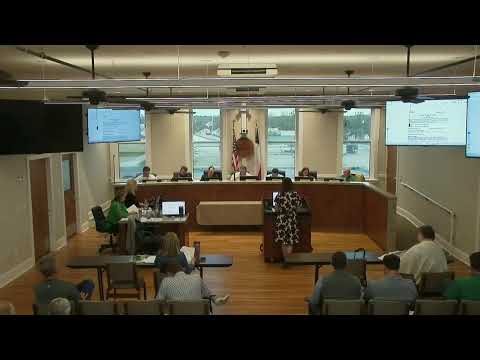
Council approves rezoning for Northern Creek Estates after hours of public concern over drainage and traffic
Summary
Lampasas City Council approved a zoning change for the Northern Creek Estates development (1206 Mill St. and 1705 E. Fourth St.) after a public hearing featuring developer testimony, engineers’ caveats, and multiple residents who raised flooding, traffic and infrastructure concerns. The vote passed 4–3.
Lampasas City Council voted 4–3 on March 17 to approve rezoning for the Northern Creek Estates subdivision, a multi-phase proposal that would adjust lot types and set aside about 20.51 acres as agricultural green space.
The measure allows revisions to the previously approved 2023 plan for the parcels commonly known as 1206 Mill Street and 1705 East Fourth Street, including changing roughly 20 planned townhomes back to single-family lots, increasing single-family lots from about 118 to approximately 138, reducing total rooftops from about 283 to 267, and converting 20.51 acres to agriculture/green space. The council’s approval was for the zoning change only; staff and speakers repeatedly stressed that civil engineering, drainage and utility capacity must still be reviewed before any final plat or construction.
Why it matters: The parcel sits near low-elevation areas that residents say flood; neighbors and several speakers told council they worry the revised plan—although it reduces the number of rooftops only slightly—could still worsen local drainage, add traffic to Fourth Street and require street and drainage improvements paid by the developer or city. Development opponents asked for more detailed, final engineering before rezoning; supporters and the developer said rezoning is the necessary first step to fund and perform the required engineering.
Planning staff opened the public hearing by summarizing the proposed changes and noted that the current action is zoning only, not final civil approval. Staff pointed council members to packet materials, including a letter and traffic analysis from Trail Engineering and to prior Planning and Zoning Commission review (PNC). The staff report explained the rezoning is an initial step and that the developer must still submit civil plans, a traffic impact analysis update, and demonstrate sewer capacity and drainage compliance with Texas Commission on Environmental Quality (TCEQ) and city requirements.
Developer Jimmy Torres of the project team told the council his group intends to build the subdivision rather than rezone for resale. Torres said prior efforts stalled because of drainage complications and landowner negotiations; he described the 20.51-acre green/ag area as part of a detention/retention plan and said the team plans to move earth within the site to create detention without discharging additional runoff onto adjacent neighbors. Torres also said a traffic study recommended a dedicated turn lane into the development from Fourth Street and that required street improvements would be part of the project’s costs.
Residents pushed back during public comment. Several neighbors—including a written and spoken comment from David Matthews of East Fourth Street and other local residents—described repeated Planning & Zoning meetings dating to 2023 and urged the council to require clearer, written confirmation of TxDOT and sewer capacity studies before rezoning. One commenter said the project proposes “cramming 267 housing units and two commercial lots into just 50 acres” and asked the city to publish comprehensive infrastructure and economic impact details. Other speakers questioned elevation changes, the amount of dirt movement required (one developer called it “millions” of dollars in earthwork), and whether there is physical room on Fourth Street for required turn lanes without taking adjoining property.
Council and staff discussion repeatedly emphasized process limits: zoning approval does not equal final project approval. Staff and the developer both said the final plat and civil plans will be subject to engineering review, TCEQ requirements, and verification of sewer capacity; the council will see those materials and have an opportunity to deny or condition future steps. The council approved the rezoning motion following the public hearing; a clerk’s summary recorded the final vote as 4 in favor and 3 opposed.
Ending: With zoning approved, the developer must complete civil design, confirm drainage and sewer capacity, and obtain required permits and final plats. Residents and council members indicated they expect detailed engineering and any required TxDOT, TCEQ or city approvals to be produced and reviewed before construction can proceed.