Get Full Government Meeting Transcripts, Videos, & Alerts Forever!
Get email alerts on the Budget topic
No spam. Unsubscribe anytime.
Lacey Township schools confront $6.2 million shortfall after referendum fails; board advances tentative 2025–26 budget and several contracts
Summary
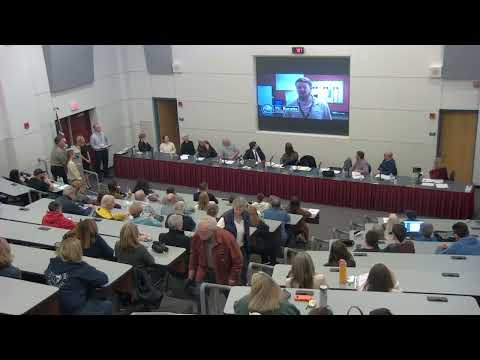
Lacey Township School District officials told the board and the public on March 12, 2025, that the district faces a roughly $6.19 million gap for 2025–26 after voters rejected a $92 million referendum and that the board approved a tentative 2025–26 budget and several contract awards while residents pressed for greater transparency.
Lacey Township School District officials told the board and the public on March 12, 2025, that the district faces a roughly $6.19 million gap for 2025–26 after voters rejected a $92 million referendum and state aid has fallen sharply in recent years. The board approved a tentative 2025–26 budget and several contract awards and addenda while residents urged greater transparency and slower, clearer outreach on any future referendum.
The issue matters because the district says it has lost more than $14 million in state aid over the past seven years and cannot replace that revenue quickly under New Jersey’s 2% cap on local tax-levy increases. Business Administrator Sharon Armesby told the board the tentative operating budget is about $76.1 million and that the district is currently about $6,186,882 short of balancing next year’s plan without using land-sale revenue or other one-time sources.
“We have $6,000,000 that we're still short in our budget,” Armesby said during the budget presentation. She described a mix of revenue declines (including one-time SREC sales that expire in June) and rising costs for benefits, utilities, tuition and transportation. Armesby also presented specific line items used in building the tentative budget: an operating budget of $76,114,000, grants and entitlements of $9,078,003.47 and debt service of $2,349,850. She said the proposed total property tax levy would rise to about $63,000,139.99, a net increase of roughly 3.15 percent when the district applies a health-benefit levy adjustment.
Board President Kim Kloss said the district will continue outreach to understand why the referendum failed and to prioritize projects voters will support. “We do not conduct any board business on social media. None,” Kloss said, repeating the board’s public posture on social-media communications and urging residents to use the district’s established channels.
Public comment at the meeting was dominated by reflections on the March 11 referendum vote, which opponents portrayed as a response to the referendum’s size and the inclusion of discretionary items such as artificial-turf fields in question 3. Several residents asked the board to improve pre-referendum communications, to hold open forums and to post more of the project and bid information proactively. Residents also raised concerns about maintenance staffing levels; one speaker said the maintenance department had been reduced to three employees.
Acting Superintendent Will Zelensky and members of the board repeatedly emphasized the district’s constrained options. Zelensky said the district will continue exploring revenue and additional cost reductions and invited further public participation in the budget review process. He and Armesby noted that the tentative budget must be filed with the county the following day and that the final public hearing on the budget is scheduled for April 29.
While the referendum defeat drew the most attention, the board also handled routine and time-sensitive business. The board approved a set of addenda to the tentative budget (including a health-benefit-cost adjustment), awarded two walk-on professional-service contracts, accepted several donations and confirmed graduation dates after securing contractors needed for the high-school ceremony. The board recessed into and returned from executive session twice during the meeting to discuss confidential personnel matters.
Votes at a glance - Approved: Tentative 2025–26 budget submission (operating budget about $76.1 million; net tax-levy increase about 3.15 percent as presented). Vote: roll-call majority yes. - Approved (addendum): Adjustment to health-care costs for the tentative budget (addendum #12). Vote: roll-call majority yes. - Approved (addendum): Facility-use adjustments/additions (addendum #14). Vote: roll-call majority yes. - Awarded: Labor-negotiator contract to Padula Law Firm at $165 per hour. Vote: roll-call majority yes. - Awarded: Land-survey contract to CME Associates (low bidder $77,160). Vote: roll-call majority yes. - Accepted: Donations (including a carpet donation and installation offer from a local company). Vote: roll-call majority yes.
Board direction and next steps The board set next steps that included scheduling additional public budget workshops and posting budget materials on the district website. Acting Superintendent Zelensky announced that high-school graduation contractors were secured and that the high-school ceremony will be held Thursday, June 19, 2025; middle-school promotion will be held Monday, June 23, 2025, after the board approved a revised school calendar to make up snow days. The budget timeline remains: tentative budget filed with the county, public hearing April 29 and final adoption by May 15.
What was not decided No new referendum was proposed or scheduled at the meeting. The board did not adopt any final capital plan or single out which of the previously proposed referendum projects would be reintroduced; Kloss said a small committee (referendum committee members: Sal Armato, Linda Walker and Skip Peters) will assess public priorities and report back. Several public commenters urged the board to present future proposals in smaller phases and to publish more detailed cost breakdowns in advance.
Community context Residents and board members made repeated references to the role of state aid, Open Public Records Act (OPRA) requests, and New Jersey School Boards Association (NJSBA) guidance on social-media conduct. Multiple speakers asked the district to improve pre-referendum outreach and to host open-forum question-and-answer sessions accessible in person and via recorded video. Board members said a recent string of roof and interior-leak reports reinforce the need for capital repairs even though funding will now require rethinking without the referendum.
The district attributed the bulk of its fiscal stress to uneven state-aid changes over seven years. Armesby told the board the district had seen about $14 million in state-aid reductions over that period and that a state formula—previously the subject of litigation by districts—has created year-to-year unpredictability in aid levels.
Closing note Board leaders said they will continue outreach, consider phased options to address urgent facility needs and look for grant and revenue opportunities that could reduce the need for a single large bond question going forward. The tentative budget will be available on the district website ahead of the April 29 public hearing.