Get Full Government Meeting Transcripts, Videos, & Alerts Forever!
Get email alerts on the Home Rule Charter topic
No spam. Unsubscribe anytime.
DCED presenter outlines Pennsylvania home rule charter process and local trade-offs
Summary
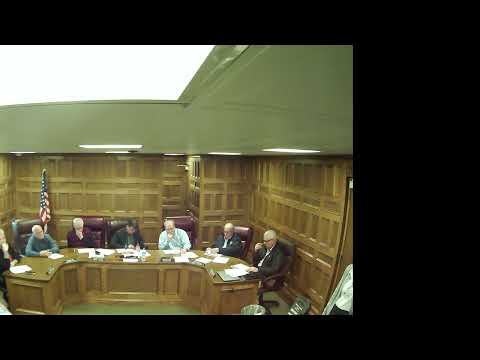
Terry, a representative of the Pennsylvania Department of Community and Economic Development (DCED), told a Bradford meeting that adopting a home rule charter would shift municipal governance from state-prescribed rules to a locally drafted charter and administrative code, and described the statutory process, timelines, petition thresholds and funding options.
Terry, a representative of the Pennsylvania Department of Community and Economic Development (DCED), told a Bradford meeting that adopting a home rule charter would shift municipal governance from state-prescribed rules to a locally drafted charter and administrative code, and described the statutory process, timelines, petition thresholds and funding options.
Home rule allows a municipality to “exercise power and perform functions that are not denied” by the U.S. Constitution, the Pennsylvania Constitution or state law, Terry said, adding that the enabling statute is found in “code 53, chapter 29.” She said the process typically begins when a governing body places a referendum on the ballot to explore home rule and, if approved, a government study commission is elected to study and possibly draft the charter.
Terry called the DCED publication on home rule “phenomenal” and said it walks communities through the process in layman’s terms. She said DCED can assist the government study commission during its initial work and that grant funding is commonly available to pay a consultant to guide drafting, codification and transition tasks.
Why it matters
Adopting home rule can change how a municipality organizes government, how it collects certain local taxes and how it codifies administrative procedures — decisions that affect local budgeting and who pays for city services. At the Bradford meeting, officials and residents discussed the potential to shift tax burdens (for example, through changes in earned income tax application) and a cited estimate that a commuter tax could raise about $3,140,000 for Bradford if it were permissible under state law.
Key points from the presentation
- Legal basis and limits: Terry repeatedly distinguished the home rule charter (the locally adopted constitution for municipal government) from the administrative code that sets operational details. She noted that certain matters remain governed by state law and cannot be overridden in a home rule charter; examples mentioned in the meeting included labor-relations arbitration, election law, ethics law, recall/reappointment procedures, the municipal planning code (zoning), the unit debt act and certain environmental statutes (clean streams, sewage facilities, stormwater). She cited “third class city code” and “code 53, chapter 29” as reference points for the legal framework.
- Process and timeline: The typical sequence described was: (1) council places an ordinance on the ballot asking voters whether to study home rule; (2) if voters approve, they elect a government study commission (commonly 7, 9 or 11 members); (3) the commission has up to nine months to study and may decide not to proceed, or it may take an additional up-to-nine-month drafting period to produce a charter for a public vote. Terry noted that the initial study commission must be sworn in within 10 days of certification and hold an organizational meeting within 15 days. She said ballots, petition deadlines and election-office filing windows impose firm calendar constraints (she cited that an ordinance must be filed with the elections office not less than 13 weeks before a specified election).
- Petitions and membership: The transcript records an answer of “a hundred” signatures as the typical petition threshold to get a candidate listed for the government study commission; candidates file nonpartisan petitions and must be registered voters. Terry emphasized that a sufficient number of candidates must run for the commission (for example, if seven seats are authorized but fewer than seven candidates file, the initiative stalls).
- Costs and consultant role: Terry said many municipalities use grants to fund a paid consultant and that DCED helps steer the initial phase, assist in preparing an RFP and coordinate early outreach. She said consultants typically include attorneys as part of their team and the local solicitor will review the draft charter before it goes to voters. The presentation included an attendee remark that the consultant-and-process costs had been estimated locally in the past on the order of “20,000” (currency not specified in the discussion).
- Taxes and fiscal effects: Terry and questioners discussed tax mechanics frequently. She said third-class-city statutory millage limits historically are 30 mills and that earned income tax (EIT) is conventionally 1 percent; she noted that under home rule a municipality may have more flexibility to adjust local revenue mechanisms though some participants expressed concern that home rule would allow unchecked tax increases. Terry cautioned that elected officials and drafters live in the community and that large, sudden tax hikes are rare in practice; she added that home rule often provides alternative revenue tools that can reduce pressure on property tax rates.
- Examples and experience: Terry cited several Pennsylvania municipalities that had pursued home rule, including Lancaster (recently adopted) and New Castle; she said Lancaster’s website and DCED materials offered practical examples and had helped other communities design outreach. She said in recent years the DCED-observed success rate for commissions that place a charter on the ballot has been high when the process includes robust public education and council support.
Questions and public concerns
Residents and local participants pressed on details including: how many signatures are required (answer: “a hundred” was given in the meeting), whether petitions are partisan (the presenter said petitions are nonpartisan), the role of alternates if commission members resign, and whether a consultant remains through the entire drafting process (the speaker said consultants “usually have attorneys on board” and can remain engaged through drafting and codification). Participants also asked about sunshine-law (open-meetings) applicability; the presenter said study commissions are subject to sunshine/open-meeting rules.
Several attendees raised equity concerns for residents on fixed incomes and asked how home rule could affect property-tax burdens for people aged 65 and older; Terry said home rule can provide options that shift some burden onto earned-income or commuter-based bases rather than solely on property owners, but she emphasized that any change requires voter approval and that specifics would depend on the drafted charter and enabling provisions.
No formal action taken
The meeting recorded questions and answers and information sharing only; the transcript shows no formal motion, vote or other official action by Bradford’s governing body during the session. Terry said DCED is available to assist if the city chooses to explore home rule further and that grants may be available to fund consultants, administrative-code drafting and ordinance codification.
Next steps noted in the meeting
Terry said the city is in the position of having a strategic-plan recommendation (phase 1) that suggested exploring home rule. She advised that if Bradford’s council decides to proceed, they must place the referendum ordinance on the ballot, ensure petition and filing deadlines are met, and that the commission — if elected — would begin the study period and public education phase. No date or formal commitment to proceed was recorded in the transcript.