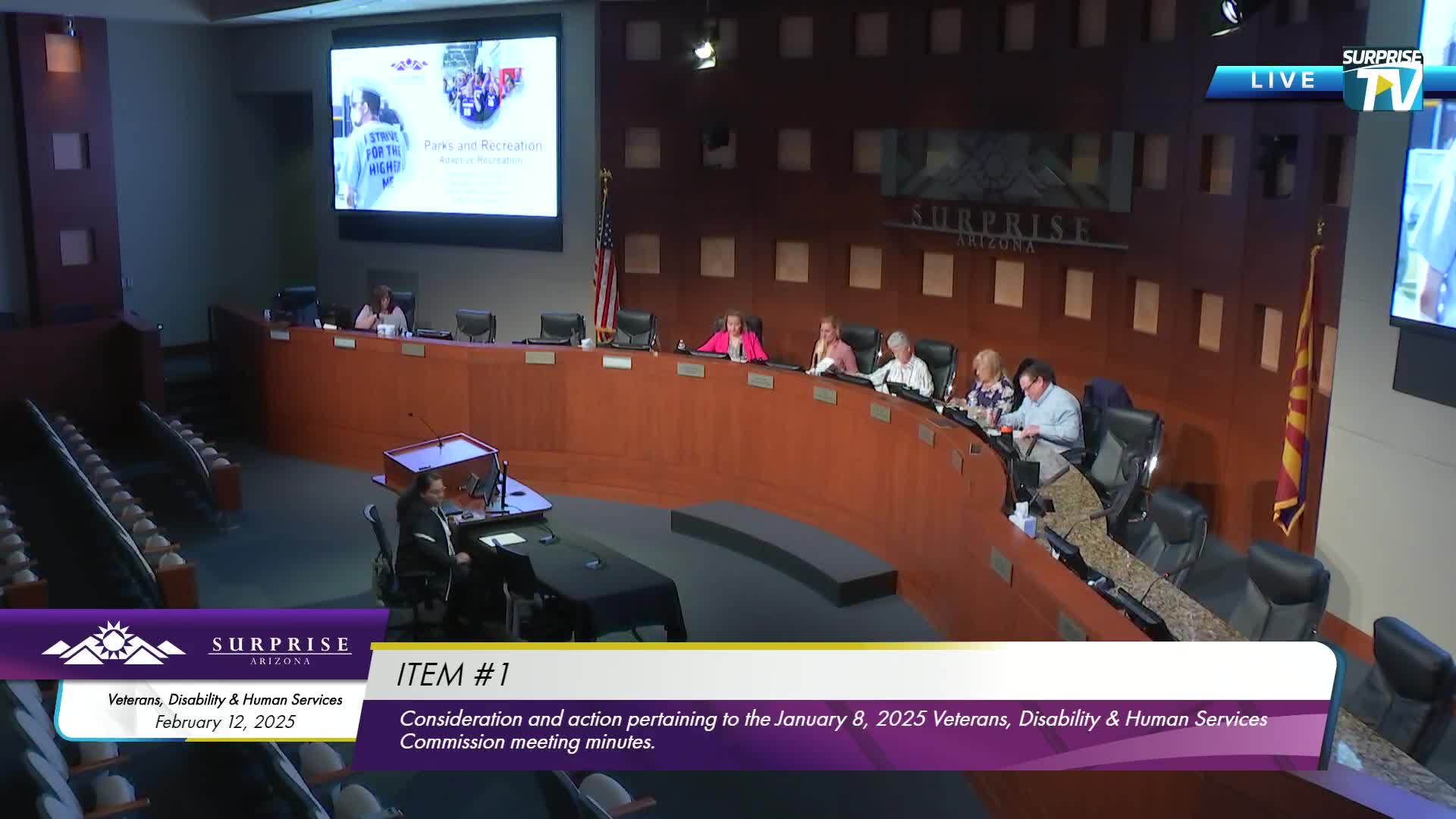
Surprise highlights adaptive recreation offerings, reports 3,572 participants in 2024
Get AI-powered insights, summaries, and transcripts
SubscribeSummary
At the Feb. 12 Veterans Disability and Human Services Commission meeting, Adaptive Recreation coordinator Meg McElhaney described city programs for people with developmental and intellectual disabilities, detailed volunteer support and upcoming events, and outlined how residents can become volunteers.
Meg McElhaney, the City of Surprise adaptive recreation coordinator, told the Veterans Disability and Human Services Commission on Feb. 12 that the city’s adaptive recreation programs served 3,572 participants in 2024 and relied on an extensive volunteer network.
McElhaney described program goals, typical modifications and current and upcoming offerings. "If you wanna see more of this, see more of the adaptive programs all you have to do is become a buddy," she said, urging residents to volunteer. She said volunteers must be age 12 and older; volunteers 18 and older complete a background check and about two hours of abuse-prevention training.
The programs provide individualized modifications so participants can learn at their own pace. McElhaney gave swim and basketball examples: swim training is broken into progressions using kickboards and pull buoys, and basketball rims are fitted with hula hoops to give a lower target for players who need it. Services are aimed at improving motor skills, social interaction and enjoyment, she said.
McElhaney listed current and recurring programs including Adaptive Intro to Cooking, Special Olympics basketball and softball teams, buddy (noncompetitive) basketball split by age groups, arts-and-crafts sessions, buddy baseball, buddy tennis, buddy kickball, an adaptive egg hunt at Dreamcatcher Park and an adaptive category in the city talent show. She also described outreach programs such as Sensitive Santa and Santa Express for special-education classrooms.
Volunteer and participation totals cited in the presentation: 611 volunteers recorded in 2024, contributing 2,331 volunteer hours; 3,572 total participants in 2024. McElhaney said volunteers come from a range of community groups including Ottawa University, high school teams, the Surprise Youth Council and the Sun City Grand Fishing Club.
Commissioners and family members who spoke praised the program’s reach. Chair Wisniewski said, "Thank you, Megan. That was really awesome what you guys do." Several commissioners and attendees noted that participants come from across the Valley and that the program is a model other jurisdictions look to replicate.
McElhaney provided logistics for prospective volunteers: a one-page application, a background check that typically returns within 24–48 hours and an abuse-prevention training that takes roughly two hours. Volunteers receive a branded volunteer shirt once cleared. For registration the presenter referenced the city’s ActiveNet site and offered a phone contact on the program flyer.
McElhaney asked commissioners to support the program by helping recruit volunteers and by attending sessions to observe. She thanked local partners who supported events and provided donated equipment, and praised family and respite-provider involvement that supplements staff and volunteer support.
The commission did not take formal action on Adaptive Recreation at the meeting; the presentation was informational.