Get Full Government Meeting Transcripts, Videos, & Alerts Forever!
Get email alerts on the Board Administration topic
No spam. Unsubscribe anytime.
CPRA board approves agenda and minutes, unanimously votes to enter executive session on two pending lawsuits
Summary
On March 19 the CPRA board approved the meeting agenda and minutes, heard no public comments, then unanimously voted to enter executive session to discuss two pending lawsuits concerning the Mid-Barataria sediment diversion and related federal litigation.
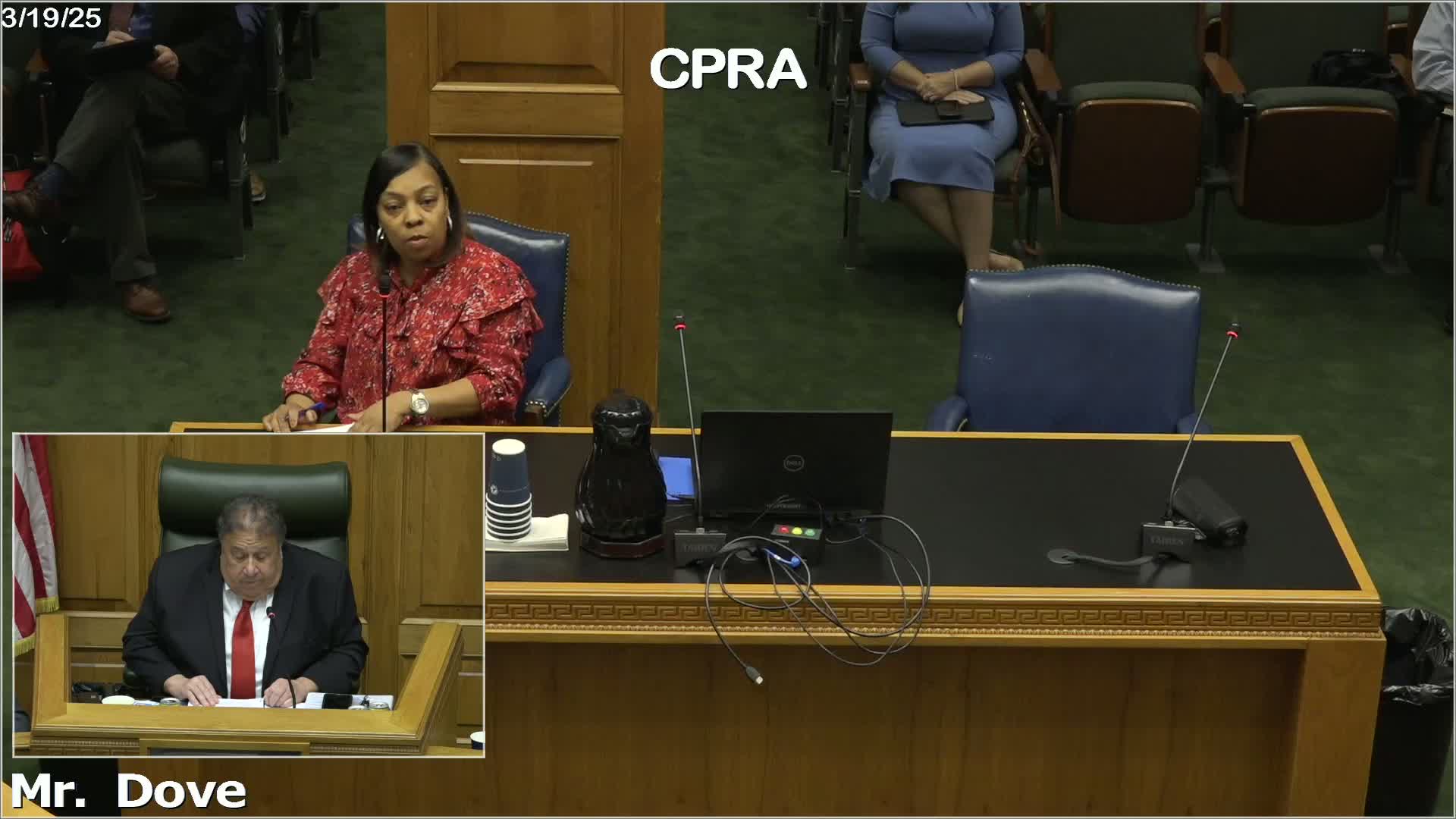
The Coastal Protection and Restoration Authority board opened its March 19 meeting with routine procedural votes, then moved into a closed executive session after a unanimous roll-call vote.
Dwayne Bourgeois moved to approve the meeting agenda; the motion was seconded by Mister Hidalgo and approved by voice vote. The board then approved the minutes in a motion by Mister Aldagal, seconded by Mister Alfred; that motion also carried by voice vote. CPRA asked for public comment on the agenda and minutes; none were offered.
Later in the meeting the board voted to enter executive session to discuss the status of two pending lawsuits. The motion to enter executive session was made by Mister Bourgeois and seconded by Mister Davis. The board heard no public comments on the executive-session request and proceeded with a roll-call vote. The roll call recorded “yes” votes from Chairman Dove and the full board membership present; the meeting transcript recorded the vote as unanimous by those present.
Meeting staff announced the subject matter for the executive session: (1) a federal lawsuit in the U.S. District Court for the Eastern District of Louisiana alleging National Environmental Policy Act and Administrative Procedure Act violations and Endangered Species Act claims related to Corps actions and regulatory agencies; and (2) a state-court lawsuit brought by Plaquemines Parish alleging CPRA did not comply with a local ordinance related to construction of the Mid-Barataria sediment diversion. CPRA then moved into executive session and the public broadcast was suspended as permitted under the board’s rules.