Get Full Government Meeting Transcripts, Videos, & Alerts Forever!
Get email alerts on the Arbitration Waiver Delegation topic
No spam. Unsubscribe anytime.
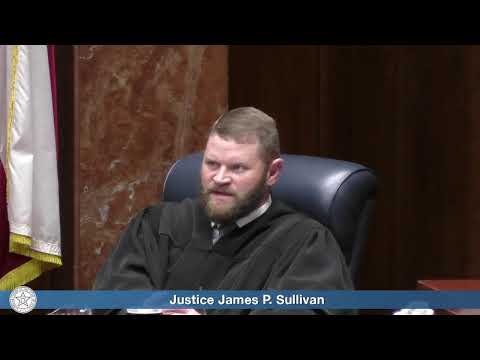
Justices debate whether a prior waiver and delegation clause send a Pearland trampoline injury to arbitration
Summary
In Serna v. Pearland Urban Air the Texas high court heard argument over whether a pre‑injury waiver and a delegation clause in an earlier agreement require arbitrating a subsequent injury claim by a minor.
The Supreme Court of Texas heard argument in Serna v. Pearland Urban Air about whether a parent’s earlier signed waiver and an arbitration delegation clause in that waiver require sending a later injury dispute involving the parent’s child to arbitration.
Why it matters: The case raises recurring questions in consumer‑injury disputes: when does an initial signed waiver or online or on‑site agreement cover later visits, and when do courts or arbitrators decide whether a later transaction or visit created a new agreement? The case tests the reach of the Federal Arbitration Act (FAA) doctrines — separability and delegation — in the context of events involving a minor and consumer‑facing waivers.
Petitioner’s counsel (identified in the transcript as Mister Terrazata) told the court the central question is whether the August waiver and its arbitration/delegation clause govern a later visit and that, on the record, formation questions about a second, later visit (and whether that created a separate contract) belong to the court to decide. Terrazata argued the court of appeals erred by treating the delegation clause as dispositive without first doing ordinary contract formation analysis (offer, acceptance, mutual assent, consideration).
Respondent’s counsel, Ms. Tari, argued the record shows a valid arbitration clause with a delegation clause and that under FAA principles and Rent‑A‑Center (and subsequent U.S. Supreme Court guidance cited at argument) questions about arbitrability and scope go to the arbitrator. Tari also told the justices that consumer practices commonly include prior waivers and that the operator’s on‑site processes (waiver on file for repeat visitors; birthday‑party procedures) are relevant to determining whether a later visit is covered.
During questioning the justices explored whether a second visit without re‑signing or without payment could nevertheless be covered by an earlier signed waiver (invitation and party‑booking practices were discussed), whether a later unwritten or implied agreement could modify an earlier written waiver, and how separability/delegation interact with classic contract defenses and formation issues. Justices and counsel also discussed practical hypotheticals — for example, whether a parent who signed once and later returns without signing again would be an invitee and whether the waiver should bind that parent and the child.
The court discussed Babydoll’s (court of appeals precedent) and Rent‑A‑Center/Coinbase and whether those precedents require sending the dispute to arbitration or whether a court should decide formation questions first. The transcript records detailed interrogation of hypotheticals and doctrinal lines but no ruling; the case was submitted after argument.